 English
 Español
  Português
  русский
  Français
  日本語
日本語  Deutsch
  tiếng Việt
  Italiano
  Nederlands
  ภาษาไทย
  Polski
  한국어
한국어  Svenska
  magyar
  Malay
Malay  বাংলা ভাষার
  Dansk
Dansk  Suomi
Suomi  हिन्दी
  Pilipino
  Türkçe
  Gaeilge
  العربية
  Indonesia
  Norsk
Norsk  تمل
تمل  český
český  ελληνικά
  український
  Javanese
  فارسی
فارسی  தமிழ்
தமிழ்  తెలుగు
  नेपाली
  Burmese
  български
  ລາວ
ລາວ  Latine
  Қазақша
  Euskal
  Azərbaycan
  Slovenský jazyk
  Македонски
  Lietuvos
  Eesti Keel
  Română
  Slovenski
  मराठी
मराठी  Srpski језик


Why Is a Stirred Mill the Smart Choice for Ultra-Fine Grinding?
Ultra-fine grinding is where a lot of mineral processing lines quietly lose money: power bills climb, product size drifts, media consumption surprises you, and downtime shows up at the worst possible moment. If you’ve ever asked “why does my regrind behave differently every shift?” or “why can’t I hit target without over-grinding?”, you’re already standing in the exact problem space a Stirred Mill is designed to address.
This article breaks down what a stirred mill does, where it fits best, how to choose one without guessing, and what operators can do to keep performance stable day after day—without turning your plant into a science fair.
Abstract
A Stirred Mill is a high-intensity grinding solution commonly used for fine and ultra-fine applications such as regrind, concentrate polishing, and improved liberation before downstream separation. Compared with traditional tumbling mills, stirred milling can deliver tighter particle size control, improved energy efficiency in fine ranges, and better process stability—when it’s selected, integrated, and operated correctly. This guide focuses on practical pain points: consistent product size, media and liner wear, circuit integration, contamination control, commissioning, and total cost of ownership.
Contents
- The pain points that make fine grinding frustrating
- What a stirred mill is and how it works
- Where a stirred mill shines and where it doesn’t
- Key variables that control performance
- How to choose the right stirred mill for your duty
- How to integrate a stirred mill into your grinding circuit
- Operating checklist and troubleshooting
- Total cost of ownership and what to model upfront
- Working with Qingdao EPIC Mining Machinery Co.,Ltd.
- FAQ
- Next step
Outline
- Define the real operational problems (size drift, power, media, downtime).
- Explain the stirred milling mechanism and why it behaves differently from tumbling mills.
- Match equipment to the job (regrind vs. primary grinding vs. polishing).
- Translate “design talk” into daily control knobs operators can actually use.
- Offer a selection method that reduces risk during scale-up and commissioning.
- Provide checklists, troubleshooting, and cost drivers for long-term stability.
The pain points that make fine grinding frustrating
Fine grinding is rarely “just grind smaller.” Most plants face a mix of technical and operational headaches. Here are the ones that show up again and again:
- Inconsistent product size (P80 drift): One shift hits target, the next shift is coarse. Downstream recovery suffers, and the plant keeps chasing symptoms instead of causes.
- Rising specific energy: As you push into finer sizes, the energy required per ton often climbs sharply. If your equipment isn’t suited for high-intensity breakage, power turns into heat and noise instead of liberation.
- Over-grinding and slimes: Grinding “too much” can be as harmful as grinding too little. Excess fines can increase reagent consumption, worsen filtration, and reduce selectivity in flotation.
- Media and liner cost surprises: Some circuits look great on paper, then bleed cost through media wear, liner changes, and high maintenance labor.
- Water balance and classification instability: Fine circuits are sensitive. A small change in cyclone performance, density, or viscosity can swing the whole circuit.
- Downtime that multiplies: When regrind is unstable, it often bottlenecks flotation, thickening, and filtration. One problem becomes five problems.
A Stirred Mill is not a magic wand—but it’s a strong tool when the pain points are rooted in the physics of fine breakage and circuit stability.
What a stirred mill is and how it works
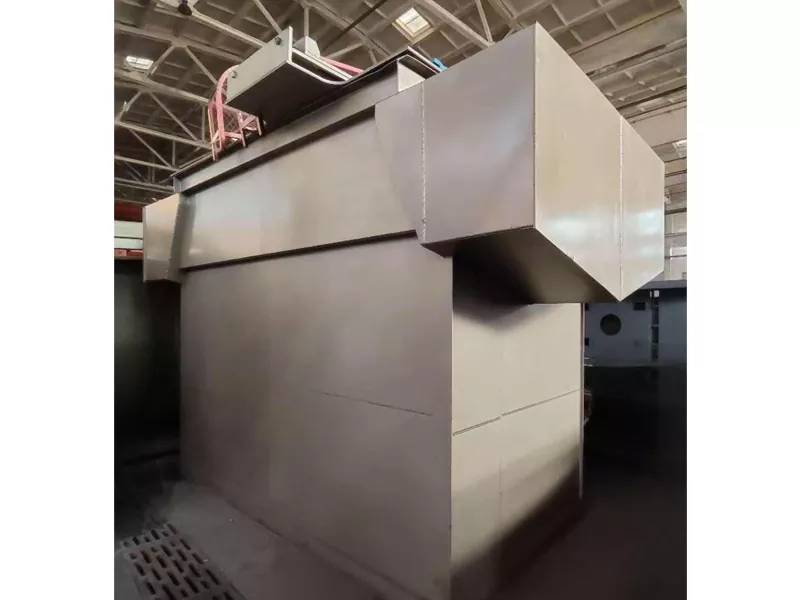
A stirred mill is a grinding mill that uses a rotating agitator to stir grinding media inside a stationary chamber. Instead of relying primarily on gravity and cascading impacts (as in a traditional tumbling mill), stirred mills generate high-frequency, high-intensity interactions between media and particles.
In practical terms, stirred milling is about efficiently delivering energy at the fine end of the size spectrum. When particle sizes are already small, impact becomes less effective and controlling breakage becomes more about shear, attrition, and frequent micro-collisions.
- Grinding chamber: A vessel containing slurry and media.
- Agitator: A rotating shaft with discs, pins, or screws that transfers energy into the charge.
- Media: Often ceramic or steel, selected based on duty, contamination tolerance, and wear economics.
- Feed and discharge system: Designed to maintain residence time and prevent media loss.
Because stirred mills can control energy input and residence time more precisely, they’re frequently used for regrind and polishing applications where tight product control matters.
Where a stirred mill shines and where it doesn’t
Selection gets easier when you stop asking “which mill is best?” and start asking “which mill is best for this job?”
| Application | Why a Stirred Mill Helps | Common Caution |
|---|---|---|
| Regrind after rougher flotation | Tight control of fine product improves liberation and recovery | Requires stable classification and density control |
| Concentrate polishing | Improves grade and reduces locked particles without extreme over-grinding | Contamination and media choice become critical |
| Fine grinding for specialty minerals | Can deliver narrow PSD with repeatable operation | Slurry rheology may limit throughput |
| Primary grinding of coarse feed | Usually not the sweet spot | May be inefficient and wear-intensive |
Bottom line: A Stirred Mill tends to deliver the best value when feed is already relatively fine and the goal is controlled, efficient grinding to fine/ultra-fine sizes with stable operation.
Key variables that control performance
If your team wants predictable results, these are the control knobs that matter most. You don’t need a PhD—just consistent measurement and disciplined adjustments.
- Media type and size: Smaller media increases contact frequency and can improve fine grinding, but may raise cost or change wear patterns. Ceramic media reduces contamination in some duties but requires correct operating conditions.
- Tip speed (agitator speed): Higher speed increases intensity. Too high can waste energy, accelerate wear, or create heat/rheology issues.
- Slurry density and viscosity: Fine grinding is sensitive to rheology. If slurry gets too viscous, transport and classification suffer, and the mill can become power-hungry without delivering size reduction.
- Residence time: Too short and you miss target. Too long and you may over-grind, create slimes, and consume more energy than necessary.
- Classification efficiency: Your mill can be “perfect,” and the circuit can still be unstable if classification is inconsistent.
A useful operator mindset is: stability first, intensity second. A stable circuit at slightly lower intensity often beats an aggressive circuit that swings all day.
How to choose the right stirred mill for your duty
Choosing a Stirred Mill is partly engineering and partly risk management. The safest selection process focuses on evidence and clear assumptions.
- Define target product and duty: What is the required P80 (and acceptable band), and what downstream unit operation benefits from it?
- Characterize feed variability: If feed hardness, mineralogy, or density swings, design must tolerate those swings.
- Decide contamination tolerance: If downstream chemistry is sensitive, media selection and internal materials matter.
- Confirm classification strategy: Cyclones, screens, or other classifiers must match the fine duty.
- Plan commissioning and controls: Instrumentation for density, power, and flow is not “nice-to-have” in fine grinding.
If you want a practical decision shortcut, use this checklist: fine target + need stable PSD + energy pressure + regrind/polishing duty = stirred milling is likely a strong candidate.
How to integrate a stirred mill into your grinding circuit
Most stirred mills deliver their value when they’re treated as part of a circuit, not as a standalone box. Integration usually comes down to three themes:
- Feed preparation: Keep tramp material out. Protect the mill and stabilize operation with proper screening or magnetic separation where needed.
- Closed-circuit classification: A closed circuit helps hold product size. The classifier must be tuned for fine separation; otherwise, you’ll either recirculate too much (choking throughput) or discharge too coarse (hurting recovery).
- Downstream alignment: Regrind targets should be aligned with flotation kinetics, thickener performance, and filtration requirements—not just a single grind size number.
One more practical detail: build the operating strategy around measured density and power. If those two signals are unstable, product size will almost always be unstable too.
Operating checklist and troubleshooting
Here’s a field-friendly checklist that operators can actually use.
- Start-up: Verify correct slurry density, confirm media load, ramp speed gradually, and watch power trend for abnormal spikes.
- Normal operation: Keep density consistent, avoid sudden feed swings, and monitor classification performance (circulating load behavior tells a story).
- Product getting coarser: Check density drop, media wear/charge level, classifier bypass, or feed size increase.
- Product getting too fine/slimy: Check residence time, speed setpoint, classification cut size, and whether the circuit is over-recirculating fines.
- Power climbing with no size benefit: Suspect viscosity/rheology increase, media packing, or classification failure causing recirculation of already-fine material.
- High wear rates: Re-check media choice, internal material selection, speed, and whether solids contain abrasive components driving wear.
Pro tip: log changes like a pilot—one change at a time, recorded with time, density, speed, power, and product size sample. Fine grinding punishes guesswork.
Total cost of ownership and what to model upfront
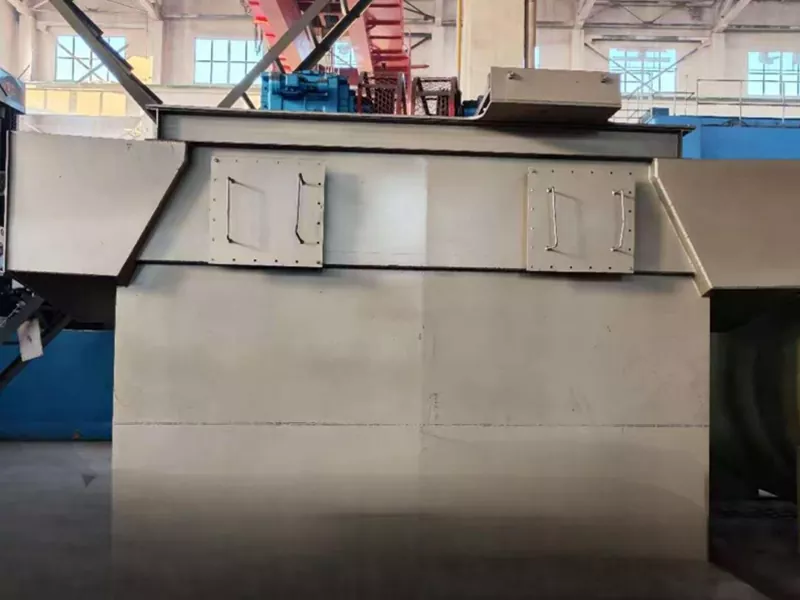
Many buyers focus on purchase price and miss the real economics. Over the life of the equipment, the biggest cost drivers usually include energy, media, wear parts, downtime, and labor.
| Cost Driver | What Influences It | How to Control It |
|---|---|---|
| Energy per ton | Target size, speed, density, classification | Stabilize density, tune classifier, avoid over-grinding |
| Media consumption | Media type/size, abrasiveness, operating intensity | Optimize media selection, control speed, maintain correct load |
| Wear parts | Internal material, slurry chemistry, solids content | Choose suitable liners, keep solids within design window |
| Downtime | Maintenance access, spares, operator discipline | Plan spares, train operators, standardize inspections |
A good stirred mill project is one where the plant knows what “success” means: not just a lab-sized product, but stable operation that protects recovery and keeps operating costs predictable.
Working with Qingdao EPIC Mining Machinery Co.,Ltd.
Equipment selection becomes dramatically easier when the supplier can connect design choices to real operating outcomes. Qingdao EPIC Mining Machinery Co.,Ltd. supports stirred mill applications with a focus on practical commissioning, stable long-term operation, and matching the solution to the duty—whether that duty is regrind, polishing, or specialty fine grinding.
When you’re evaluating a Stirred Mill, the most valuable conversations are usually about your circuit constraints: feed variability, contamination tolerance, water balance, classification strategy, and maintenance reality. A good solution isn’t just “a mill.” It’s a mill that your team can run consistently without daily firefighting.
FAQ
Q: What makes a stirred mill different from a ball mill?
A: A stirred mill uses an agitator to create frequent, high-intensity media-particle interactions, which is especially effective in fine and ultra-fine ranges. A ball mill relies more on cascading and impact, which can be less efficient as particle sizes get very small.
Q: When is a stirred mill the best choice?
A: It’s often a strong choice for regrind, concentrate polishing, and applications where you need tight control of fine product size, improved liberation, and stable operation.
Q: Does a stirred mill always reduce energy consumption?
A: Not automatically. The biggest gains come when the application truly requires fine grinding and the circuit is designed and controlled well—especially classification and density stability.
Q: What grinding media should I use?
A: Media choice depends on duty, contamination tolerance, and wear economics. Ceramic media may reduce contamination for some minerals, while steel media can be cost-effective in other duties. Correct size and operating conditions matter as much as the material.
Q: What causes product size to drift during operation?
A: Common causes include slurry density swings, classifier instability, media wear/insufficient media load, changes in feed size or hardness, and viscosity increases that reduce effective grinding.
Q: Can I use a stirred mill for primary grinding?
A: It’s usually not the best match for coarse, primary duties. Stirred mills typically deliver the most value when the feed is already relatively fine and controlled fine grinding is required.
Next step
If your circuit is fighting energy costs, unstable fine product, or regrind bottlenecks, a properly selected Stirred Mill can be a turning point—but only when it’s matched to your ore, your target size, and your real plant constraints. Share your duty (feed size, throughput, target P80, and circuit layout) with Qingdao EPIC Mining Machinery Co.,Ltd., and we’ll help you map a solution that’s built for steady operation and predictable cost. Ready to move from trial-and-error to control? Contact us to discuss your stirred milling project.
Send Inquiry



X
We use cookies to offer you a better browsing experience, analyze site traffic and personalize content. By using this site, you agree to our use of cookies.
Privacy Policy