 English
 Español
  Português
  русский
  Français
  日本語
日本語  Deutsch
  tiếng Việt
  Italiano
  Nederlands
  ภาษาไทย
  Polski
  한국어
한국어  Svenska
  magyar
  Malay
Malay  বাংলা ভাষার
  Dansk
Dansk  Suomi
Suomi  हिन्दी
  Pilipino
  Türkçe
  Gaeilge
  العربية
  Indonesia
  Norsk
Norsk  تمل
تمل  český
český  ελληνικά
  український
  Javanese
  فارسی
فارسی  தமிழ்
தமிழ்  తెలుగు
  नेपाली
  Burmese
  български
  ລາວ
ລາວ  Latine
  Қазақша
  Euskal
  Azərbaycan
  Slovenský jazyk
  Македонски
  Lietuvos
  Eesti Keel
  Română
  Slovenski
  मराठी
मराठी  Srpski језик


How Can an Autogenous Mill Simplify Grinding and Cut Operating Costs?
Abstract
An Autogenous Mill (often shortened to “AG mill”) can be a smart way to reduce grinding media spend, streamline circuits, and improve overall plant economics—when the ore and operating strategy are a good match. But many buyers struggle with the same pain points: uncertain suitability for their ore, unpredictable throughput, liner and lifter wear surprises, product size instability, and commissioning risks that show up after the purchase order is signed.
This guide breaks the topic down in a practical, procurement-friendly way: what an autogenous mill is, where it performs best, what to ask suppliers, how to estimate ownership cost drivers, and which operational knobs actually move the needle. You’ll also find a clear checklist, comparison table, and FAQ to help you make a confident decision.
Table of Contents
- Outline
- What Is an Autogenous Mill and Why Do Plants Use It?
- Common Buyer Pain Points and How to De-Risk Them
- Is Your Ore a Good Fit for Autogenous Grinding?
- Autogenous vs SAG vs Ball Mills
- Key Design Choices That Affect Performance
- Operating Levers That Stabilize Throughput and Product Size
- A Procurement Checklist Before You Buy
- Commissioning and Ramp-Up: What Good Looks Like
- FAQ
- Conclusion
Outline
- Define an autogenous mill and the value it can deliver
- Translate typical customer pain points into concrete technical questions
- Explain ore suitability and what tests/data reduce risk
- Compare grinding circuit options using an easy decision table
- Highlight design and operational choices that protect ROI
- Provide a buying checklist and commissioning roadmap
What Is an Autogenous Mill and Why Do Plants Use It?
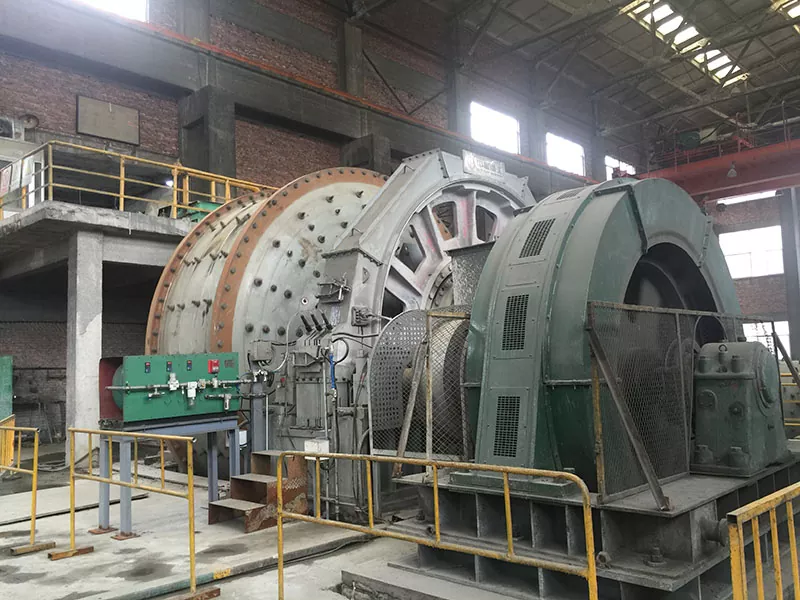
An Autogenous Mill is a tumbling mill that uses the ore itself as the grinding media. Instead of relying primarily on steel balls, the mill lifts and drops rock, producing impact and abrasion that break the material down. In practice, autogenous grinding is often chosen to:
- Reduce grinding media cost (a major operating expense in ball milling)
- Simplify the circuit by limiting media handling and associated logistics
- Handle large feed and support high-throughput primary grinding
- Lower contamination risk where iron pick-up is a concern
That said, AG milling is not a “plug-and-play” swap. Performance depends heavily on ore competency, feed size distribution, moisture, and how well the circuit is engineered around the mill (classification, pebble handling, control strategy, and liner design).
If you’re sourcing equipment, a capable supplier should help you map your ore characteristics to realistic throughput and product size targets—not just nameplate power. Qingdao EPIC Mining Machinery Co.,Ltd. supports autogenous mill projects with engineering-oriented customization (rather than one-size-fits-all configurations), which is exactly where most project risk is either removed—or accidentally baked in.
Common Buyer Pain Points and How to De-Risk Them
Most autogenous mill projects succeed or fail on a handful of predictable issues. Here are the pain points buyers raise most often, plus the practical way to address each one during selection and design.
-
Pain point: “Will an autogenous mill actually work for my ore?”
De-risk it by requesting ore competency testing (and sharing representative samples), plus a supplier-side mass balance and power draw estimate tied to your target P80. -
Pain point: “Throughput looks great on paper, then collapses when feed changes.”
De-risk it by designing for variability: define acceptable feed top size, manage fines, and ensure the classification and control loops can stabilize the circulating load. -
Pain point: “Wear parts cost and downtime were underestimated.”
De-risk it by evaluating liner/lifter design, predicted life, change-out time, and the supplier’s recommended maintenance plan (including critical spares). -
Pain point: “Product size is unstable, downstream flotation/leaching suffers.”
De-risk it by planning the full grinding-classification system: discharge style, screen/cyclone sizing, and instrumentation that keeps density and load stable. -
Pain point: “Commissioning takes longer than promised.”
De-risk it with a ramp-up roadmap: operator training, control tuning, liner break-in plan, and measurable acceptance criteria (throughput, power, P80, availability).
Is Your Ore a Good Fit for Autogenous Grinding?
Autogenous milling rewards the “right” ore body and punishes the wrong one. You do not need perfect ore—what you need is enough competent rock to act as grinding media without creating excessive critical-size buildup that chokes the mill.
In general, autogenous milling tends to work well when:
- The ore has moderate to high competency so larger fragments can grind smaller particles
- The feed can be controlled to a consistent top size (primary crushing strategy matters)
- The circuit includes a plan for pebbles/critical size (screening, pebble crushing, or controlled recirculation)
- Downstream processes benefit from a stable grind and reduced media contamination
Autogenous milling is riskier when:
- The ore is very soft and generates excess fines early (reduced grinding “media” effect)
- The ore creates a strong critical size fraction that neither breaks nor exits easily
- Feed is highly variable in moisture/clay, increasing pooling and reducing effective grinding
- Upstream crushing cannot control top size, causing power spikes and throughput losses
If you’re unsure, the fastest way to reduce uncertainty is to treat ore suitability as an engineering exercise, not a sales promise: define your feed size distribution, target product P80, and operating constraints (water, energy, footprint, liner change-out windows), then request a circuit proposal built around those realities.
Autogenous vs SAG vs Ball Mills
Procurement often starts with a simple question: “Should we go AG, SAG, or ball?” The best answer depends on media cost, ore behavior, and the product size you need. Here’s a practical comparison:
| Option | Grinding Media | Typical Strengths | Typical Watchouts | When It’s Often Chosen |
|---|---|---|---|---|
| Autogenous (AG) | Ore only | Lower media cost, simpler media logistics, reduced iron contamination, good for primary grinding | Ore-dependent performance, critical size buildup risk, requires strong circuit design | Competent ore bodies, high throughput primary grinding, sites aiming to reduce media spend |
| Semi-autogenous (SAG) | Ore + small % of balls | More forgiving than AG, better control over grinding action, strong throughput capability | Still needs media supply, wear and liner costs can be significant | Variable ores, when AG is risky but primary grinding needs are large |
| Ball mill | Balls | Predictable fine grinding, stable product size control, widely understood | Media cost and handling, higher contamination risk, usually smaller feed required | Secondary/tertiary grinding, fine product targets, circuits where predictability is top priority |
Key Design Choices That Affect Performance
An autogenous mill isn’t just a rotating shell—it’s a system. The design decisions below directly affect throughput, wear life, and product size stability.
-
Mill diameter and length (aspect ratio):
Affects residence time, breakage pattern, and how the load behaves. Oversizing can waste capital; undersizing can create chronic bottlenecks. -
Liner and lifter configuration:
Drives how the ore is lifted and impacts. Correct lifter height/face angle can improve breakage efficiency and reduce energy wasted as heat and noise. -
Discharge style and classification integration:
The discharge design must match your classification method (screens, cyclones, or a hybrid) so the mill can maintain a stable load and avoid overgrinding. -
Pebble/critical size strategy:
Many circuits perform best with a plan for scats and pebbles—often screening and optional pebble crushing to prevent buildup and recover throughput. -
Drive system and power control:
Smooth starts, controlled torque, and stable power draw improve reliability and reduce mechanical stress during process upsets. -
Instrumentation and control readiness:
Load estimation, density measurement, and real-time monitoring are not “nice to have.” They are what keep product size and throughput from drifting.
When evaluating suppliers, ask them to explain how each design choice connects to your ore and process goals. A strong proposal will read like a plan to manage risk—because that’s what you’re buying.
Operating Levers That Stabilize Throughput and Product Size
Even a well-designed autogenous mill can underperform if the operating strategy is fuzzy. The good news: a few controllable levers usually deliver outsized gains.
- Feed top size discipline: Keep primary crushing and screening aligned with the mill’s intended feed envelope.
- Density and water balance: Too thick can choke transport; too thin can reduce effective grinding and destabilize classification.
- Mill load management: Avoid chasing tonnage by overloading—power draw can rise while effective breakage falls.
- Classification tuning: If the separator is poorly tuned, the mill becomes a recycling machine instead of a grinding machine.
- Critical size control: Monitor pebbles/scats; add screening or pebble crushing if buildup becomes chronic.
- Liner lifecycle planning: Track wear patterns and schedule changes proactively to protect availability.
If you’re budgeting an autogenous circuit, availability is often the hidden multiplier. A slightly lower peak throughput can still win financially if the plant runs more consistently with fewer unplanned stops.
A Procurement Checklist Before You Buy
Use this checklist to turn “sales talk” into decision-grade information.
- Ore and feed definition: Representative samples, feed size distribution, moisture/clay behavior, and variability range
- Target product: Required P80/P50, downstream sensitivity (flotation, leach kinetics, pelletizing, etc.)
- Circuit concept: Proposed flowsheet, classification method, pebble handling, and recirculation strategy
- Power and throughput basis: Clear assumptions, expected operating window, and what happens under “worst week” feed
- Wear and maintenance: Liner/lifter materials, predicted life, change-out plan, and critical spares list
- Controls and instrumentation: Minimum recommended sensors and control loops for stable operation
- Installation and commissioning scope: Training plan, ramp-up milestones, performance acceptance criteria
- Supplier capability: References in similar ores/capacity, engineering support, after-sales service responsiveness
Commissioning and Ramp-Up: What Good Looks Like
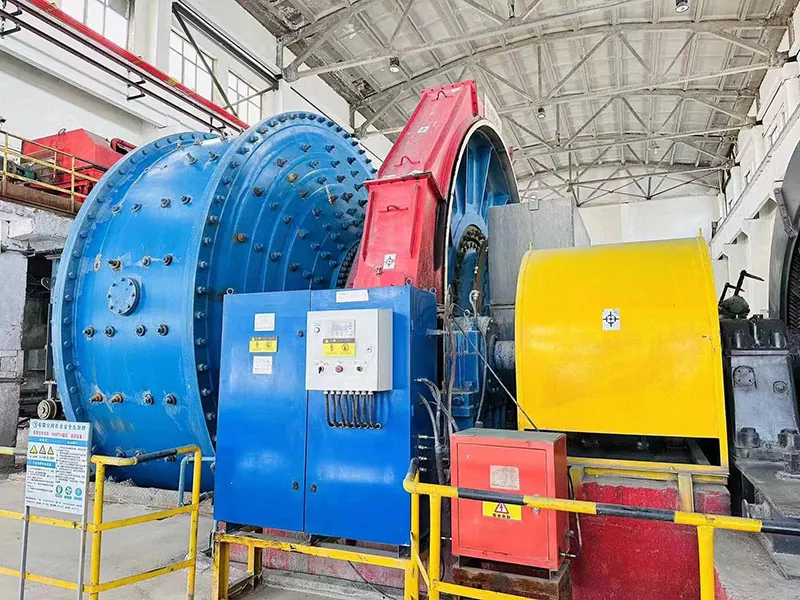
Autogenous mills often look “easy” mechanically and “hard” metallurgically. A clean ramp-up plan makes the difference between a smooth start and months of firefighting.
- Pre-commissioning: Verify mechanical alignment, lubrication readiness, instrumentation calibration, and safety interlocks.
- First ore and liner break-in: Start conservatively to establish stable load behavior and validate control loops.
- Control tuning: Tune density, feed rate, and classification controls to reduce oscillation and improve product stability.
- Performance verification: Confirm throughput, power draw, P80, and circulating load within defined tolerances.
- Operator training: Teach “cause and effect” so operators can correct drift without creating bigger swings.
This is where a supplier with strong engineering support matters. The best vendors treat ramp-up as a managed process—complete with measurable targets and hands-on problem solving.
FAQ
What is the main advantage of an Autogenous Mill?
It can significantly reduce grinding media cost and simplify media logistics, while supporting high-throughput primary grinding—especially when the ore is competent enough to act as its own grinding media.
Is an autogenous mill always cheaper to run than a ball mill?
Not always. While media cost can drop, overall operating cost depends on ore behavior, liner life, energy efficiency, and circuit stability. The lowest-cost option is the one that meets product size targets with high availability and minimal rework.
How do I know if my ore will create critical size problems?
Critical size issues often show up when a portion of the ore is tough enough to resist breakage but small enough to circulate without exiting efficiently. Screening, pebble monitoring, and testwork-based circuit design are the practical ways to detect and manage this risk.
Do autogenous mills require a pebble crusher?
Not always, but many circuits benefit from a pebble handling strategy. Depending on ore and product goals, pebble crushing can stabilize throughput and prevent buildup that reduces grinding efficiency.
What data should I prepare before requesting a quotation?
At minimum: feed top size and distribution, ore competency indicators, moisture/clay notes, target product size, throughput target range, operating hours expectations, and site constraints (power, water, footprint, maintenance windows).
Conclusion
An Autogenous Mill can be a powerful tool for cutting media-related operating costs and building a simpler, high-throughput grinding circuit—but success depends on ore suitability, circuit design, and the discipline of commissioning and control. If you approach the purchase as a risk-managed engineering decision (not a brochure comparison), you’ll avoid the classic traps: unstable throughput, surprise wear costs, and product size drift that hurts downstream recovery.
If you want a solution tailored to your ore and production targets, contact us at Qingdao EPIC Mining Machinery Co.,Ltd. to discuss your feed conditions, capacity goals, and the most reliable autogenous mill configuration for your plant.
Send Inquiry



X
We use cookies to offer you a better browsing experience, analyze site traffic and personalize content. By using this site, you agree to our use of cookies.
Privacy Policy