 English
 Español
  Português
  русский
  Français
  日本語
日本語  Deutsch
  tiếng Việt
  Italiano
  Nederlands
  ภาษาไทย
  Polski
  한국어
한국어  Svenska
  magyar
  Malay
Malay  বাংলা ভাষার
  Dansk
Dansk  Suomi
Suomi  हिन्दी
  Pilipino
  Türkçe
  Gaeilge
  العربية
  Indonesia
  Norsk
Norsk  تمل
تمل  český
český  ελληνικά
  український
  Javanese
  فارسی
فارسی  தமிழ்
தமிழ்  తెలుగు
  नेपाली
  Burmese
  български
  ລາວ
ລາວ  Latine
  Қазақша
  Euskal
  Azərbaycan
  Slovenský jazyk
  Македонски
  Lietuvos
  Eesti Keel
  Română
  Slovenski
  मराठी
मराठी  Srpski језик


Which Vibrating Screen Should You Choose to Stop Blinding, Reduce Downtime, and Hit Your Target Cut Size?
Abstract
A Vibrating Screen can make or break your plant’s throughput, product quality, and operating cost. When the screen is wrong (or poorly configured), you’ll feel it fast: pegging and blinding, moisture carryover, inconsistent gradation, premature wear, loud vibration, and the kind of “small” downtime that quietly becomes your biggest loss. This guide walks through practical selection logic you can use on real lines—quarry, mining, sand, tailings, and process screening. You’ll learn how to match screen type, deck setup, media, vibration parameters, and maintenance strategy to your material and production goals, with a clear checklist and a comparison table. We’ll also reference common industrial configurations from Qingdao EPIC Mining Machinery Co.,Ltd. to illustrate options like linear screening, circular (rotary) screening, and high-frequency dewatering.
Table of Contents
- Outline
- What problems should a Vibrating Screen solve
- What are the main Vibrating Screen types and when to use each
- How do you select the right Vibrating Screen for your material
- What setup choices improve screening efficiency and stability
- When does dewatering become the real job
- What maintenance habits prevent repeated shutdowns
- FAQ
Outline
- Define your real pain point: capacity, cut accuracy, moisture, or downtime
- Pick the screen motion style: linear vs circular vs high-frequency dewatering
- Lock your cut size strategy: deck count, aperture, and feed distribution
- Choose screen media and anti-blinding method based on moisture and fines
- Set the “health targets”: vibration stability, wear life, noise control, access for maintenance
- Validate with a short test plan: sampling, moisture tracking, and wear inspection cadence
What problems should a Vibrating Screen solve
Buyers rarely wake up thinking, “I want a new screen.” They wake up thinking, “Why are we missing spec again?” or “Why are we shutting down every week?” A Vibrating Screen is supposed to create predictable separation—fast, repeatable, and easy to keep running.
- Blinding and pegging: holes clog with wet fines or sticky particles, reducing open area and capacity.
- Low screening efficiency: too much material stays on top (carryover) or falls through (misplacement), hurting quality and yield.
- Moisture carryover: product looks “okay” visually but fails downstream handling, stacking, or processing due to water retention.
- Premature wear: side plates, screen media, beams, and contact zones degrade faster than planned, inflating spare-part costs.
- Unstable vibration: bolts loosen, cracks develop, and noise increases—often a sign of imbalance, bad isolation, or misapplied excitation.
- Maintenance friction: you can’t access key parts quickly, so “small” interventions become full shutdowns.
The good news: most of these issues are not “mysteries.” They’re the predictable outcome of mismatched screen type, wrong media, poor feed distribution, or configuration that ignores your material’s behavior (especially moisture, fines content, and shape).
What are the main Vibrating Screen types and when to use each
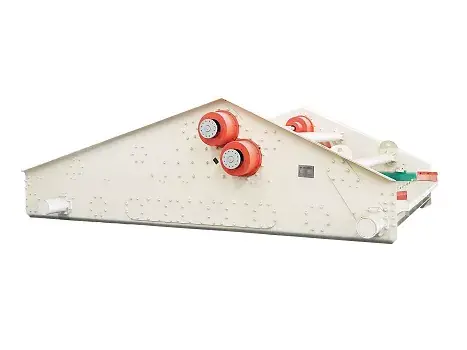
Not all screens behave the same. The motion path changes how material stratifies, how quickly it travels, and how well fines find their way through apertures. In practice, most industrial selection falls into three buckets:
| Screen type | Typical motion | Where it shines | Common pain point it solves |
|---|---|---|---|
| Linear vibrating screen | Reciprocating straight-line travel | Fine screening, classification, desliming, adjustable deck angle | Improves cut precision and throughput consistency on fine particles |
| Circular (rotary) vibrating screen | Approximate circular trajectory | General scalping and sizing, rugged performance on variable feed | Stabilizes screening on fluctuating feed rates and mixed particle sizes |
| High-frequency dewatering screen | High-frequency vibration with dewatering-friendly deck geometry | Tailings dry discharge, concentrate dewatering, slurry separation | Reduces final moisture and improves water recovery |
For example, EPIC’s catalog commonly highlights linear configurations for fine particle screening and dewatering-related work, circular (YA series) for classic sizing with robust excitation, and dedicated high-frequency dewatering designs where moisture is the KPI rather than just cut size.
How do you select the right Vibrating Screen for your material
If you want a selection process that doesn’t fall apart during commissioning, start with four inputs. Don’t guess—measure or estimate from real sampling:
- Target cut size: the separation point you must achieve (and how tight the spec is).
- Feed characteristics: top size, fines percentage, particle shape, abrasiveness, and whether it’s sticky or prone to blinding.
- Moisture and water mode: dry feed, spray water, slurry, or high-moisture fines—this changes everything.
- Capacity goal and uptime reality: tph targets are meaningless if you can’t maintain the machine safely and quickly.
Then use this simple decision logic. It won’t replace engineering calculations, but it will prevent the most expensive mismatches:
| Your dominant problem | What it usually indicates | What to prioritize first |
|---|---|---|
| Frequent blinding on fine cuts | Sticky fines + wrong media or insufficient stratification | Media choice (poly/PU, anti-blinding), feed distribution, deck angle, and motion style |
| Off-spec gradation | Misplacement due to overload, wrong aperture, or unstable bed depth | Deck sizing strategy, multi-deck layout, and consistent feed presentation |
| Moisture too high after screening | Screen is acting like a sizer but you need dewatering | High-frequency dewatering screen, proper spray/water recovery plan, and correct deck inclination |
| High wear cost and cracked structures | Abrasive material + weak wear protection or vibration stress | Wear liners at contact zones, robust connections, isolation, and correct excitation setup |
| Too much downtime for “small” tasks | Poor access, hard-to-swap media, messy maintenance workflow | Modular media, quick-change design, access points, and standard spare strategy |
Here’s the uncomfortable truth: the “best” Vibrating Screen is the one your team can keep running. If your plant can’t swap panels quickly or inspect critical points safely, you’re going to pay in lost hours, not just parts.
What setup choices improve screening efficiency and stability
Once you’ve chosen the screen type, configuration is where performance is won—or quietly lost. Two machines with the same name can behave very differently based on these choices:
- Deck count and sizing strategy: multi-deck setups can remove oversize early, reduce bed depth, and improve fine separation.
- Aperture selection: choosing “exact cut size” often backfires; you want a practical aperture that accounts for particle shape and near-size behavior.
- Feed distribution: uneven feed creates dead zones, overloads one side, and causes localized blinding and wear.
- Media selection: wire mesh offers high open area, polyurethane/rubber improves wear and noise control; anti-blinding options help with sticky fines.
- Excitation and isolation: stable vibration reduces structural fatigue and keeps the bed moving consistently.
If you’ve ever seen a screen “work fine” at low feed but fail at full production, it’s often not a mysterious capacity limit—it’s stratification breakdown. When the bed is too thick, fines can’t reach the apertures, so the screen becomes a conveyor. That’s when operators start “fixing” it by increasing water or changing angles without a plan, and efficiency becomes a moving target.
A practical commissioning tip: during ramp-up, take short interval samples (feed, oversize, undersize) and track moisture where it matters (not just at one point). A week of disciplined sampling can prevent months of incremental guesswork.
When does dewatering become the real job
Dewatering is not just “screening with water.” It’s a different objective: reducing free water and often pushing toward a stable discharge that can be stacked, conveyed, or sent to downstream filtration with less load. If your line has tailings dry discharge, concentrate dewatering, slurry separation, or fine mineral processing where moisture control is the KPI, a dedicated high-frequency dewatering Vibrating Screen usually makes more sense than forcing a general-purpose sizer to do a dewatering job.
- Expect different success metrics: final moisture, clarity of overflow, recovery of fines, and stability of discharge.
- Pay attention to wear zones: slurry contact areas should be protected with appropriate wear-resistant materials.
- Plan your water loop: dewatering changes your water recovery strategy—don’t treat it as a bolt-on.
- Design for maintenance: dewatering duties can punish screen media; modular panels and quick access matter a lot.
In many plants, the turning point is simple: if your downstream handling suffers due to wet product, you’re already paying for moisture—through reprocessing, transport issues, and unstable stockpiles. That’s when dewatering stops being a “nice improvement” and becomes the highest ROI upgrade.
What maintenance habits prevent repeated shutdowns
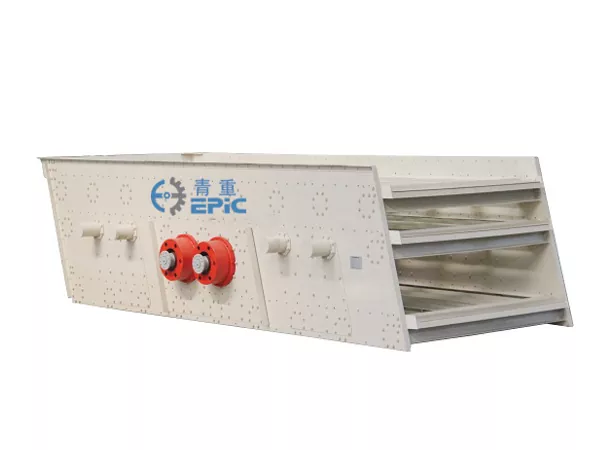
A strong screen design helps, but routines keep it alive. If you want fewer surprises, build a basic inspection rhythm your team can actually follow:
- Daily quick check: unusual noise, temperature changes near bearings, loose fasteners, visible media damage, abnormal material flow patterns.
- Weekly mechanical review: bolt torque checks where applicable, spring/isolation inspection, wear liner condition, feed box condition.
- Monthly performance check: sampling-based confirmation of cut accuracy and moisture, not just visual “looks okay” checks.
- Spare strategy: keep the parts that cause the longest delay—screen media kits, critical fasteners, and wear components.
If you only remember one maintenance principle, make it this: treat recurring blinding, recurring tearing, or recurring cracking as a system signal, not a parts problem. Replacing the same panel every week is rarely “bad luck.” It’s usually telling you something about feed presentation, moisture, near-size loading, or misaligned vibration behavior.
FAQ
- Q: What is the fastest way to reduce blinding on a Vibrating Screen
- Start with media choice and feed presentation. Anti-blinding media, correct aperture strategy for near-size particles, and a more even feed distribution often outperform “turning knobs” on vibration alone. If moisture is the driver, consider whether you’re asking a sizing screen to do a dewatering job.
- Q: When should I choose a linear Vibrating Screen instead of a circular one
- Choose linear motion when fine particle screening, sharper classification, or adjustable deck geometry is a priority—especially when you need consistent performance on smaller sizes. Circular motion is often favored for general sizing and robust performance under variable feed conditions.
- Q: Why does my screen meet capacity but fail product spec
- Capacity can be misleading if the bed becomes too thick. When stratification breaks down, the screen can move material fast while separation quality drops. Re-check deck sizing strategy, feed distribution, and whether your cut size needs a different motion style or additional deck.
- Q: How do I know if I need a dewatering screen
- If moisture at discharge causes handling problems, stockpile instability, or downstream overload (filters, conveyors, pumps), you likely need dedicated dewatering performance rather than only sizing. High-frequency dewatering designs are typically applied in tailings and concentrate dewatering scenarios.
- Q: What information should I prepare before requesting a quotation
- Prepare target cut size, desired capacity, feed top size, fines percentage, bulk density (if known), moisture/water mode (dry, wet, slurry), abrasiveness notes, installation constraints, and your pain point priority (quality, moisture, or downtime). With that, suppliers can recommend a screen type and configuration faster and more accurately.
Ready to match a Vibrating Screen to your real operating conditions
A well-selected Vibrating Screen isn’t just a piece of equipment—it’s a stability upgrade for your entire line. If you share your material details, target cut size, moisture condition, and throughput goal, Qingdao EPIC Mining Machinery Co.,Ltd. can help you shortlist the right screen type and configuration and avoid the usual traps that cause blinding, off-spec product, and downtime. If you want a clear recommendation tailored to your process, contact us with your basic parameters and we’ll respond with a practical proposal.
Send Inquiry



X
We use cookies to offer you a better browsing experience, analyze site traffic and personalize content. By using this site, you agree to our use of cookies.
Privacy Policy