 English
 Español
  Português
  русский
  Français
  日本語
日本語  Deutsch
  tiếng Việt
  Italiano
  Nederlands
  ภาษาไทย
  Polski
  한국어
한국어  Svenska
  magyar
  Malay
Malay  বাংলা ভাষার
  Dansk
Dansk  Suomi
Suomi  हिन्दी
  Pilipino
  Türkçe
  Gaeilge
  العربية
  Indonesia
  Norsk
Norsk  تمل
تمل  český
český  ελληνικά
  український
  Javanese
  فارسی
فارسی  தமிழ்
தமிழ்  తెలుగు
  नेपाली
  Burmese
  български
  ລາວ
ລາວ  Latine
  Қазақша
  Euskal
  Azərbaycan
  Slovenský jazyk
  Македонски
  Lietuvos
  Eesti Keel
  Română
  Slovenski
  मराठी
मराठी  Srpski језик


How Can Iron Removal Equipment Prevent Costly Contamination and Downtime?
Article Summary
Metal contamination is one of those “silent” problems that can ruin product quality, damage downstream machines, and trigger unplanned shutdowns. Whether you’re handling mined ore, aggregates, powders, recycled materials, or bulk commodities, stray iron can enter your process at many points—raw material sourcing, transport, crushing, conveying, or even from wear parts inside your own line.
This guide explains what iron removal equipment does, the pain points it solves, the most common equipment types, and how to choose the right configuration for your material and throughput. You’ll also find practical installation tips, a maintenance routine that reduces surprises, and an FAQ to help you compare options with confidence.
Table of Contents
- What Is Iron Removal Equipment?
- Which Pain Points Does It Solve?
- Where Is It Used Most?
- Common Types of Iron Removal Equipment
- How to Select the Right System
- Placement and Installation Tips
- Maintenance That Actually Prevents Downtime
- A Practical Workflow Example
- Choosing a Supplier and Building a Long-Term Solution
- FAQ
Outline
- Define iron removal equipment and the contamination sources it targets
- Connect contamination to real operational losses: rejects, damage, downtime, safety risk
- Compare the major equipment types and typical applications
- Provide a selection checklist based on material, size, moisture, and process layout
- Share placement and maintenance practices to keep performance stable over time
- Wrap up with a simple workflow and a supplier evaluation framework
What Is Iron Removal Equipment?
Iron removal equipment is a category of industrial devices designed to detect, capture, or separate unwanted ferrous metal (and in some cases non-ferrous metal) from bulk materials moving through a process line. In plain terms: it stops “mystery metal” from traveling further downstream where it can cause expensive trouble.
The target contaminants typically include:
- Tramp iron: bolts, nails, wire, rebar fragments, broken tools
- Wear debris: ferrous fragments produced by crushers, mills, chutes, or liners
- Embedded metal: metal pieces mixed into raw material loads
- Fine ferrous particles: iron dust that can affect purity or final appearance
Most systems use magnetic force (permanent magnets or electromagnets) or detection + rejection (metal detectors paired with diverters). The best choice depends on your material characteristics and where the contamination risk is highest.
Which Pain Points Does It Solve?
If you’ve ever had to explain a surprise shutdown, you already know: metal contamination is rarely “small.” It tends to spread into multiple problems at once.
- Equipment damage: Tramp iron can crack crusher plates, snap belts, jam feeders, and scar screw conveyors.
- Unplanned downtime: A single metal jam can stop production, create clean-up work, and push deliveries late.
- Product quality issues: Iron particles can discolor powders, increase impurity levels, and cause rejected batches.
- Safety risks: Metal fragments can become projectiles near high-speed equipment or cause overheating and fire hazards in extreme cases.
- Higher operating cost: More wear, more spares, more labor, more overtime—and often higher energy consumption when equipment struggles with jams.
Good iron removal equipment turns these “unknown risks” into controlled, measurable events—capturing contamination at predictable points so your line stays stable.
Where Is It Used Most?
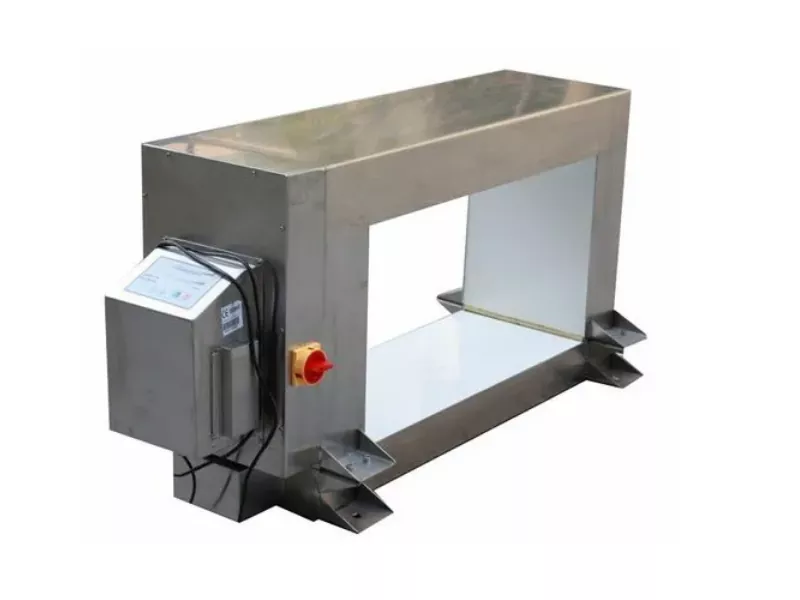
Iron removal equipment is common anywhere bulk material is transported, crushed, milled, screened, or blended. Typical industries include:
- Mining and mineral processing
- Quarrying and aggregates
- Cement and building materials
- Chemicals and industrial powders
- Recycling (glass, plastics, C&D, scrap-derived fuels)
- Bulk handling terminals (ports, warehouses, transfer stations)
Even if your incoming material is “clean,” contamination can still be introduced internally from worn parts. That’s why many plants use multiple stages of separation instead of relying on a single magnet.
Common Types of Iron Removal Equipment
Different devices solve different problems. Some are built for large tramp iron on a conveyor, while others target fine ferrous particles inside powders. Here’s a practical comparison:
| Equipment Type | Best For | Typical Placement | Strengths | Watch Outs |
|---|---|---|---|---|
| Overband Magnet (Suspended Magnet) | Tramp iron on belts | Above conveyor head pulley or mid-belt | Continuous removal, protects crushers | Needs correct height and belt speed match |
| Magnetic Pulley | Automatic ferrous separation at discharge | As conveyor head pulley | Simple, low maintenance, always-on | Requires pulley retrofit; best with consistent feed |
| Magnetic Drum Separator | Mixed materials, high throughput | In chutes or transfer points | Stable separation, good for recycling streams | Moist, sticky materials may build up |
| Grate Magnet / Grid Magnet | Coarse lumps or granules | Hoppers, bins, chutes | Strong capture in gravity flow | Needs periodic cleaning access |
| Magnetic Liquid Trap | Slurries and liquid lines | Piping systems | Protects pumps and downstream filtration | Must match pressure, viscosity, and cleaning routine |
| Metal Detector + Reject System | When you must verify “metal-free” output | After key processing steps | Detects non-magnetic metals too (with proper setup) | Requires calibration; reject design is critical |
Rule of thumb: Use magnets to remove what you can early (cheap protection), and use detection/rejection later when you need verified cleanliness in the final product.
How to Select the Right System
If you’re choosing iron removal equipment, focus less on “the strongest magnet” and more on “the right system for the contamination you actually have.” Below is a checklist you can use for internal evaluation or supplier discussions:
- Material form: Is it powder, granules, lumps, slurry, or mixed waste?
- Particle size distribution: Are you trying to capture big tramp iron, fine ferrous dust, or both?
- Moisture and stickiness: Sticky material can coat surfaces and reduce separation efficiency.
- Throughput: Tons/hour or kg/hour determines magnet width, field coverage, and residence time.
- Conveyor speed and belt width: Critical for suspended magnets and pulleys.
- Installation constraints: Headroom, access for cleaning, and existing chute geometry matter more than most people expect.
- Downstream risk: What are you protecting—crusher, mill, classifier, packaging line, customer spec?
- Cleaning approach: Manual cleaning may be fine for low contamination, but high-volume lines often need self-cleaning designs.
To make selection easier, here’s a quick mapping of goals to typical solutions:
| Your Goal | Common Solution | Why It Works |
|---|---|---|
| Stop tramp iron before a crusher | Overband magnet + metal detector (optional) | Captures large metal and reduces catastrophic jams |
| Remove iron automatically at belt discharge | Magnetic pulley | Continuous separation with minimal operator effort |
| Improve purity in powder/granule streams | Grate magnets / grid magnets | High-contact capture in gravity flow points |
| Handle mixed recycling streams | Drum separator + staged magnets | Stable separation across variable feed conditions |
| Verify final product metal-free | Metal detector + reject mechanism | Adds inspection and documented control at the end |
Placement and Installation Tips
Placement can make or break performance. Two plants can buy the same equipment and get very different results simply because one placed it in a “magnet-friendly” location.
- Capture early, verify later: Put separation before high-risk machines (crushers, mills) and detection near the final product stage.
- Use transfer points strategically: Chutes and discharge points often create a thinner material curtain, making separation more effective.
- Control burden depth: A thick pile on a belt reduces capture efficiency because metal is further from the magnetic field.
- Design for cleaning access: If the operator can’t reach it safely, cleaning gets skipped—then performance “mysteriously” drops.
- Plan for dust and vibration: Industrial environments punish poor sealing and weak mounting hardware.
If you’re retrofitting an existing line, consider a short site survey that measures belt width, belt speed, headroom, and the most common contamination size. Those basics prevent expensive “almost fits” mistakes.
Maintenance That Actually Prevents Downtime
Iron removal equipment is often installed as a “set it and forget it” solution—until it stops working quietly. The best plants treat it like a control point with a simple routine.
- Daily/shift checks: Confirm the collection zone is not overloaded; look for unusual metal types that indicate upstream failures.
- Weekly cleaning: Remove buildup that can shield metal from the magnetic field, especially with wet or dusty material.
- Monthly inspection: Check mounting bolts, belt tracking, chute wear, and any guarding.
- Quarterly performance review: Track “metal collected per ton” to identify changes in feed quality or wear-part issues.
One underrated benefit: the metal you collect becomes diagnostic data. If metal spikes suddenly, you can investigate upstream before it becomes a breakdown.
A Practical Workflow Example
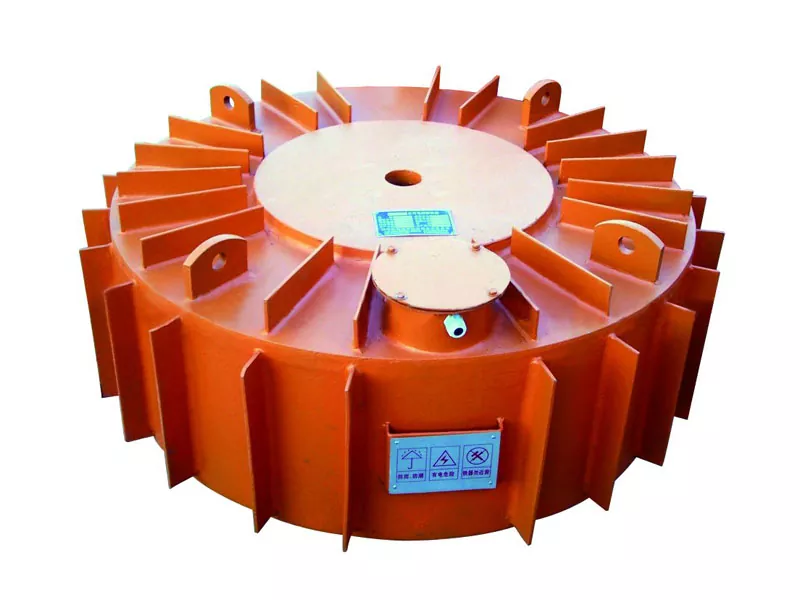
Here’s a straightforward way to build a robust iron removal strategy without overcomplicating the line:
- Incoming control: Add an overband magnet above the main conveyor feeding the primary crusher.
- Transfer point refinement: Add a magnetic drum or chute-mounted grid magnet where material drops to the next stage.
- Quality checkpoint: Install a metal detector near the finished product stage if purity specs are strict or customer audits require proof.
- Maintenance loop: Record collection results and schedule cleaning as part of standard operations, not as an “extra task.”
This staged approach protects equipment, improves product quality, and reduces the chance that one missed bolt turns into a full-line shutdown.
Choosing a Supplier and Building a Long-Term Solution
Equipment performance isn’t only about the device—it’s about how well it matches your process. A strong supplier should be able to discuss your material behavior, flow patterns, and risk points, then recommend a configuration that fits your line layout and operating realities.
For example, Qingdao EPIC Mining Machinery Co.,Ltd. works with bulk-material industries where reliability and stable separation matter day after day. When you evaluate a supplier, look for evidence of practical engineering support: layout guidance, sizing recommendations, and clear maintenance instructions that operators can realistically follow.
If you want the best outcome, share a few basics upfront—material type, throughput, belt width/speed, moisture level, and where failures have happened before. That information turns “generic equipment” into a real solution.
FAQ
Q: Is a stronger magnet always better?
A: Not always. Field strength matters, but placement, burden depth, belt speed, and material behavior often matter just as much. The “best” magnet is the one that consistently captures your real contamination in your real process.
Q: Can iron removal equipment capture stainless steel?
A: Some stainless steels are weakly magnetic, while others are not. If stainless contamination is a concern, a metal detector system may be a better control point, depending on the product and process.
Q: Where should I install a suspended magnet on a conveyor?
A: Common placements are near the head pulley (where the material trajectory changes) or at a transfer point where material is thinner and more exposed. The correct height and positioning depend on belt speed and burden depth.
Q: How do I know if my current system is underperforming?
A: Warning signs include repeated jams, metal showing up downstream, increasing wear-part damage, or visible buildup on magnets/drums. Tracking collected metal over time is a simple way to spot changes early.
Q: What’s the difference between removing tramp iron and improving product purity?
A: Tramp iron removal focuses on large metal that damages machinery. Purity improvement targets smaller ferrous particles that can affect specs, appearance, or downstream processing quality. Many plants need both stages.
Q: Does moisture reduce separation efficiency?
A: It can. Wet or sticky materials may clump, increase burden depth, and cause buildup on surfaces—reducing exposure to the magnetic field. In these cases, design for easy cleaning and consider staged separation.
Q: How often should I clean the equipment?
A: It depends on contamination rate and material stickiness. Many operations start with weekly cleaning and adjust based on what they observe. High contamination lines may need more frequent cleaning or self-cleaning designs.
Cut the surprises out of your process: the right iron removal equipment can protect your machinery, stabilize quality, and reduce downtime in a way your whole team feels immediately. If you want a configuration recommendation based on your material and line layout, contact us to discuss your application and get a practical proposal.
Send Inquiry



X
We use cookies to offer you a better browsing experience, analyze site traffic and personalize content. By using this site, you agree to our use of cookies.
Privacy Policy