 English
 Español
  Português
  русский
  Français
  日本語
日本語  Deutsch
  tiếng Việt
  Italiano
  Nederlands
  ภาษาไทย
  Polski
  한국어
한국어  Svenska
  magyar
  Malay
Malay  বাংলা ভাষার
  Dansk
Dansk  Suomi
Suomi  हिन्दी
  Pilipino
  Türkçe
  Gaeilge
  العربية
  Indonesia
  Norsk
Norsk  تمل
تمل  český
český  ελληνικά
  український
  Javanese
  فارسی
فارسی  தமிழ்
தமிழ்  తెలుగు
  नेपाली
  Burmese
  български
  ລາວ
ລາວ  Latine
  Қазақша
  Euskal
  Azərbaycan
  Slovenský jazyk
  Македонски
  Lietuvos
  Eesti Keel
  Română
  Slovenski
  मराठी
मराठी  Srpski језик


Why Do Froth Flotation Cells Matter for Higher Recovery and Lower Processing Costs?
Article Summary
Froth Flotation Cells play a central role in mineral separation performance, affecting recovery rate, concentrate grade, energy use, reagent consumption, and plant stability. This article explains how flotation cells work in practical terms, why many operations struggle with inconsistent froth behavior, and how to select and operate the right system based on ore characteristics and production goals. You will also find a clear selection checklist, a comparison table for buying decisions, operating tips, maintenance guidance, and a FAQ section to help solve common customer pain points such as unstable recovery, high operating costs, difficult start-up, and scaling concerns.
Contents
- Article Outline
- What problems are buyers trying to solve?
- How do Froth Flotation Cells work in real production?
- How should you choose the right flotation cell?
- Comparison table for decision-making
- How can you improve stability and recovery?
- What maintenance practices prevent downtime?
- Why work with a reliable equipment supplier?
- FAQ
- Conclusion and next step
Article Outline
- Key customer pain points in flotation performance and operating cost
- Basic working principle of Froth Flotation Cells
- Selection factors: ore type, throughput, recovery target, layout, automation
- A practical comparison table for procurement and engineering teams
- Operating optimization steps for better froth control and product consistency
- Maintenance priorities and common troubleshooting scenarios
- Supplier support, customization, and project value
- Frequently asked questions and final call to action
What problems are buyers trying to solve with Froth Flotation Cells?
When processing plants look for new Froth Flotation Cells, they are usually not just buying a tank with an impeller. They are trying to solve bigger operational problems: unstable recovery, excessive reagent use, poor concentrate grade, low air dispersion efficiency, difficult operator control, or repeated shutdowns caused by wear and maintenance delays. In many plants, flotation is where small process variations become expensive losses.
A common pain point is inconsistency. One shift may deliver strong recovery, while the next shift sees weak froth, poor bubble distribution, or excessive entrainment. This creates pressure on both production and quality teams. Another pain point is scalability: a pilot setup may perform well, but once the plant expands, the system becomes hard to control and energy consumption rises sharply.
Buyers also face a practical challenge during procurement: many product descriptions sound similar, but real performance depends on cell design, air input control, slurry circulation, froth depth management, and integration with the entire circuit. Choosing the right equipment means thinking beyond nameplate capacity and focusing on how the cell will behave under real ore variability.
Bottom line: The right Froth Flotation Cells should help you recover more valuable minerals, reduce unnecessary consumption, and keep daily operation predictable—not just meet a basic capacity target.
How do Froth Flotation Cells work in real production?
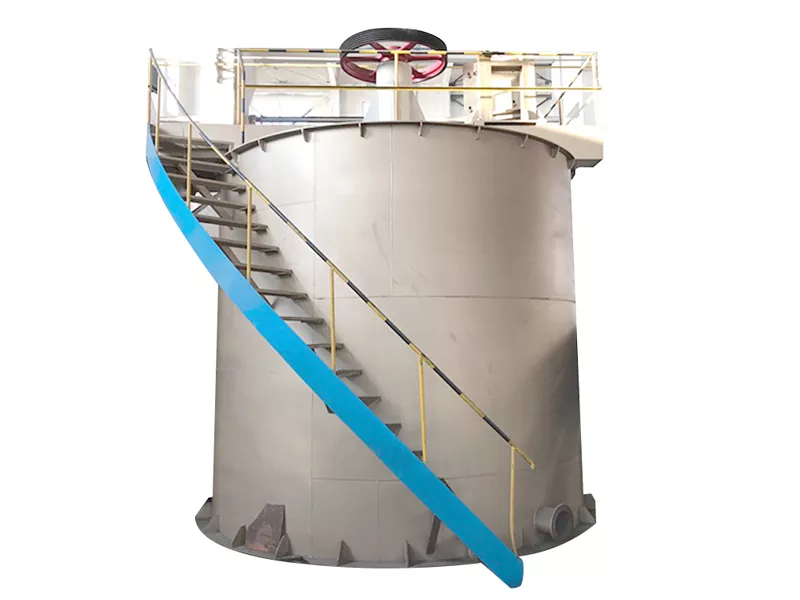
In simple terms, Froth Flotation Cells separate valuable minerals from gangue by using differences in surface chemistry. Reagents are added so target mineral particles become more likely to attach to air bubbles. Inside the cell, air is dispersed into the slurry, bubbles rise, and hydrophobic particles attach to those bubbles. The bubble-particle aggregates move upward into the froth layer, where they are skimmed or overflowed as concentrate. Hydrophilic particles remain in the pulp and move out as tailings.
While the principle sounds straightforward, actual production is sensitive to several interacting variables: particle size distribution, pulp density, pH, reagent scheme, air rate, agitation intensity, froth depth, residence time, and mineral liberation level. If any one of these is poorly controlled, the froth may become too thin, too wet, too unstable, or overloaded with unwanted material.
That is why modern flotation cell selection is not only about “can it float minerals,” but also about “can it maintain control across changing ore conditions.” A well-designed system supports stable bubble generation, effective suspension, and manageable froth behavior so operators can adjust parameters without constantly fighting the process.
- Stable air dispersion improves particle-bubble contact probability.
- Appropriate agitation prevents sanding while avoiding over-shearing bubbles.
- Consistent froth removal supports concentrate grade and throughput balance.
- Good instrumentation access helps operators respond faster to ore variability.
How should you choose the right Froth Flotation Cells for your plant?
Selecting Froth Flotation Cells starts with a process question, not a catalog question. Before comparing equipment, define what “success” means for your project: maximum recovery, higher concentrate grade, reduced operating cost, lower water use, compact footprint, easier maintenance, or future expansion readiness. Once this target is clear, the equipment conversation becomes much more productive.
Key factors to evaluate before buying:
- Ore characteristics — Mineral type, grade, liberation size, clay content, and variability directly affect flotation behavior.
- Throughput requirement — Required tonnage and target residence time influence cell volume and circuit configuration.
- Product targets — Recovery and concentrate grade goals determine how aggressive or selective the flotation strategy should be.
- Circuit design — Rougher, scavenger, and cleaner duties may require different cell arrangements and control strategies.
- Utilities and operating conditions — Available power, compressed air, water quality, and climate can affect performance and maintenance planning.
- Automation and monitoring needs — Easy adjustment, access to sensors, and compatibility with plant controls improve operational reliability.
- Wear and serviceability — Liners, impellers, stators, and seals should be designed for practical replacement intervals.
- Supplier support — Commissioning, training, spares planning, and process support often make the difference after installation.
If your team is comparing multiple suppliers, ask for more than a standard quotation. Request a clear explanation of design logic, recommended operating window, wear part strategy, and support for commissioning. That is where long-term value becomes visible.
Which comparison points help procurement teams make a better decision?
| Comparison Item | Why It Matters | What to Ask the Supplier |
|---|---|---|
| Effective cell volume and duty fit | Affects residence time and recovery stability | How is sizing matched to rougher/scavenger/cleaner stages? |
| Air dispersion and control range | Directly impacts bubble generation and separation efficiency | What air rate range is recommended for our ore and throughput? |
| Agitation and suspension performance | Prevents sanding and dead zones while protecting froth quality | How does the design balance mixing intensity and bubble protection? |
| Wear part life and replacement access | Reduces downtime and maintenance labor | Which parts wear fastest and what is the typical replacement plan? |
| Control integration and instrumentation access | Supports stable operation under ore fluctuations | How can operators monitor froth depth, air rate, and level reliably? |
| Technical support and commissioning assistance | Improves startup speed and reduces early-stage errors | What support is provided before, during, and after installation? |
This kind of comparison framework helps teams avoid one-dimensional decisions based only on initial purchase price. In flotation, poor fit can cost more over time than a higher-quality system that runs steadily.
How can you improve recovery and froth stability after installation?
Even high-quality Froth Flotation Cells need proper tuning. Many performance issues blamed on equipment actually come from operating drift, reagent inconsistency, feed fluctuation, or incomplete commissioning. The best results usually come from a structured optimization routine rather than frequent emergency adjustments.
Practical optimization checklist:
- Stabilize feed conditions first — Sudden changes in pulp density or particle size can overwhelm any flotation setup.
- Review reagent addition points — Timing and mixing quality matter as much as dosage.
- Tune air rate in steps — More air is not always better; too much can create unstable froth and lower selectivity.
- Adjust froth depth carefully — Froth depth influences drainage and concentrate cleanliness.
- Track changes shift by shift — Record parameter adjustments and results to build a reliable operating window.
- Train operators on froth observation — Visual froth behavior is still an important diagnostic signal in daily operation.
- Coordinate upstream and downstream units — Grinding and dewatering changes often show up in flotation performance.
One of the most effective habits is to define “normal froth behavior” for your ore types. When operators know what healthy froth looks like—and what changes indicate over-aeration, poor reagent conditioning, or entrainment—they can respond faster and more consistently.
Tip: If your concentrate grade drops while froth volume increases, do not assume the circuit is improving. A larger froth bed may simply be carrying more unwanted material. Evaluate grade and recovery together.
What maintenance practices prevent downtime and performance loss?
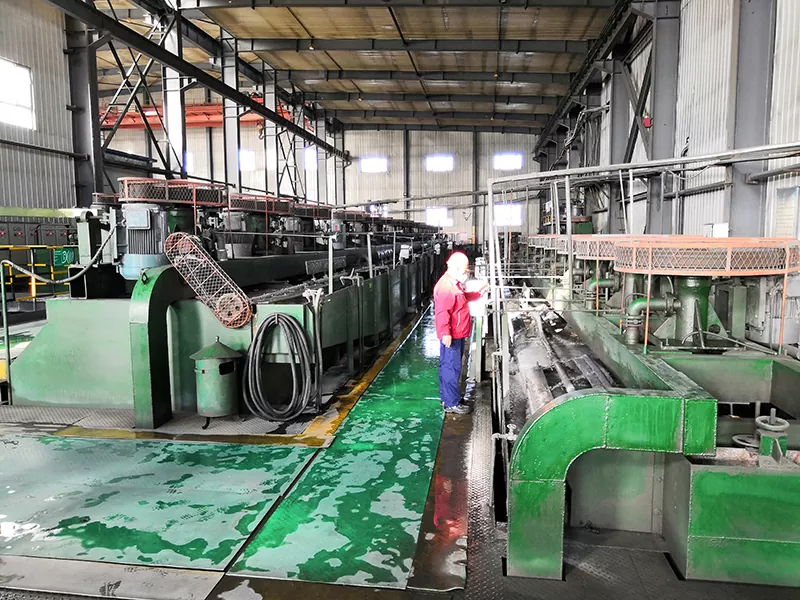
Maintenance is often treated as a separate topic from process performance, but in flotation they are tightly linked. Wear in impellers, stators, liners, or air distribution components can gradually change mixing and aeration behavior long before a complete failure occurs. That means recovery may decline silently while the cell still appears to be running.
Maintenance priorities for Froth Flotation Cells:
- Inspect wear parts at planned intervals and compare actual wear against expected service life.
- Check air supply lines and valves for blockage, leakage, or unstable pressure.
- Verify level control devices and instrumentation response during routine inspections.
- Monitor vibration, unusual noise, or motor load changes that may indicate mechanical issues.
- Keep a critical spare parts list based on lead time and failure consequence.
- Record maintenance findings alongside process data to identify recurring root causes.
Common symptoms and possible causes:
| Symptom | Possible Cause | Action Direction |
|---|---|---|
| Weak or uneven froth | Air dispersion issue, reagent imbalance, feed variation | Check air rate, reagent dosing consistency, and feed stability |
| High froth volume but low grade | Excessive entrainment, shallow froth depth, over-aeration | Rebalance air rate and froth depth, review wash/cleaning strategy |
| Recovery decline over time | Wear parts degradation, ore change, control drift | Inspect mechanical components and verify operating window |
| Frequent unplanned shutdowns | Reactive maintenance strategy, poor spare planning | Create preventive schedule and stock critical components |
Why does supplier experience matter when choosing Froth Flotation Cells?
Equipment performance is important, but long-term project success also depends on technical communication, customization capability, and after-sales support. A supplier that understands process requirements can help you avoid oversizing, undersizing, or selecting a cell design that looks good on paper but struggles in operation.
Qingdao EPIC Mining Machinery Co.,Ltd. is a name many buyers evaluate when sourcing mineral processing equipment, including Froth Flotation Cells. For procurement and engineering teams, the practical value of working with an experienced manufacturer is not only in the equipment itself, but also in how well they support model selection, project matching, commissioning preparation, and spare parts planning.
When discussing your project with a supplier, provide as much real process information as possible—ore type, target minerals, feed size range, throughput, desired recovery and grade, and layout constraints. Better input leads to better equipment recommendations and smoother project execution.
- Ask for application-focused recommendations instead of generic product introductions.
- Confirm what commissioning and training support is available.
- Clarify wear parts lead time and replacement planning before purchase.
- Discuss future expansion needs at the beginning, not after installation.
FAQ
Q1: Can one flotation cell model fit every ore type?
No. Ore characteristics vary widely, and flotation behavior changes with mineralogy, liberation, and slurry conditions. Froth Flotation Cells should be selected and configured according to actual duty and process targets.
Q2: Why is my froth sometimes abundant but recovery still poor?
Froth volume alone is not a reliable indicator of good separation. You may have excessive entrainment, unstable bubble size distribution, or poor selectivity. Review air rate, reagent conditioning, and froth depth together.
Q3: How do we reduce operating cost without sacrificing recovery?
Start with process stability. Stabilized feed, optimized reagent addition, correct aeration, and timely maintenance often reduce reagent waste and energy inefficiency while preserving or improving performance.
Q4: What information should we prepare before requesting a quotation?
Prepare ore type, target minerals, feed particle size range, slurry conditions, throughput, circuit duty, target recovery/grade, and site constraints. This helps suppliers provide a more accurate and useful proposal.
Q5: Are after-sales support and spare parts planning really that important?
Yes. Flotation systems operate continuously, and delays in troubleshooting or spare part supply can quickly affect production output. Strong technical support reduces startup risk and shortens downtime.
What is the smartest next step if you want better flotation performance?
The best results from Froth Flotation Cells come from matching equipment design with real process conditions, then operating within a disciplined and well-understood control window. If your plant is facing unstable recovery, high consumption, or difficult daily control, the solution is often a combination of correct cell selection, better commissioning preparation, and stronger process support.
If you are planning a new project or upgrading an existing flotation circuit, now is the right time to discuss your ore characteristics, throughput goals, and plant constraints with an experienced team. For tailored recommendations and project support, contact us and start a practical conversation about the right flotation solution for your operation.
Send Inquiry



X
We use cookies to offer you a better browsing experience, analyze site traffic and personalize content. By using this site, you agree to our use of cookies.
Privacy Policy