 English
 Español
  Português
  русский
  Français
  日本語
日本語  Deutsch
  tiếng Việt
  Italiano
  Nederlands
  ภาษาไทย
  Polski
  한국어
한국어  Svenska
  magyar
  Malay
Malay  বাংলা ভাষার
  Dansk
Dansk  Suomi
Suomi  हिन्दी
  Pilipino
  Türkçe
  Gaeilge
  العربية
  Indonesia
  Norsk
Norsk  تمل
تمل  český
český  ελληνικά
  український
  Javanese
  فارسی
فارسی  தமிழ்
தமிழ்  తెలుగు
  नेपाली
  Burmese
  български
  ລາວ
ລາວ  Latine
  Қазақша
  Euskal
  Azərbaycan
  Slovenský jazyk
  Македонски
  Lietuvos
  Eesti Keel
  Română
  Slovenski
  मराठी
मराठी  Srpski језик


Why Use an Agitation Tank to Fix Mixing Problems?
Abstract: In mineral processing, chemical dosing, wastewater treatment, and slurry handling, “good enough” mixing is often the hidden reason for unstable quality, clogged pipelines, rising reagent costs, and surprise downtime. This article breaks down what an agitation tank really does, the most common customer pain points, and how to choose a configuration that delivers consistent suspension, uniform concentration, and reliable downstream performance. You’ll also find a practical sizing checklist, an issue-to-solution table, and a maintenance plan you can hand directly to your operators.
- Best for: slurry homogenization, solids suspension, reagent conditioning, leaching preparation, and pre-flotation mixing
- Main outcomes: fewer dead zones, steadier product quality, lower energy waste, easier maintenance planning
- Common industries: mining & mineral processing, metallurgy, chemicals, environmental treatment
Table of Contents
- 1. Agitation Tank Basics (What It Solves)
- 2. Customer Pain Points and the Real Causes
- 3. Design Choices That Make or Break Results
- 4. Common Configurations and Where They Fit
- 5. How to Select the Right Tank (A Practical Checklist)
- 6. Installation, Commissioning, and Operator Habits
- 7. Maintenance That Prevents Downtime
- 8. FAQ
- 9. Final Takeaways
Outline
- Understand how an agitation tank creates controlled circulation, suspension, and uniformity.
- Identify the root causes behind “mysterious” mixing failures (they’re usually predictable).
- Match impeller type, power, and geometry to your slurry and process objective.
- Use a selection checklist to reduce risk before procurement.
- Lock in long-term reliability through commissioning discipline and routine maintenance.
Agitation Tank Basics (What It Solves)
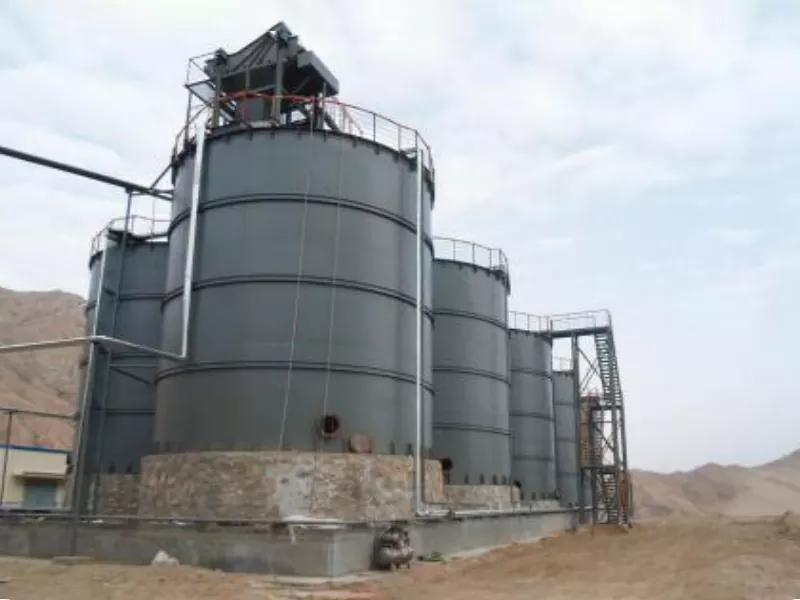
An agitation tank is more than a vessel with a spinning impeller. In real production, it’s a control point: it stabilizes what enters the next step. When the slurry density swings, solids settle, reagents are unevenly distributed, or temperature/viscosity changes, the entire line becomes “noisy.” Operators compensate by overdosing chemicals, increasing pump speed, or stopping to clear blockages—costly habits that feel necessary when mixing is unreliable.
At a functional level, an agitation tank is built to do three jobs:
- Homogenize: keep concentration consistent so sampling and dosing make sense.
- Suspend solids: prevent settling that leads to dead zones, scale buildup, and density spikes.
- Condition reactions: ensure reagents contact particles evenly before flotation, leaching, or separation.
If your line suffers from unstable grade, inconsistent recovery, or “random” plugging, mixing is often the quiet culprit. Fixing the tank design and operating method frequently delivers a bigger improvement than tweaking reagents or chasing pump upgrades.
Customer Pain Points and the Real Causes
Most agitation tank complaints sound different but share the same physics: poor circulation patterns, insufficient shear where it’s needed, or mechanical details that don’t match the slurry. Below are the pain points customers mention most—and the typical root causes behind them.
| Pain Point | Likely Root Cause | What Usually Fixes It |
|---|---|---|
| Solids settling at the bottom; frequent manual cleaning | Low tip speed, weak axial flow, missing/poor baffles, wrong impeller diameter | Axial-flow impeller + correct diameter, baffles, increased power density |
| Foaming, air entrainment, unstable density readings | Vortex formation, impeller too close to surface, excessive speed | Add baffles, adjust liquid level and impeller submergence, optimize speed |
| High reagent consumption without stable recovery | Short-circuiting flow, dead zones, poor dispersion of reagents | Better circulation pattern, multi-impeller arrangement, improved feed point |
| Excessive vibration or recurring gearbox failures | Misalignment, undersized shaft, wrong bearing/seal selection, slurry ingress | Stronger mechanical design, proper seals, alignment checks, vibration monitoring |
| Clogged pipelines downstream; pump cavitation | Density swings from settling and re-suspension, poor tank outlet design | Stable suspension, better outlet positioning, anti-settling operating window |
The key mindset shift: treat mixing as a measurable unit operation. When the tank consistently delivers uniformity, downstream problems shrink fast—because your pumps, cyclones, flotation cells, filters, or reactors stop being fed a “surprise” slurry.
Design Choices That Make or Break Results
A good agitation tank design is a set of aligned decisions. If one element conflicts with the others, you’ll feel it in power waste, maintenance headaches, or inconsistent process results. Use the points below as a reality check when comparing quotes and drawings.
- Impeller type: Axial-flow impellers excel at suspension and circulation; radial-flow impellers provide stronger shear for dispersion in some chemical applications. Many slurry duties benefit from axial or mixed-flow designs.
- Impeller diameter and speed: Bigger diameter at moderate speed often improves circulation efficiency versus a small impeller spinning aggressively. The “fastest” choice is not always the best choice.
- Baffles: Baffles reduce vortexing and convert rotational motion into useful top-to-bottom circulation. Missing baffles is one of the most common reasons tanks underperform.
- Tank geometry: Height-to-diameter ratio influences flow patterns. Very shallow tanks can struggle with vertical circulation; very tall tanks may need multi-impeller shafts.
- Drive train: Motor selection, gearbox service factor, and coupling quality matter more in abrasive slurry than many buyers expect. Reliability is usually “designed in” here.
- Shaft and bearing design: Slurry loads are unforgiving. A marginal shaft can work in water tests and fail in real solids duty.
- Seal strategy: Preventing slurry ingress protects bearings and gearboxes. If you’ve seen repeated failures, seal and bearing protection should be revisited first.
- Liners and materials: Corrosion and abrasion drive lifecycle cost. The lowest upfront cost can become the most expensive choice if it triggers frequent repairs.
Practical tip: Ask for a clear explanation of the mixing objective—suspension, homogenization, dispersion, or reaction conditioning. The best configuration depends on which outcome matters most.
Common Configurations and Where They Fit
Not all agitation tanks are built for the same job. Below is a simple comparison you can use to start narrowing options.
| Configuration | Strengths | Best Fit Scenarios |
|---|---|---|
| Single-impeller mechanical agitation | Simple, cost-effective, easy to maintain | Moderate solids, smaller volumes, straightforward conditioning |
| Dual-impeller (multi-stage) agitation | Better vertical circulation, reduced dead zones in tall tanks | Taller tanks, higher solids, stronger suspension requirement |
| High-solids slurry conditioning tank | Designed for abrasion and heavy loading | Mining slurries, thick pulp, pre-flotation or pre-leach conditioning |
| Enhanced dispersion setup | Improved reagent distribution and particle contact | When reagent efficiency and uniform chemistry are critical |
If you’re comparing suppliers, push beyond “motor power” as the headline metric. The best-performing system is the one that achieves your mixing objective at stable operating conditions with minimal mechanical stress.
How to Select the Right Tank (A Practical Checklist)
Selection goes wrong when the tank is treated like a commodity. A few missing data points can force the design into guesswork, and guesswork is expensive in slurry duty. Use this checklist to reduce risk before purchase.
- Process objective: Are you trying to suspend solids, homogenize density, disperse reagents, or condition a reaction?
- Slurry properties: Solids percentage, particle size distribution, abrasiveness, viscosity, temperature, and corrosiveness.
- Required residence time: How long must material stay mixed to reach stable chemistry or uniform concentration?
- Throughput and variability: Peak flow, minimum flow, and expected fluctuations over shifts.
- Installation constraints: Headroom, access for maintenance, crane capability, foundation requirements, and allowable noise/vibration limits.
- Materials and wear strategy: Liner type, anti-corrosion measures, and the plan for wear-part replacement.
- Instrumentation needs: Level, density, pH/ORP (if relevant), temperature, and interlocks for safe operation.
- Lifecycle support: Spare parts availability, service response, and clarity of maintenance documentation.
Many buyers also benefit from a supplier who can translate process goals into a stable mixing window. This is where experienced manufacturers such as Qingdao EPIC Mining Machinery Co.,Ltd. typically focus: not just delivering equipment, but helping the tank behave predictably under real slurry fluctuations.
Installation, Commissioning, and Operator Habits
Even a well-designed agitation tank can underperform if it’s installed casually. The first weeks of operation often determine whether the tank becomes “set and forget” or a permanent trouble spot.
- Alignment checks: Confirm shaft alignment, coupling condition, and base level before first run. Misalignment quietly increases vibration and shortens gearbox life.
- Correct liquid level: Many tanks need sufficient submergence above the impeller. Running too low can cause vortexing, air entrainment, and unstable density.
- Feed point matters: Where you introduce slurry or reagents changes the circulation pattern. Poor placement can cause short-circuiting (material exits before it’s properly conditioned).
- Ramp-up discipline: Start at safe speeds, confirm stable circulation, then adjust toward your target window. Fast starts on heavy slurry can shock the drive train.
- Operator playbook: Define what “normal” looks like: sound, vibration, amperage, and slurry appearance. When operators can spot drift early, failures become rare.
Small habit, big impact: Track motor current alongside density or solids percentage. A steady relationship usually indicates stable mixing; a drifting relationship often signals settling, wear, or air entrainment.
Maintenance That Prevents Downtime
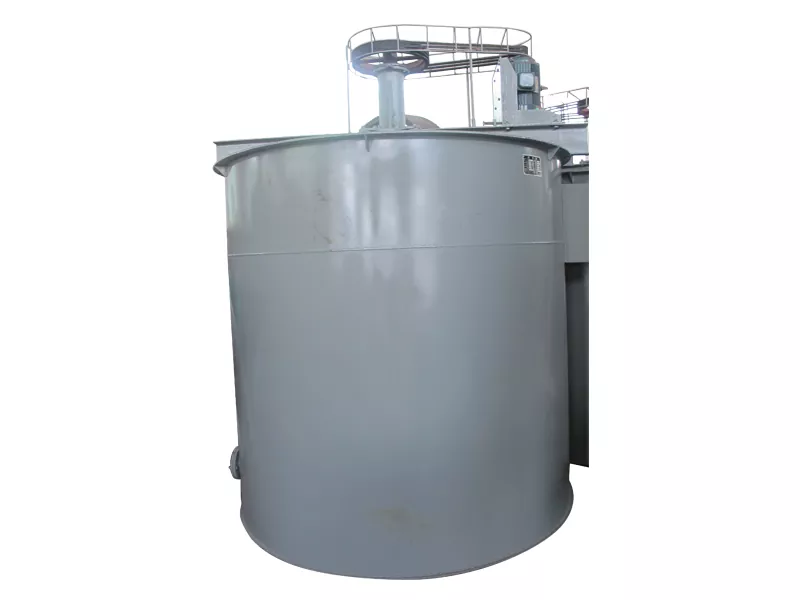
Slurry mixing is tough, but it doesn’t have to be unpredictable. Most unplanned stops come from repeatable patterns: wear-part neglect, seal failures, lubrication gaps, and vibration that went unaddressed for weeks.
Recommended maintenance rhythm:
- Daily: check unusual noise, visible leakage, motor current trend, and slurry level stability.
- Weekly: inspect coupling and guard, confirm fasteners, check gearbox condition indicators, verify baffle integrity if accessible.
- Monthly: review vibration trend, inspect seals more closely, confirm lubrication schedule compliance, check for internal buildup signs.
- Quarterly: planned inspection of impeller wear and liner condition (frequency depends on abrasiveness and duty cycle).
What to document: wear measurements, vibration readings, oil condition, seal replacements, and any operating changes. A simple log turns “random failures” into predictable maintenance planning.
FAQ
1) How do I know if my agitation tank is underpowered?
Common signs include persistent bottom settling, unstable density at the outlet, reagent overdosing to “force” recovery, and frequent downstream plugging. If increasing speed helps only briefly, the issue may be impeller selection, baffles, or circulation pattern—not just motor size.
2) Why does my tank form a vortex and pull air?
Vortexing often happens when baffles are missing or ineffective, the liquid level is too low, or the impeller is too close to the surface. Air entrainment can cause foam, density noise, and process instability.
3) Is higher speed always better for mixing slurry?
No. Higher speed can increase wear, energy cost, and air entrainment. Many slurry applications perform better with an efficient impeller diameter, correct baffles, and a stable speed that achieves suspension without excessive turbulence.
4) When should I use a dual-impeller design?
Dual-impeller setups are common when tanks are tall, volumes are large, or solids are high and you need stronger top-to-bottom circulation. They help reduce dead zones and improve overall uniformity.
5) What information should I provide to get an accurate recommendation?
At minimum: throughput range, solids percentage, particle size distribution, slurry temperature/viscosity, corrosiveness/abrasiveness, required residence time, and the process objective (suspension vs. dispersion vs. reaction conditioning).
Final Takeaways
- Most “process instability” linked to slurries is actually a mixing stability issue in disguise.
- Impeller choice, baffles, geometry, and sealing strategy often matter more than simply increasing motor power.
- Commissioning discipline and basic trend tracking (current, vibration, density) dramatically reduce downtime.
- A clear selection checklist prevents expensive redesigns and recurring operational headaches.
If your current tank is causing settling, density swings, or rising maintenance costs, it’s usually fixable with the right configuration and operating window. Share your slurry details and process targets, and we’ll help you map a practical, reliable solution—contact us to get started.
Send Inquiry



X
We use cookies to offer you a better browsing experience, analyze site traffic and personalize content. By using this site, you agree to our use of cookies.
Privacy Policy