 English
 Español
 Português
 русский
 Français
 日本語
 Deutsch
 tiếng Việt
 Italiano
 Nederlands
 ภาษาไทย
 Polski
 한국어
 Svenska
 magyar
 Malay
 বাংলা ভাষার
 Dansk
 Suomi
 हिन्दी
 Pilipino
 Türkçe
 Gaeilge
 العربية
 Indonesia
 Norsk
 تمل
 český
 ελληνικά
 український
 Javanese
 فارسی
 தமிழ்
 తెలుగు
 नेपाली
 Burmese
 български
 ລາວ
 Latine
 Қазақша
 Euskal
 Azərbaycan
 Slovenský jazyk
 Македонски
 Lietuvos
 Eesti Keel
 Română
 Slovenski
 मराठी
 Srpski језик


How Can a Numerical Control Dosing Machine Improve Precision and Efficiency in Mineral Processing
Article Summary: Accurate reagent dosing is essential for stable mineral processing, consistent flotation performance, and efficient resource utilization. A Numerical Control Dosing Machine uses digital control and programmable operating parameters to help mining operators manage dosing quantities, improve repeatability, and reduce unnecessary reagent consumption. This guide explains how the technology works, its main advantages, practical applications, equipment selection criteria, and maintenance requirements, helping mineral processing plants make informed purchasing decisions.
EPIC provides mineral processing equipment and intelligent control solutions designed to support demanding industrial workflows. A Numerical Control Dosing Machine can help mining operations move beyond manual reagent addition toward more consistent, controllable, and data-informed dosing practices. By matching equipment configuration and control logic to actual process requirements, operators can improve operational stability while managing reagent usage and production costs.
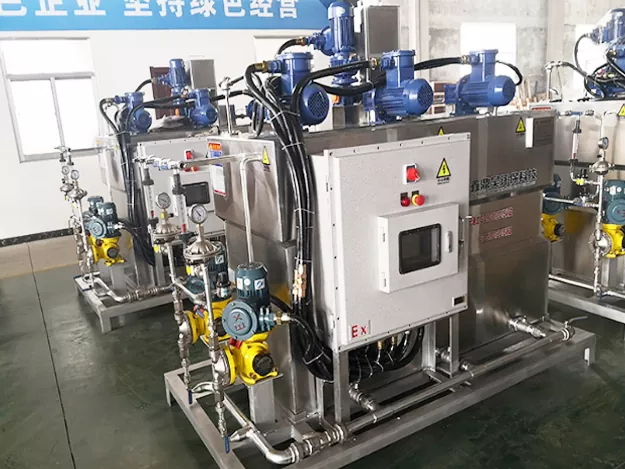
Table of Contents
- What Is a Numerical Control Dosing Machine?
- How Does the Machine Work?
- Key Benefits of Numerical Control Dosing
- Where Is Numerical Control Dosing Used?
- Manual Dosing vs. Numerical Control Dosing
- How to Choose the Right Dosing Machine
- Operation and Maintenance Best Practices
- Frequently Asked Questions
- Conclusion: Building a More Efficient Dosing Process
What Is a Numerical Control Dosing Machine?
A Numerical Control Dosing Machine is an automated dosing system that uses digital control technology to regulate the delivery of reagents or other process materials according to predefined operating parameters. In mineral processing, it can be integrated into workflows where consistent chemical addition is necessary to maintain process conditions and support efficient separation.
Unlike purely manual dosing, which depends heavily on operator judgment and repeated adjustments, numerical control allows users to define dosing quantities, intervals, cycles, and other available parameters through a control interface. The machine then executes the programmed instructions according to its configured capabilities.
For mineral processing plants, this approach is particularly relevant when reagent requirements vary with ore characteristics, production targets, or operating conditions. A programmable system can help operators standardize recurring procedures while retaining the flexibility to modify settings when process requirements change.
EPIC offers mineral processing equipment and related automation solutions. Buyers evaluating its Numerical Control Dosing Machine should confirm the available control functions, dosing range, installation requirements, and compatibility with their specific beneficiation process before ordering.
How Does the Machine Work?
The working principle of a numerical control dosing system combines parameter configuration, control processing, and mechanical dosing execution. Depending on the selected configuration, the system may operate independently or connect with a broader plant automation system.
- Parameter configuration: Operators establish the required dosing quantity, operating interval, cycle, and other supported settings based on process requirements.
- Digital control: The control unit processes the configured instructions and coordinates the operation of the dosing components.
- Dosing execution: Pumps, valves, feeders, or other compatible mechanisms deliver the specified material according to the programmed sequence.
- Process monitoring: Available displays and instruments help operators review operating status and identify deviations that require attention.
- Adjustment and optimization: Operators refine settings based on process observations, laboratory results, and production performance.
It is important to distinguish programmed dosing from fully closed-loop control. A programmable machine can execute preset instructions, but automatic correction based on real-time process measurements requires compatible sensors, feedback logic, and control integration. Buyers should verify these functions rather than assume they are included in every model.
What Are the Key Benefits of Numerical Control Dosing?
1. More Consistent Dosing
Repeated manual dosing can introduce variations caused by operator technique, timing, and workload. Digital control helps standardize recurring dosing sequences, making it easier to maintain consistent operating procedures across shifts and production batches.
2. Better Reagent Management
Reagents are an important operating expense in many beneficiation processes. More controlled addition can help reduce unnecessary over-dosing and improve the ability to evaluate reagent consumption. Actual savings depend on ore characteristics, reagent selection, process control, and the accuracy of the complete dosing system.
3. Flexible Process Configuration
Programmable dosing equipment can be useful when a plant handles different ore types or changes its operating procedures. Where supported, stored programs and adjustable parameters allow operators to select or revise dosing sequences without rebuilding the entire process arrangement.
4. Reduced Dependence on Manual Intervention
Automated execution can reduce repetitive operator tasks and help personnel focus on process supervision, inspection, and optimization. It may also reduce direct contact with certain chemicals when the overall system is appropriately designed and installed.
5. Improved Operational Management
When dosing equipment is integrated with suitable monitoring systems, operating information can support troubleshooting, maintenance planning, and process comparisons. This information becomes more useful when recorded consistently and evaluated alongside production and laboratory data.
Where Is a Numerical Control Dosing Machine Used?
Numerical control dosing is relevant to industrial processes that depend on controlled material addition. In mineral processing, the most important applications involve reagent preparation, conditioning, and separation operations.
- Flotation plants: Controlled addition of collectors, frothers, and other compatible flotation reagents according to the selected process strategy.
- Grinding and classification circuits: Support for reagent addition where chemical conditioning is required as part of the processing flow.
- Mineral conditioning systems: Repeatable dosing before downstream separation or treatment stages.
- Water treatment: Controlled chemical addition in compatible industrial treatment processes, subject to material and equipment suitability.
- Pilot plants and process trials: Standardized dosing sequences that help operators compare operating conditions during testing.
Application suitability depends on reagent properties, required flow rates, chemical compatibility, environmental conditions, and process design. A dosing machine intended for one material should not automatically be assumed suitable for every chemical or slurry. Confirm these requirements with the equipment supplier before finalizing the configuration.
Manual Dosing vs. Numerical Control Dosing: What Is the Difference?
The most suitable dosing approach depends on production scale, process complexity, accuracy requirements, and the resources available for operation. The following table summarizes typical differences.
| Evaluation Factor | Manual Dosing | Numerical Control Dosing |
|---|---|---|
| Operating method | Operator-controlled addition | Digitally configured dosing sequence |
| Repeatability | Depends strongly on operator consistency | Supports standardized execution of programmed settings |
| Parameter changes | Adjusted manually | Changed through supported control functions |
| Labor requirements | Can require frequent direct intervention | Can reduce repetitive dosing tasks |
| Process monitoring | May rely on manual records and observation | May provide digital status information, depending on configuration |
| Integration potential | Usually limited without additional equipment | Can support broader automation when compatible interfaces are available |
| Initial investment | Often lower for simple operations | May require higher upfront equipment and integration costs |
| Best suited to | Simple, low-volume, or infrequent dosing tasks | Repeated, variable, or process-critical dosing operations |
Numerical control is not automatically the best choice for every facility. The investment is most compelling when improved consistency, reduced manual workload, and better process control can deliver measurable operational value.
How to Choose the Right Numerical Control Dosing Machine
Before selecting a machine, define the dosing task in measurable terms. A clear specification helps suppliers recommend an appropriate configuration and reduces the risk of buying equipment that cannot meet actual operating conditions.
Key Selection Criteria
- Dosing range and accuracy: Establish the minimum and maximum required quantities, acceptable deviation, and calibration method.
- Material characteristics: Identify chemical composition, viscosity, concentration, abrasiveness, corrosiveness, and any suspended solids.
- Control requirements: Determine whether preset programs are sufficient or whether sensor feedback, automatic adjustment, alarms, or remote monitoring are necessary.
- Production capacity: Match dosing throughput and cycle frequency to the plant's actual process demand.
- Environmental conditions: Assess dust, moisture, temperature, vibration, and any hazardous-area requirements.
- Integration compatibility: Confirm electrical supply, communication interfaces, installation dimensions, and compatibility with existing plant controls.
- Maintenance and service: Review calibration access, spare-part availability, technical support, operator training, and maintenance intervals.
Questions to Discuss With the Supplier
When evaluating an EPIC dosing solution, prepare the following information for a technical discussion:
- What material or reagent needs to be dosed, and what are its physical and chemical properties?
- What are the required dosing quantity, operating frequency, and acceptable accuracy?
- Will the machine operate continuously, intermittently, or according to multiple stored programs?
- Does the process require closed-loop feedback or integration with a plant control system?
- What commissioning, calibration, training, and after-sales services are available?
For model-specific details, review the EPIC Numerical Control Dosing Machine product information and request written confirmation of the specifications relevant to your application.
How Can Operators Maintain Reliable Dosing Performance?
Even a well-designed dosing system requires regular inspection. Mechanical wear, clogged pipelines, changes in material properties, and incorrect parameter settings can affect dosing performance over time.
Recommended Maintenance Practices
- Verify dosing accuracy: Perform calibration checks at a frequency appropriate to the material, process risk, and operating conditions.
- Inspect pipelines and valves: Check for leaks, blockages, residue buildup, and signs of chemical attack.
- Review control settings: Confirm that active programs, dosing intervals, and target quantities match approved operating procedures.
- Protect program records: Back up supported configurations and maintain clear records of approved parameter changes.
- Inspect electrical components: Check connections, displays, sensors, and control components according to the manufacturer's instructions.
- Train operators: Ensure personnel understand safe material handling, startup and shutdown procedures, alarms, and emergency responses.
Maintenance schedules should follow the manufacturer's documentation and the actual service conditions. Before cleaning or servicing the machine, isolate relevant energy sources and follow the site's chemical-handling and lockout procedures.
Frequently Asked Questions About Numerical Control Dosing Machines
1. What is the main purpose of a Numerical Control Dosing Machine?
Its main purpose is to regulate material addition through digitally configured dosing parameters. In mineral processing, this can help standardize reagent dosing and support more stable operating conditions.
2. Can a numerical control dosing system reduce reagent waste?
It can help reduce unnecessary addition by improving dosing consistency and making operating settings easier to manage. The actual reduction depends on the existing process, reagent characteristics, calibration, and the effectiveness of process monitoring.
3. Is a Numerical Control Dosing Machine suitable for flotation plants?
It can be suitable for flotation applications when its dosing range, material-contact components, control functions, and capacity match the process requirements. The supplier should confirm compatibility with the specific reagents and operating conditions.
4. Does numerical control automatically mean closed-loop dosing?
No. Numerical control may execute preset parameters without continuously measuring the process response. Closed-loop operation requires suitable sensors, feedback signals, and control logic in addition to compatible dosing hardware.
5. What information is needed to select a dosing machine?
Important details include the material to be dosed, required quantity and accuracy, operating frequency, chemical properties, environmental conditions, available utilities, and any integration requirements.
6. How often should dosing equipment be calibrated?
Calibration frequency depends on the equipment design, process criticality, material characteristics, and observed performance. Follow the manufacturer's recommendations and increase inspection frequency when process results indicate possible dosing deviations.
7. Can EPIC provide technical assistance for equipment selection?
EPIC provides mineral processing equipment and related technical services. Buyers should contact the company to confirm the available machine configuration, application suitability, customization options, installation support, and service arrangements for their project.
Conclusion: Building a More Efficient Dosing Process
A Numerical Control Dosing Machine can help mineral processing plants improve dosing repeatability, reduce repetitive manual work, and manage reagent addition more systematically. Its value depends on selecting suitable dosing hardware, defining realistic control parameters, maintaining calibration, and integrating the machine appropriately with the wider production process.
For mining operators planning to upgrade reagent dosing or improve process consistency, EPIC offers a starting point for discussing equipment options and application requirements. Review your material properties, target dosing range, and control objectives before making a final selection. Visit the EPIC product page for further information, and contact us to discuss your project requirements, request a suitable configuration, and explore a practical dosing solution for your mineral processing operation.
Send Inquiry



X
We use cookies to offer you a better browsing experience, analyze site traffic and personalize content. By using this site, you agree to our use of cookies.
Privacy Policy