 English
 Español
 Português
 русский
 Français
 日本語
 Deutsch
 tiếng Việt
 Italiano
 Nederlands
 ภาษาไทย
 Polski
 한국어
 Svenska
 magyar
 Malay
 বাংলা ভাষার
 Dansk
 Suomi
 हिन्दी
 Pilipino
 Türkçe
 Gaeilge
 العربية
 Indonesia
 Norsk
 تمل
 český
 ελληνικά
 український
 Javanese
 فارسی
 தமிழ்
 తెలుగు
 नेपाली
 Burmese
 български
 ລາວ
 Latine
 Қазақша
 Euskal
 Azərbaycan
 Slovenský jazyk
 Македонски
 Lietuvos
 Eesti Keel
 Română
 Slovenski
 मराठी
 Srpski језик


How Can an Electric Magnetic Iron Remover Improve Industrial Material Purity and Production Efficiency
Article Summary: Removing unwanted ferrous contaminants is essential for maintaining material quality, protecting processing equipment, and improving production efficiency in modern industrial operations. An Electric Magnetic Iron Remover provides an effective solution for separating iron impurities from materials transported along conveyor systems. Designed for demanding environments such as mining, mineral processing, construction materials, chemical production, and recycling, this equipment helps reduce contamination risks and equipment damage. This article explores its working principles, major features, technical specifications, industrial applications, selection criteria, and maintenance practices, while introducing the solutions offered by EPIC.
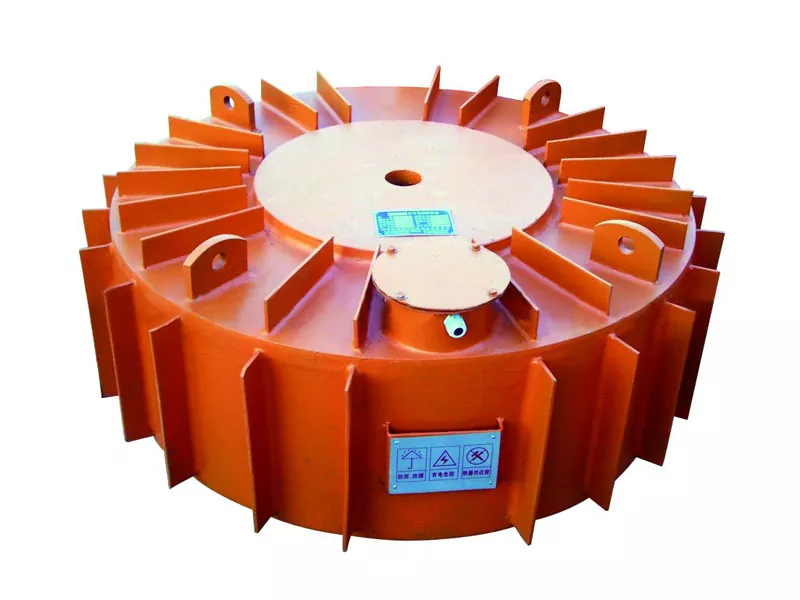
Table of Contents
1. Why Is Iron Removal Important in Industrial Processing?
2. How Does an Electric Magnetic Iron Remover Work?
3. What Are the Key Features of an Electric Magnetic Iron Remover?
4. Technical Specifications and Model Comparison
5. Which Industries Benefit from Magnetic Iron Removal Equipment?
6. How to Choose the Right Magnetic Iron Remover?
7. Advantages Over Conventional Iron Removal Methods
8. Installation, Operation, and Maintenance Guidelines
9. Why Choose EPIC Mining Equipment?
10. Frequently Asked Questions
1. Why Is Iron Removal Important in Industrial Processing?
In industrial production, unwanted ferrous materials can enter raw materials during mining, transportation, crushing, grinding, and material handling. These contaminants may include iron fragments, steel pieces, worn equipment components, and other magnetic impurities.
Although some metallic contaminants are relatively small, their presence can create significant problems throughout a production line. For example, metal fragments entering crushers or grinding equipment may cause excessive wear, mechanical damage, and unexpected shutdowns. In industries that require consistent raw material quality, iron contamination can also affect the final product.
An Electric Magnetic Iron Remover helps address these challenges by generating a magnetic field that attracts and separates ferrous materials from moving material streams.
Installing suitable magnetic separation equipment offers several operational benefits:
- Equipment protection: Helps prevent iron-containing foreign objects from entering downstream machinery.
- Product quality improvement: Reduces unwanted ferrous contamination in processed materials.
- Production continuity: Minimizes equipment interruptions caused by metallic impurities.
- Lower maintenance costs: Reduces the potential for damage to crushers, conveyors, and other processing equipment.
- Improved operational safety: Helps control metallic contamination throughout material transportation.
For mining companies and industrial manufacturers, effective iron removal is therefore an important part of a reliable material handling strategy.
2. How Does an Electric Magnetic Iron Remover Work?
An Electric Magnetic Iron Remover uses an electrically generated magnetic field to attract ferrous contaminants from materials moving along a conveyor belt or similar transportation system.
Unlike permanent magnetic equipment, an electromagnetic separator produces its magnetic field through an energized excitation coil. This allows the equipment to provide continuous magnetic separation during normal production operations.
Understanding the Separation Process
The working process generally involves the following stages:
- Material transportation: Raw materials move along a conveyor belt beneath or through the effective magnetic separation area.
- Magnetic field generation: Electrical current passes through the excitation coil, generating a magnetic field.
- Iron attraction: Ferrous particles within the material stream are attracted toward the magnetic equipment.
- Contaminant separation: Captured iron is separated from the main material flow.
- Iron discharge: Depending on the equipment configuration, captured iron can be removed manually or discharged automatically using an unloading belt system.
The actual separation performance depends on several factors, including magnetic field strength, installation height, material thickness, conveyor speed, particle characteristics, and the quantity of iron contaminants.
For continuous industrial applications, selecting the appropriate cooling method and iron unloading configuration is particularly important.
3. What Are the Key Features of an Electric Magnetic Iron Remover?
A high-quality Electric Magnetic Iron Remover should combine reliable magnetic performance, durable construction, convenient maintenance, and compatibility with different production environments.
EPIC's equipment series is designed for demanding mineral processing and industrial material handling applications, offering several practical features.
3.1 High Operational Reliability
Industrial separation equipment must operate consistently under demanding working conditions. EPIC magnetic iron removal equipment features a robust construction intended for continuous heavy-duty applications, helping reduce unexpected interruptions and maintain stable production.
3.2 Flexible Cooling Configurations
Different industrial environments have different heat dissipation requirements. The equipment series provides two cooling configurations:
- Forced air cooling: Uses a fan-assisted cooling arrangement to improve heat dissipation during operation.
- Natural air cooling: Relies on natural heat dissipation and offers an alternative configuration for suitable operating conditions.
Choosing between these configurations should depend on the operating environment, equipment duty cycle, ambient temperature, and maintenance requirements.
3.3 Optional Automatic Iron Unloading
Some models are equipped with an automatic iron unloading arrangement. This configuration helps remove captured ferrous contaminants without requiring frequent manual cleaning.
For production lines handling large material volumes or significant quantities of metallic impurities, automatic unloading can improve operational convenience and reduce labor requirements.
3.4 Low-Noise Operation
The specially engineered magnetic system is designed to minimize fan noise, contributing to a more comfortable industrial working environment.
3.5 Convenient Installation and Maintenance
Equipment installation and maintenance directly affect long-term operating costs. EPIC's design focuses on practical installation, accessible inspection, and reduced routine maintenance requirements.
4. Technical Specifications and Model Comparison
Choosing an appropriate magnetic separator requires evaluating its technical parameters against the actual production conditions. EPIC provides multiple models with different belt widths, excitation power ratings, suspension heights, and equipment weights.
The following table summarizes the technical specifications published for the Electric Magnetic Iron Remover series.
| Model | Cooling Configuration | Belt Width (mm) | Excitation Power (kW) | Hanging Height (mm) | Material Thickness (mm) | Belt Speed (m/s) | Weight (kg) |
|---|---|---|---|---|---|---|---|
| RCDA-5 | Forced Air Cooling | 500 | 1.0 | 150 | ≤100 | ≤2.5 | 450 |
| RCDA-6 | Forced Air Cooling | 600 | 1.6 | 175 | ≤150 | ≤2.5 | 620 |
| RCDA-8 | Forced Air Cooling | 800 | 2.0 | 250 | ≤200 | ≤2.5 | 960 |
| RCDB-5 | Natural Air Cooling | 500 | 0.1 | 150 | ≤110 | ≤2.5 | 400 |
| RCDB-6 | Natural Air Cooling | 600 | 1.6 | 175 | ≤140 | ≤2.5 | 600 |
| RCDB-8 | Natural Air Cooling | 800 | 3.0 | 250 | ≤200 | ≤2.5 | 950 |
| RCDC-5 | Forced Air Cooling with Automatic Iron Unloading | 500 | 1.2 | 150 | ≤100 | ≤2.5 | 1100 |
| RCDC-6 | Forced Air Cooling with Automatic Iron Unloading | 600 | 2.0 | 175 | ≤150 | ≤2.5 | 1300 |
| RCDC-8 | Forced Air Cooling with Automatic Iron Unloading | 800 | 3.5 | 250 | ≤200 | ≤2.5 | 2200 |
| RCDD-5 | Natural Air Cooling with Automatic Iron Unloading | 500 | 0.1 | 150 | ≤110 | ≤2.5 | 1000 |
| RCDD-6 | Natural Air Cooling with Automatic Iron Unloading | 600 | 1.8 | 175 | ≤140 | ≤2.5 | 1350 |
| RCDD-8 | Natural Air Cooling with Automatic Iron Unloading | 800 | 3.0 | 250 | ≤200 | ≤2.5 | 1600 |
Note: Specifications are based on the manufacturer's published product information. The original product table contains some formatting inconsistencies in the cooling and unloading descriptions. Confirm the final model configuration, electrical requirements, and operating parameters with EPIC before placing an order.
How Should Buyers Interpret These Parameters?
- Belt width: Determines the nominal equipment width and helps establish compatibility with the conveyor system.
- Excitation power: Indicates the electrical power requirement of the magnetic excitation system.
- Hanging height: Refers to the equipment's suspension height parameter and should be considered alongside the actual magnetic working gap.
- Material thickness: Indicates the published material-layer thickness limit for the corresponding model.
- Belt speed: Provides a reference for conveyor-related operating conditions.
- Equipment weight: Helps engineers evaluate the supporting structure and installation requirements.
For an accurate selection, buyers should provide conveyor dimensions, material characteristics, expected throughput, and iron contamination conditions.
5. Which Industries Benefit from Magnetic Iron Removal Equipment?
An Electric Magnetic Iron Remover is suitable for various industries where ferrous contamination must be controlled during material transportation and processing.
5.1 Mining and Mineral Processing
Mining operations frequently transport ores containing unwanted metallic impurities. Magnetic iron removal equipment helps separate ferrous contaminants before they enter crushers, grinding mills, and other downstream processing machinery.
This is particularly useful in mineral processing facilities that require equipment protection and stable material quality.
5.2 Construction Materials Manufacturing
Sand, gravel, aggregates, and cement-related production processes may contain metallic debris originating from raw materials or equipment wear.
Installing magnetic separation equipment in suitable conveyor locations helps reduce ferrous contamination and protect subsequent processing equipment.
5.3 Chemical Industry
Chemical manufacturers often require consistent raw material purity. Magnetic iron removal can help eliminate unwanted iron particles from suitable powders and granular materials before further processing.
5.4 Recycling Industry
Recycling facilities handle mixed material streams containing different types of metallic and non-metallic waste. Electromagnetic separation provides a practical method for recovering ferrous materials and reducing metal contamination in selected recycling processes.
Typical Application Scenarios
| Industry | Typical Material | Main Separation Objective | Operational Benefit |
|---|---|---|---|
| Mining | Ore and mineral aggregates | Remove ferrous contaminants | Protect crushing equipment |
| Construction | Sand, gravel, and aggregates | Reduce metallic impurities | Improve material cleanliness |
| Chemical Production | Powders and granules | Control iron contamination | Support raw material quality |
| Recycling | Mixed industrial waste | Separate recoverable ferrous materials | Improve material sorting |
6. How to Choose the Right Magnetic Iron Remover?
Selecting an Electric Magnetic Iron Remover should involve more than comparing equipment prices or nominal belt widths. Buyers need to evaluate the complete material handling process to ensure that the selected model meets actual operating requirements.
Important Selection Factors
- Conveyor belt width: Select a suitable equipment configuration based on the conveyor dimensions and material coverage requirements.
- Material layer thickness: Consider the maximum thickness of the transported material because thicker layers can make it more difficult to capture deeply buried iron particles.
- Material characteristics: Evaluate particle size, bulk density, moisture content, and the distribution of ferrous contaminants.
- Conveyor operating speed: Ensure compatibility between the separation equipment and the actual conveying conditions.
- Cooling requirements: Choose forced air cooling or natural air cooling according to operating temperature and duty cycle.
- Automatic unloading requirements: Consider automatic iron discharge when continuous production or high contamination levels make manual cleaning impractical.
- Installation conditions: Check available space, supporting structure, electrical supply, and maintenance access.
Practical Questions Before Purchasing
Before requesting a quotation, industrial buyers should prepare the following information:
- What is the conveyor belt width?
- What is the maximum material layer thickness?
- What is the actual conveyor belt speed?
- What type of ferrous contaminants need to be removed?
- What is the expected material processing capacity?
- Does the production line require automatic iron unloading?
- What are the ambient temperature and installation conditions?
Providing these details allows the manufacturer to evaluate the application and recommend a more appropriate equipment configuration.
7. Advantages Over Conventional Iron Removal Methods
Different magnetic separation technologies are designed for different production conditions. Compared with basic manual iron removal or magnetic equipment without automatic unloading, a properly configured Electric Magnetic Iron Remover can offer several operational advantages.
7.1 More Consistent Separation
Electromagnetic equipment provides a controlled magnetic field for capturing ferrous materials during conveyor operation. Its performance can be evaluated and adjusted according to material thickness, working distance, and contamination conditions.
7.2 Better Production Efficiency
Continuous magnetic separation reduces the need to stop production frequently for manual inspection and iron removal, especially when an automatic unloading configuration is selected.
7.3 Reduced Equipment Damage
Removing ferrous foreign objects before they reach sensitive downstream machinery helps reduce the risk of damage to crushers, grinding mills, and conveying systems.
7.4 Flexible Production Line Integration
Different models and belt-width configurations provide options for integrating magnetic separation equipment into new or existing production lines.
7.5 Easier Operational Management
Suitable cooling configurations and optional automatic unloading allow operators to select equipment according to production requirements and maintenance capabilities.
However, electromagnetic separation is not suitable for every contaminant. Non-magnetic metals such as aluminum and copper generally require other separation technologies.
8. Installation, Operation, and Maintenance Guidelines
Correct installation and regular maintenance are essential for ensuring the long-term performance of an Electric Magnetic Iron Remover.
8.1 Installation Recommendations
- Position the equipment above the conveyor or material flow line according to the manufacturer's installation recommendations.
- Ensure that the supporting structure can safely withstand the equipment weight and operating loads.
- Maintain stable electrical connections and appropriate grounding.
- Adjust the magnetic working distance according to the material thickness and separation requirements.
- Allow sufficient space for inspection, cleaning, and maintenance activities.
- Verify that the conveyor arrangement and discharge system are compatible with the selected equipment.
8.2 Routine Maintenance Checklist
| Inspection Item | Recommended Action | Purpose |
|---|---|---|
| Magnetic components | Inspect for damage or abnormal conditions | Maintain magnetic system reliability |
| Conveyor belt | Check tension, alignment, and wear | Ensure stable operation |
| Cooling system | Check fan operation and airflow where applicable | Support effective heat dissipation |
| Electrical connections | Inspect wiring, terminals, and grounding | Maintain electrical safety |
| Moving components | Inspect and lubricate according to the manual | Reduce friction and mechanical wear |
| Iron unloading system | Check belt condition and discharge operation | Maintain reliable automatic unloading |
Maintenance frequency should be determined by operating hours, environmental conditions, material characteristics, and manufacturer recommendations.
Before servicing the equipment, operators should disconnect and isolate the electrical supply, follow lockout procedures, and comply with the manufacturer's safety instructions. Appropriate personal protective equipment should always be used.
9. Why Choose EPIC Mining Equipment?
Choosing a magnetic separation equipment manufacturer is an important purchasing decision. Beyond equipment specifications, buyers should consider engineering capabilities, manufacturing quality, technical communication, and after-sales support.
EPIC Mining Equipment provides industrial mineral processing equipment designed for mining and material handling applications. Its Electric Magnetic Iron Remover series offers multiple model configurations to accommodate different conveyor widths, cooling requirements, and iron unloading needs.
Key Reasons to Consider EPIC
- Industrial equipment expertise: Experience in designing and manufacturing mineral processing machinery for demanding applications.
- Multiple equipment configurations: Different models are available with forced air cooling, natural air cooling, and optional automatic iron unloading.
- Engineering and manufacturing capabilities: The company highlights CNC-manufactured components and precision engineering in its equipment production.
- Quality management: The company reports ISO 9001:2015 quality management system certification and multiple utility patents.
- International market experience: EPIC equipment has been exported to markets including Russia, Kazakhstan, Tanzania, Chile, Namibia, and Zimbabwe.
- Technical and after-sales assistance: Customers can obtain installation guidance, technical support, and maintenance assistance.
For buyers comparing magnetic separation equipment suppliers, working directly with a manufacturer helps clarify model selection, installation requirements, and technical specifications before procurement.
To learn more about the product, visit the official EPIC Electric Magnetic Iron Remover product page.
Buyers interested in other material separation solutions can also explore EPIC's mining equipment and mineral processing machinery range.
10. Frequently Asked Questions
Q1: What is an Electric Magnetic Iron Remover?
An Electric Magnetic Iron Remover is industrial magnetic separation equipment that uses an electrically generated magnetic field to attract and remove ferrous contaminants from materials transported along conveyor systems. It is commonly used in mining, mineral processing, construction materials manufacturing, and recycling applications.
Q2: What materials can an Electric Magnetic Iron Remover separate?
It is primarily designed to remove magnetic iron-containing materials, including iron fragments, steel pieces, and other ferrous contaminants. It is not intended to directly separate all non-ferrous metals or non-magnetic impurities.
Q3: What is the difference between forced air cooling and natural air cooling?
Forced air cooling uses a fan-assisted system to improve heat dissipation, while natural air cooling relies on natural heat transfer. The appropriate option depends on operating conditions, thermal requirements, duty cycle, and the equipment model.
Q4: Does an Electric Magnetic Iron Remover support automatic iron unloading?
Yes. Selected configurations in EPIC's product series include automatic iron unloading. These models help remove captured ferrous contaminants during operation, reducing the need for frequent manual cleaning and improving production convenience.
Q5: How do I select the correct model for my conveyor system?
Start by evaluating conveyor belt width, material thickness, conveyor speed, material characteristics, and iron contamination levels. You should also determine whether forced air cooling or natural air cooling is more suitable and whether automatic iron unloading is necessary. Providing these details to the manufacturer will help identify an appropriate model.
Q6: Can magnetic iron removal equipment protect crushers and grinding mills?
Yes. When installed at an appropriate upstream position, magnetic iron removal equipment can capture ferrous foreign objects before they enter crushers, grinding mills, and other downstream machinery. This helps reduce the risk of mechanical damage and unplanned maintenance.
Q7: What maintenance does an Electric Magnetic Iron Remover require?
Routine maintenance generally includes checking the magnetic components, conveyor belt, cooling system, electrical connections, moving parts, and automatic unloading mechanism where applicable. Inspection frequency should follow the operating manual and actual working conditions.
Q8: Why should industrial buyers choose EPIC as their magnetic iron remover supplier?
EPIC offers multiple equipment models, different cooling configurations, and optional automatic iron unloading. The company also highlights its manufacturing capabilities, ISO 9001:2015 quality management certification, international project experience, and technical support services. Buyers can communicate their production requirements directly to EPIC to discuss suitable equipment configurations.
11. Conclusion
An Electric Magnetic Iron Remover is an important component in modern industrial material handling systems. By attracting and separating unwanted ferrous contaminants, it helps protect downstream machinery, improve material cleanliness, reduce maintenance interruptions, and support more consistent production operations.
When selecting equipment, manufacturers and industrial buyers should carefully evaluate conveyor dimensions, material characteristics, excitation power, cooling configurations, working distance, and automatic iron unloading requirements. Proper installation and preventive maintenance are equally important for achieving reliable long-term operation.
EPIC Mining Equipment provides a range of electromagnetic iron removal solutions designed for mining, mineral processing, construction materials, chemical production, and recycling applications. Whether you are upgrading an existing conveyor system or planning a new processing facility, EPIC can help you evaluate suitable equipment configurations based on your actual operating conditions. If you are looking for a reliable Electric Magnetic Iron Remover manufacturer and supplier, visit the official product page and contact us today to discuss your technical requirements, request detailed specifications, and obtain a customized quotation for your project.
Send Inquiry



X
We use cookies to offer you a better browsing experience, analyze site traffic and personalize content. By using this site, you agree to our use of cookies.
Privacy Policy