 English
 Español
 Português
 русский
 Français
 日本語
 Deutsch
 tiếng Việt
 Italiano
 Nederlands
 ภาษาไทย
 Polski
 한국어
 Svenska
 magyar
 Malay
 বাংলা ভাষার
 Dansk
 Suomi
 हिन्दी
 Pilipino
 Türkçe
 Gaeilge
 العربية
 Indonesia
 Norsk
 تمل
 český
 ελληνικά
 український
 Javanese
 فارسی
 தமிழ்
 తెలుగు
 नेपाली
 Burmese
 български
 ລາວ
 Latine
 Қазақша
 Euskal
 Azərbaycan
 Slovenský jazyk
 Македонски
 Lietuvos
 Eesti Keel
 Română
 Slovenski
 मराठी
 Srpski језик


How Can a Screw Conveyor Improve Bulk Material Handling Efficiency in Industrial Production
Article Summary: Efficient bulk material transportation is essential for maintaining productivity, reducing operating costs, and ensuring stable industrial processes. A Screw Conveyor offers a compact, enclosed, and versatile solution for moving powders and granular materials across different production stages. EPIC provides industrial conveying equipment designed for materials such as magnesium powder, cement, and soda ash. This guide explores screw conveyor working principles, structural features, technical specifications, industrial applications, and essential purchasing considerations to help manufacturers select the right conveying solution.
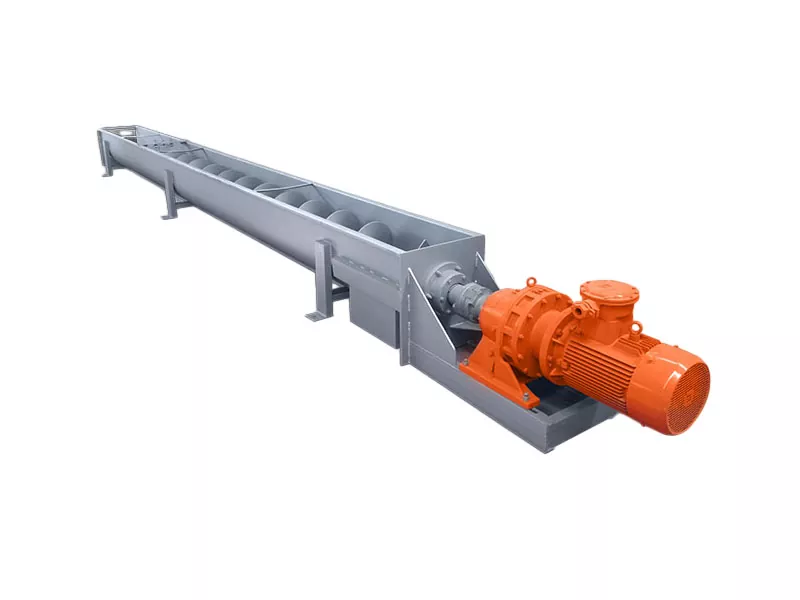
Table of Contents
- 1. What Is a Screw Conveyor?
- 2. How Does a Screw Conveyor Work?
- 3. What Are the Main Components?
- 4. Key Features and Functional Advantages
- 5. Screw Conveyor Technical Specifications
- 6. Industrial Applications of Screw Conveyors
- 7. How to Choose the Right Screw Conveyor?
- 8. Installation and Maintenance Recommendations
- 9. Frequently Asked Questions
- 10. Conclusion
1. What Is a Screw Conveyor?
A screw conveyor is a mechanical material handling system that uses a rotating helical blade, commonly called a screw or auger, to move bulk materials through an enclosed or partially enclosed trough. It is widely used in mining, metallurgy, chemical processing, cement production, construction materials manufacturing, and other industries requiring continuous material transportation.
Unlike belt conveyors that transport materials along a moving belt, a screw conveyor moves materials through the rotational movement of its spiral blade. This structure makes it particularly suitable for handling powders, fine particles, and granular materials in controlled production environments.
EPIC, a professional industrial equipment manufacturer and supplier in China, offers screw conveying solutions featuring a closed groove box, adjustable feeding and discharging gates, and reversible operation. Its equipment is designed for handling materials including:
- Magnesium powder and other mineral powders.
- Cement and construction materials.
- Soda ash and chemical raw materials.
- Various dry granular industrial materials.
For factories that require compact equipment, controlled material feeding, and reliable enclosed transportation, a screw conveyor can be an effective addition to an integrated production line.
2. How Does a Screw Conveyor Work?
The operating principle of a screw conveyor is based on the mechanical movement generated by a rotating spiral blade inside a trough or tubular housing. When the motor drives the screw shaft, the helical flights push the material forward along the conveyor's longitudinal direction.
The typical conveying process involves four stages:
- Material Feeding: Bulk materials enter the conveyor through the designated feeding port. The feed arrangement should ensure a consistent material supply without excessive accumulation.
- Rotational Movement: A motor and transmission system rotate the screw shaft, allowing the spiral blades to continuously engage with the material.
- Material Transportation: The rotating flights move the material through the closed trough toward the discharge position.
- Controlled Discharge: Material exits through the discharge opening. Adjustable loading and unloading gates help regulate material flow according to production requirements.
Depending on the equipment configuration, screw conveyors can also support reversible conveying. This means the direction of material movement can be changed when required by the production process.
Some configurations can additionally perform stirring, mixing, heating, or cooling during transportation when suitable auxiliary equipment is integrated. These functions make screw conveyors useful not only for material transfer but also for certain intermediate processing operations.
3. What Are the Main Components of a Screw Conveyor?
Understanding the main structural components helps buyers evaluate equipment quality, maintenance requirements, and compatibility with existing production systems.
- Helical Screw Blade: The primary conveying component responsible for pushing bulk materials through the equipment.
- Screw Shaft: Supports the spiral flights and transmits rotational force from the drive system.
- Conveyor Trough: Provides an enclosed passage for material transportation and helps reduce dust emissions and material spillage.
- Drive Assembly: Usually consists of a motor and transmission components that supply the required rotational power.
- Feeding Port: Allows materials to enter the conveying system from upstream equipment or storage units.
- Discharge Port: Releases transported materials into downstream processing equipment or storage facilities.
- Bearings and Supporting Structures: Maintain shaft stability and support reliable mechanical operation.
The dimensional accuracy and assembly quality of these components directly influence conveying performance. Correct alignment between the spiral and groove box is particularly important for maintaining appropriate operating clearances and reducing unnecessary wear.
4. What Are the Key Features and Functional Advantages?
A properly selected screw conveyor offers several practical advantages for industrial material handling operations.
4.1 Compact Structure and Space Efficiency
The equipment features a relatively small cross-sectional footprint, making it suitable for production facilities where installation space is limited. Its configuration can be integrated into existing material transportation systems without requiring extensive structural modifications.
4.2 Enclosed Conveying and Dust Control
The closed groove box helps contain powders and fine particles during transportation. Compared with open material handling arrangements, this design can reduce dust dispersion and material spillage when the equipment is correctly installed and sealed.
4.3 Adjustable Material Flow
Loading and unloading gates allow operators to regulate material feeding and discharging. This function helps coordinate the conveying process with upstream and downstream production equipment.
4.4 Reversible Conveying
Bidirectional operation provides additional flexibility for industrial layouts that require material movement in different directions. It can also simplify certain production arrangements.
4.5 Multiple Processing Functions
Beyond transportation, suitable screw conveyor configurations can support material stirring and mixing. With additional heating or cooling arrangements, the equipment can also participate in temperature-related processing operations.
4.6 Convenient Maintenance
The relatively straightforward mechanical structure makes routine inspections and component replacement manageable. Regular attention to the spiral blade, trough, bearings, and sealing conditions helps maintain stable operation.
5. What Are the Technical Specifications of an EPIC Screw Conveyor?
Technical parameters are essential when comparing different screw conveyor models. The appropriate equipment size depends on the required throughput, material characteristics, installation dimensions, and production requirements.
The following table presents the published technical specifications of EPIC GX-series screw conveyors.
| Technical Parameter | GX15 | GX20 | GX25 | GX30 | GX40 | GX50 | GX60 |
|---|---|---|---|---|---|---|---|
| Spiral Diameter (mm) | 150 | 200 | 250 | 300 | 400 | 500 | 600 |
| Magnesium Powder Capacity (t/h) | 4.5 | 8.5 | 16.5 | 23.3 | 54 | 89 | 139 |
| Cement Capacity (t/h) | 4.1 | 7.9 | 15.6 | 21.2 | 51 | 85 | 134 |
| Soda Ash Capacity (t/h) | 3 | 6.7 | 10.7 | 18 | 35.5 | 70 | 97 |
| Trough Width × Height (mm) | 272×314 | 342×384 | 392×464 | 468×555 | 572×685 | 706×823 | 806×973 |
Important: The listed conveying capacities are material-specific reference values. Actual throughput may vary according to bulk density, particle size, moisture content, feeding conditions, and operating configuration. Buyers should confirm the expected capacity with the manufacturer before placing an order.
For additional product information, visit the EPIC Screw Conveyor product page.
6. What Are the Industrial Applications of Screw Conveyors?
Screw conveyors are widely used in industries that handle large quantities of powders and granular materials. Their enclosed structure and adjustable conveying characteristics make them suitable for different stages of industrial production.
Mining and Mineral Processing
In mining operations, screw conveyors can transport mineral powders and processed materials between storage facilities, feeders, and downstream processing equipment. They can also support continuous material transfer in integrated mineral processing systems.
Cement and Construction Materials
Cement plants and construction material manufacturers frequently handle powdered raw materials. Screw conveyors provide an enclosed transportation option that helps control dust and maintain a consistent material supply.
Chemical Processing
Chemical production facilities may use screw conveyors to transport suitable dry powders and granular chemical ingredients. Their enclosed design is useful where material containment and controlled feeding are important.
Metallurgical Production
In metallurgical applications, the equipment can transfer selected mineral powders and other process materials between different production stages. Material compatibility and wear resistance should be carefully evaluated.
Industrial Mixing and Conditioning
When designed with appropriate auxiliary systems, screw conveyors can combine transportation with stirring, mixing, heating, or cooling. This helps reduce the need for separate material transfer operations in certain production processes.
Before choosing a model, manufacturers should evaluate whether the material is free-flowing and compatible with screw-based conveying. Highly viscous, sticky, oversized, or deteriorated materials may cause blockages and excessive mechanical wear.
7. How to Choose the Right Screw Conveyor?
Selecting a suitable screw conveyor requires more than comparing equipment dimensions or purchasing prices. A reliable selection process should begin with an assessment of actual production conditions.
7.1 Identify Material Characteristics
Different materials behave differently during transportation. Important properties include:
- Bulk density and particle size distribution.
- Moisture content and flowability.
- Abrasiveness and potential corrosiveness.
- Temperature and material stability.
- Whether the material tends to stick, bridge, or form lumps.
7.2 Determine Required Conveying Capacity
Calculate the expected hourly throughput based on actual production demand. Selecting an undersized conveyor may create bottlenecks, while excessive capacity can increase equipment investment and operating costs.
7.3 Consider Installation Layout
Evaluate the available installation space, feeding height, discharge position, conveyor length, and connection requirements. Ensure that the equipment can be integrated with existing crushers, feeders, storage silos, and other processing machinery.
7.4 Evaluate Operating Conditions
Determine whether the application requires continuous operation, reversible movement, adjustable discharge, or additional mixing and temperature-control functions.
7.5 Compare Manufacturer Capabilities
A dependable supplier should provide clear technical information, reasonable equipment recommendations, manufacturing quality control, and responsive technical support.
Before finalizing a purchase, ask the manufacturer to confirm:
- Recommended conveyor model and spiral diameter.
- Expected capacity for the specific material.
- Equipment dimensions and installation requirements.
- Drive configuration and operating conditions.
- Wear-part replacement and maintenance arrangements.
- Applicable inspection and quality assurance procedures.
8. How Can Proper Installation and Maintenance Extend Service Life?
Even a well-manufactured screw conveyor requires proper installation and routine maintenance to achieve reliable long-term performance.
Installation Recommendations
- Check the alignment between the screw shaft and conveyor trough before operation.
- Maintain the appropriate clearance between the spiral and tank to minimize friction and excessive wear.
- Position the feeding port to ensure smooth material entry.
- Confirm that all connections and sealing points are properly assembled.
- Check the drive system and supporting structures before commissioning.
Routine Maintenance Recommendations
- Inspect the spiral flights for deformation, abrasion, or damage.
- Check the conveyor trough for excessive wear and material accumulation.
- Monitor bearings and drive components for unusual noise or vibration.
- Replace worn components promptly to avoid unexpected downtime.
- Keep feeding and discharge openings free from blockages.
- Maintain proper sealing to minimize dust emissions.
Operators should avoid overloading the machine or introducing oversized, highly sticky, or unsuitable materials. Maintenance intervals should be adjusted according to operating hours, material abrasiveness, and actual working conditions.
9. Frequently Asked Questions About Screw Conveyors
Q1: What materials can a screw conveyor handle?
A screw conveyor is commonly used for transporting powders and granular bulk materials, including cement, magnesium powder, soda ash, and selected mineral or chemical materials. Material flowability, particle size, moisture, and abrasiveness should be evaluated before selecting the equipment.
Q2: What is the main advantage of an enclosed screw conveyor?
The enclosed trough helps contain materials during transportation, reducing dust dispersion and material spillage. It is particularly useful for handling fine powders in industrial environments where material containment is important.
Q3: Can a screw conveyor transport materials in both directions?
Yes. A suitably configured screw conveyor can support reversible operation. The conveying direction can be changed according to production requirements, providing greater flexibility for industrial material handling layouts.
Q4: How is screw conveyor capacity determined?
Capacity depends on factors such as spiral diameter, rotational speed, material bulk density, filling ratio, and material flow characteristics. Different materials can produce different throughput values even when using the same conveyor model.
Q5: Can a screw conveyor mix materials while transporting them?
Yes. Depending on its structural design and configuration, a screw conveyor can perform certain stirring and mixing functions during material transportation. Additional equipment may also be integrated for heating or cooling applications.
Q6: What materials should not be handled by a standard screw conveyor?
Highly viscous, sticky, oversized, or deteriorated materials may cause blockages, irregular feeding, or excessive wear. Special material handling requirements should be discussed with the manufacturer before equipment selection.
Q7: How do I choose the right screw conveyor manufacturer?
Consider the manufacturer's industrial experience, product specifications, manufacturing capabilities, quality inspection procedures, customization support, and after-sales service. A reliable supplier should be able to recommend a suitable model based on your material characteristics and production requirements.
10. Conclusion: Why Choose EPIC for Industrial Screw Conveying Solutions?
A screw conveyor is an important component in modern bulk material handling systems. Its compact structure, enclosed conveying design, adjustable material flow, and reversible operation make it a practical solution for transporting suitable powders and granular materials across mining, cement, chemical, and metallurgical industries.
However, achieving consistent conveying performance depends on selecting the right model, understanding material characteristics, ensuring correct installation, and following a regular maintenance program.
EPIC provides industrial screw conveyor solutions designed for practical production requirements, including the transportation of magnesium powder, cement, soda ash, and other granular materials. With multiple GX-series models and different spiral diameters, EPIC offers equipment options for different material handling capacities.
If you are looking for a reliable screw conveyor manufacturer in China, EPIC can help you evaluate equipment specifications and identify a suitable conveying solution for your production line. Visit the EPIC Screw Conveyor product page to explore the equipment details, or contact us today with your material type, required capacity, and installation requirements. Our team will help you find an efficient and cost-effective solution for your industrial material handling project.
Send Inquiry



X
We use cookies to offer you a better browsing experience, analyze site traffic and personalize content. By using this site, you agree to our use of cookies.
Privacy Policy