 English
 Español
  Português
  русский
  Français
  日本語
日本語  Deutsch
  tiếng Việt
  Italiano
  Nederlands
  ภาษาไทย
  Polski
  한국어
한국어  Svenska
  magyar
  Malay
Malay  বাংলা ভাষার
  Dansk
Dansk  Suomi
Suomi  हिन्दी
  Pilipino
  Türkçe
  Gaeilge
  العربية
  Indonesia
  Norsk
Norsk  تمل
تمل  český
český  ελληνικά
  український
  Javanese
  فارسی
فارسی  தமிழ்
தமிழ்  తెలుగు
  नेपाली
  Burmese
  български
  ລາວ
ລາວ  Latine
  Қазақша
  Euskal
  Azərbaycan
  Slovenský jazyk
  Македонски
  Lietuvos
  Eesti Keel
  Română
  Slovenski
  मराठी
मराठी  Srpski језик


Why modern mining lines need anti-interference metal detectors for ore processing?
Modern ore processing features high-speed conveyor operation and continuous crushing and grinding workflows. Complex on-site electromagnetic fields and unique ore magnetic properties often cause detection errors for conventional detection equipment. The anti-interference Metal Detector addresses common industry pain points including false alarms and missed detection, supporting stable and automated operation of modern mining production lines. This article explores the necessity of anti-interference detection technology for professional ore processing systems.
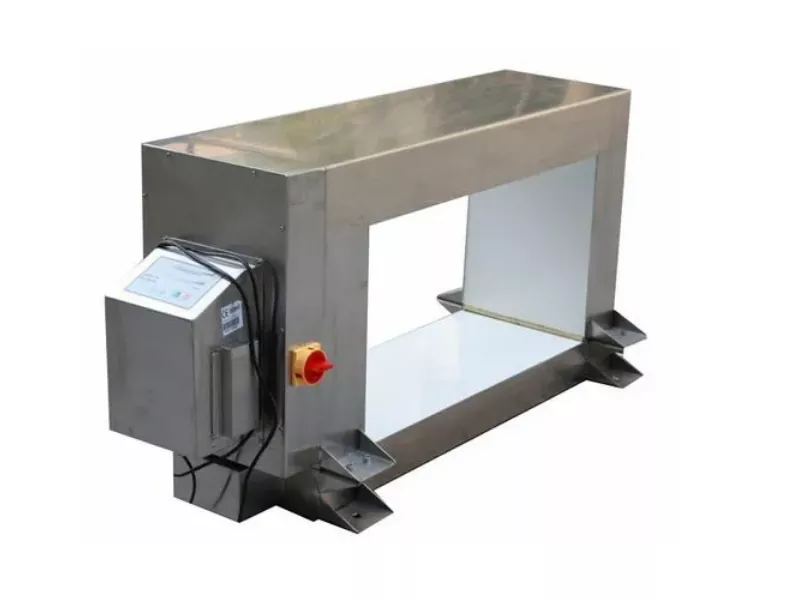
Complex Interference Sources in Mining Scenarios
Unlike ordinary industrial environments, mining sites contain multiple interference factors that affect metal detection accuracy. Massive mechanical equipment, high-current circuits and magnetic ores form continuous electromagnetic interference, which easily disturbs the sensor signal of common detection devices.
Meanwhile, magnetic ores carry inherent magnetic characteristics, which easily cover tiny tramp metal fragments and form detection blind areas. Conventional detectors without anti-interference design cannot filter complex on-site noise signals, resulting in unstable detection data, frequent false alarms and undetected metal impurities during formal production.
Core Drawbacks of Non-Anti-Interference Detectors
Mining lines equipped with conventional metal detection equipment face two prominent operational problems.
Firstly, frequent false detection triggers unnecessary line shutdowns and manual inspection procedures, reducing overall production efficiency and increasing labor costs. Secondly, unstable signal output leads to missed detection of small metal fragments. These hard foreign matters easily enter crushers, ball mills and other core processing equipment, causing component wear, structural jamming and mechanical failure.
For large-scale, uninterrupted mining processing, such detection instability directly leads to unplanned downtime and increased equipment maintenance expenditure, restricting standardized and automated production.
Value of Anti-InterferenceMetal Detector for Mining Processing
1. Stable Detection in Complex Electromagnetic Environments
Professional anti-interference technology adopted by Metal Detector effectively shields electromagnetic interference generated by on-site motors, high-current circuits and mechanical operation. It independently filters invalid noise signals and locks effective metal induction signals, maintaining stable and consistent detection sensitivity during long-cycle continuous operation.
2. Adapt to Magnetic and Non-Magnetic Ore Detection
Dedicated signal identification algorithms distinguish interference signals generated by ore magnetism from real tramp metal signals. The Metal Detector adapts to both magnetic and non-magnetic ore processing scenarios, with detectable metal fragment sizes ranging from 20mm to 70mm. It eliminates detection blind spots caused by special ore properties and complex working conditions.
3. Protect Downstream Core Processing Equipment
Tramp metal mixed in raw ore is the main cause of premature damage and mechanical failure of crushing and grinding equipment. The Metal Detector realizes full-time online monitoring of conveyor materials, intercepting mixed metal impurities in advance. It effectively reduces equipment failure probability and extends the service cycle of processing equipment.
4. Reduce Downtime and Operational Costs
Stable anti-interference performance avoids invalid shutdowns caused by false alarms, reducing redundant manual inspection work. Modular structural design supports 24-hour continuous operation and simplifies daily maintenance, helping mining enterprises control operational and labor costs in long-term production.
5. Guarantee Standardized Production and Product Quality
Real-time and accurate metal detection eliminates metal impurities in finished ore and aggregate products, ensuring stable product quality. It helps mining enterprises meet industry quality standards and standardize production processes.
Industry Trend: Higher Requirements for Detection Stability
Modern mining processing is developing toward high-speed automation and intelligent unmanned operation. Traditional basic detectors lack anti-interference capability and cannot adapt to complex electromagnetic working conditions, unable to meet the stability requirements of automated production lines. The anti-interference Metal Detector has become essential supporting equipment for intelligent mining transformation.
Conclusion
For mining processing systems, anti-interference performance is the core index to measure the practical value of a Metal Detector. It solves two major industry pain points of false alarms and missed detection in complex mining environments, realizing equipment protection, stable production and cost control. For modern automated mining lines, equipping with professional anti-interference metal detection equipment is a key step to ensure long-term stable and efficient operation. Contact us!
Send Inquiry



X
We use cookies to offer you a better browsing experience, analyze site traffic and personalize content. By using this site, you agree to our use of cookies.
Privacy Policy