 English
 Español
  Português
  русский
  Français
  日本語
日本語  Deutsch
  tiếng Việt
  Italiano
  Nederlands
  ภาษาไทย
  Polski
  한국어
한국어  Svenska
  magyar
  Malay
Malay  বাংলা ভাষার
  Dansk
Dansk  Suomi
Suomi  हिन्दी
  Pilipino
  Türkçe
  Gaeilge
  العربية
  Indonesia
  Norsk
Norsk  تمل
تمل  český
český  ελληνικά
  український
  Javanese
  فارسی
فارسی  தமிழ்
தமிழ்  తెలుగు
  नेपाली
  Burmese
  български
  ລາວ
ລາວ  Latine
  Қазақша
  Euskal
  Azərbaycan
  Slovenský jazyk
  Македонски
  Lietuvos
  Eesti Keel
  Română
  Slovenski
  मराठी
मराठी  Srpski језик


How Can a Real-Time Adjustable CNC Automatic Dosing Machine Improve Dynamic Industrial Production
When production conditions change continuously, fixed dosing parameters can lead to inaccurate chemical addition, process fluctuations, and unnecessary material consumption. EPIC developed the Real-Time Adjustable CNC Automatic Dosing Machine to address these challenges through real-time parameter tuning, high-sensitivity signal sensing, CNC synchronous control, and responsive dosing components for demanding mining and industrial applications.
A dosing system plays an important role in mineral beneficiation, chemical processing, environmental treatment, and pilot-scale production. However, many traditional dosing systems rely on fixed parameters that cannot immediately respond to changes in ore properties, water quality, production formulas, or process requirements.
The Real-Time Adjustable CNC Automatic Dosing Machine provides a more flexible approach. It allows operators to adjust dosing volume, operating intervals, and reagent ratios while the equipment remains in continuous operation. With real-time data display, high-response CNC control, precision dosing valves, and an anti-interference operating system, the equipment is designed to maintain stable dosing performance under variable working conditions.
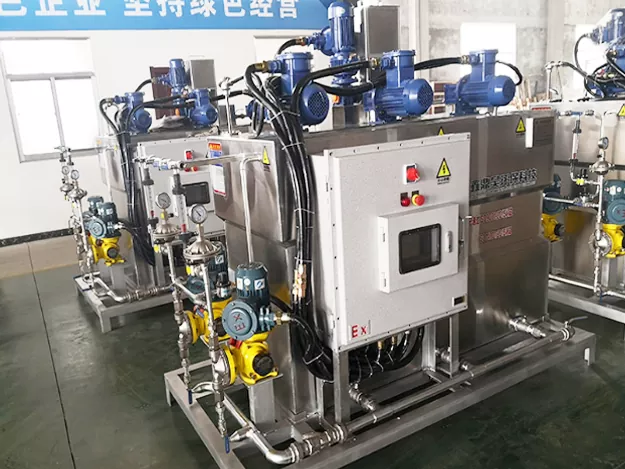
Table of Contents
- Why Are Fixed Dosing Systems Becoming Less Effective?
- What Is a Real-Time Adjustable CNC Automatic Dosing Machine?
- What Are the Key Features of This CNC Dosing Machine?
- What Advantages Does Real-Time Dosing Provide?
- What Models and Specifications Are Available?
- Where Can the Machine Be Used?
- How Does Real-Time CNC Dosing Work?
- How Can Operators Maintain Dosing Performance?
- How Should Buyers Choose a Dosing Machine?
- Frequently Asked Questions
- Conclusion
Why Are Fixed Dosing Systems Becoming Less Effective?
Industrial production rarely operates under completely stable conditions. In mineral processing, the grade and characteristics of ore can change from one batch to another. In environmental treatment, wastewater concentration can fluctuate. Chemical manufacturers may also modify formulations during process optimization or product development.
When dosing equipment operates according to fixed parameters, these changes can create a mismatch between the actual process requirements and the amount of reagent being delivered. Too little reagent may reduce process effectiveness, while excessive dosing can increase chemical consumption and operating costs.
Frequent manual intervention can create another problem: production interruptions. Operators may need to stop equipment, modify settings, restart the program, and verify the new operating condition. For continuous industrial production, this approach can reduce productivity and increase operational complexity.
A dynamic dosing solution is therefore valuable when the process requires frequent adjustments. Instead of treating parameter changes as an exception, a real-time adjustable system makes them part of normal operation.
- Changing raw material characteristics can require different dosing levels.
- Variable water quality can affect reagent requirements.
- Process optimization may require repeated parameter adjustments.
- Fixed dosing values can contribute to unnecessary reagent consumption.
- Manual adjustment may result in production downtime.
What Is a Real-Time Adjustable CNC Automatic Dosing Machine?
A Real-Time Adjustable CNC Automatic Dosing Machine is an automated dosing system designed for production environments where dosing parameters need to change according to real-time conditions.
Unlike conventional fixed-parameter dosing equipment, the system integrates high-sensitivity signal sensing with CNC synchronous control. This enables operators to modify important dosing parameters and have the changes take effect during ongoing operation, without requiring equipment shutdown or a complete program restart.
The equipment is particularly suitable for industrial and beneficiation lines where production conditions can change frequently. An interactive touchscreen provides operating information, while the control system coordinates parameter changes with the dosing mechanism.
The basic objective is straightforward: the dosing process should follow the production process instead of forcing the production process to follow a fixed dosing setting.
What Are the Key Features of This CNC Dosing Machine?
The performance of a dynamic dosing system depends on more than its dosing mechanism. Control response, data visibility, valve precision, software stability, and parameter flexibility all contribute to overall performance.
| Key Feature | How It Works | Primary Benefit |
|---|---|---|
| Non-Stop Parameter Tuning | Adjusts dosing volume, interval, and reagent ratio during operation | Reduces production interruptions |
| CNC Synchronous Control | Processes adjustment instructions and coordinates equipment response | Supports fast and consistent parameter changes |
| Real-Time Data Display | Shows dosing volume, cumulative dosage, and operating status | Improves process visibility |
| Precision Adjustable Valves | Regulates reagent delivery after parameter changes | Promotes uniform dosing |
| Anti-Interference Control | Optimizes circuit and program logic for dynamic operation | Improves operational stability |
These functions work together to create a dosing system that can respond to changing production requirements. The objective is not simply to automate dosing, but to make automated dosing more responsive and adaptable.
What Advantages Does Real-Time Dosing Provide?
1. Production Can Continue During Parameter Adjustment
One of the most important advantages is the ability to modify core parameters without stopping the machine. Operators can adjust dosing volume, operating intervals, or reagent ratios while production continues.
2. Better Adaptation to Variable Working Conditions
Mining and industrial processes can experience significant changes in raw materials and operating conditions. Real-time adjustment allows dosing parameters to be changed according to these variations instead of relying on outdated fixed settings.
3. More Controlled Reagent Consumption
Accurate dosing is directly related to resource efficiency. If a process requires less reagent under certain conditions, dynamic adjustment can help reduce unnecessary addition. Conversely, if process requirements increase, dosing can be increased accordingly.
4. Improved Production Stability
Sudden parameter changes can cause dosing surges or shortages if the system cannot respond smoothly. A properly designed dynamic control system coordinates parameter changes with dosing components to support a more stable transition.
5. Easier On-Site Operation
An industrial touchscreen gives operators access to important dosing and equipment information. This makes it easier to monitor the current operating state and make timely adjustments when process conditions change.
What Models and Specifications Are Available?
EPIC provides multiple configurations of the Real-Time Adjustable CNC Automatic Dosing Machine. The available models cover different power levels and configuration requirements, allowing the equipment to be matched to different production environments.
| Model | Power | Configuration |
|---|---|---|
| CDJ-2006-6 | 1.5 kW | 6 |
| CDJ-2006-8 | 2.2 kW | 8 |
| CDJ-2006-12 | 3 kW | 12 |
| CDJ-2006-16 | 4.5 kW | 16 |
| CDJ-2006-18 | 5 kW | 18 |
| CDJ-2006-24 | 7.5 kW | 24 |
| CDJ-2006-32 | 9 kW | 32 |
| CDJ-2006-36 | 11 kW | 36 |
| CDJ-2006-48 | 15 kW | 48 |
| CDJ-2006-58 | 18 kW | 58 |
| CDJ-2006-90 | 30 kW | 90 |
Model selection should not be based only on power. Buyers should also consider dosing requirements, reagent characteristics, production capacity, process fluctuations, control integration, and the required adjustment range.
Where Can the Machine Be Used?
The Real-Time Adjustable CNC Automatic Dosing Machine is especially useful in applications where production conditions are uncertain or process parameters change frequently.
- Mineral Beneficiation: Flotation reagent dosage can be adjusted according to changing ore grade and mineral characteristics.
- Chemical Production: Dynamic adjustment supports formula testing, process optimization, and production upgrades.
- Environmental Treatment: Treatment reagent dosage can be modified according to variations in wastewater concentration and pollution levels.
- Pilot-Scale Production: Researchers and process engineers can make frequent dosing adjustments during experimental production.
For mineral processing plants, responsive dosing can be particularly useful because flotation and other beneficiation processes involve multiple changing variables. A flexible dosing system can help operators adapt reagent addition as process conditions evolve.
How Does Real-Time CNC Dosing Work?
The operating principle can be understood as a continuous adjustment cycle:
- Monitor production conditions: Current process information is collected through the relevant sensing and control system.
- Identify a dosing requirement: Operators or the control strategy determine whether dosing parameters need to change.
- Modify the parameters: The required dosing volume, interval, or reagent ratio is entered through the control interface.
- Process the instruction: The CNC synchronous control system responds to the adjustment command.
- Adjust reagent delivery: Precision dosing components execute the new dosing requirement.
- Monitor the result: Real-time operating information allows personnel to observe the updated dosing condition.
This creates a more responsive relationship between production conditions and reagent delivery. Instead of relying entirely on pre-programmed settings, the dosing process can be continuously optimized according to actual operating requirements.
How Can Operators Maintain Dosing Performance?
Regular maintenance is essential for any automated dosing system, particularly equipment operating under frequent parameter changes. A practical maintenance program should include both mechanical inspection and control-system verification.
- Check adjustment sensitivity: Verify that parameter changes are executed correctly and promptly.
- Clean dosing pipelines: Remove residual reagent buildup that could affect flow consistency.
- Compare actual and displayed data: Confirm that touchscreen information corresponds with actual dosing performance.
- Inspect adjustable valves: Check valves and transmission components for wear, blockage, or abnormal resistance.
- Review control programs: Periodically inspect and optimize control logic to maintain stable dynamic response.
- Check the operating environment: Keep electrical and control components protected from excessive dust, moisture, and other environmental factors.
Consistent maintenance helps preserve the responsiveness, accuracy, and reliability of the equipment over long-term operation.
How Should Buyers Choose a Dosing Machine?
When purchasing a CNC automatic dosing machine from a China manufacturer or supplier, buyers should evaluate the complete production requirement rather than focusing exclusively on the initial equipment price.
| Evaluation Factor | Questions to Consider |
|---|---|
| Process Variation | How frequently do raw materials and operating conditions change? |
| Dosing Range | What dosing volume and adjustment range are required? |
| Reagent Properties | Is the reagent corrosive, abrasive, viscous, or chemically aggressive? |
| Control Integration | Does the dosing machine need to communicate with an existing automation system? |
| Production Scale | What equipment configuration is suitable for the current production capacity? |
| Technical Support | Can the manufacturer provide commissioning, customization, and after-sales support? |
EPIC combines intelligent control technology with precision manufacturing capabilities. Its published product information indicates that the company has more than 100 sets of processing equipment, ISO9001:2015 quality certification, experience serving mining and industrial enterprises, and the ability to customize adjustment ranges, response speeds, and dynamic parameters for specific applications.
Frequently Asked Questions
What is the main advantage of a Real-Time Adjustable CNC Automatic Dosing Machine?
The primary advantage is the ability to adjust key dosing parameters during continuous operation. This allows the equipment to respond more quickly to changing production conditions while reducing the need for shutdowns and manual debugging.
Can dosing parameters be changed while the machine is running?
Yes. The machine is designed for non-stop real-time parameter tuning. Operators can adjust parameters such as single dosing volume, operating interval, and reagent ratio while the equipment continues operating.
Will frequent parameter changes affect equipment stability?
The system is specifically designed for dynamic operation. Its CNC synchronous control, anti-interference system, and precision adjustable components are intended to maintain stable operation during frequent parameter modifications.
Is the machine suitable for mining applications?
Yes. The equipment is designed for variable ore beneficiation scenarios and can be used where ore grade, mineral characteristics, or other process conditions fluctuate and require corresponding changes in reagent dosage.
Can the machine be customized?
Yes. EPIC provides customized solutions for specific production requirements, including adjustment ranges, response speeds, and dynamic operating parameters.
What information should buyers provide before requesting a quotation?
Buyers should provide information such as the application, reagent type, required dosing range, production capacity, process conditions, desired adjustment frequency, existing automation system, and installation environment. More detailed process information allows the manufacturer to recommend a more appropriate configuration.
Conclusion
As industrial production becomes increasingly automated and process conditions become more dynamic, dosing systems need to provide more than fixed-volume delivery. The Real-Time Adjustable CNC Automatic Dosing Machine combines real-time parameter tuning, CNC synchronous control, data visualization, precision dosing components, and adaptive operation to provide a flexible solution for mining, chemical production, environmental treatment, and pilot-scale applications.
For companies looking to improve dosing flexibility, reduce unnecessary reagent consumption, minimize production interruptions, and respond more effectively to changing operating conditions, EPIC can provide a customized solution based on the specific process requirements. If you are planning a new project or upgrading an existing dosing system, contact us today to discuss your application, technical requirements, model selection, and customized CNC automatic dosing solution with EPIC.
Send Inquiry



X
We use cookies to offer you a better browsing experience, analyze site traffic and personalize content. By using this site, you agree to our use of cookies.
Privacy Policy