English
 Español
  Português
  русский
  Français
  日本語
日本語  Deutsch
  tiếng Việt
  Italiano
  Nederlands
  ภาษาไทย
  Polski
  한국어
한국어  Svenska
  magyar
  Malay
Malay  বাংলা ভাষার
  Dansk
Dansk  Suomi
Suomi  हिन्दी
  Pilipino
  Türkçe
  Gaeilge
  العربية
  Indonesia
  Norsk
Norsk  تمل
تمل  český
český  ελληνικά
  український
  Javanese
  فارسی
فارسی  தமிழ்
தமிழ்  తెలుగు
  नेपाली
  Burmese
  български
  ລາວ
ລາວ  Latine
  Қазақша
  Euskal
  Azərbaycan
  Slovenský jazyk
  Македонски
  Lietuvos
  Eesti Keel
  Română
  Slovenski
  मराठी
मराठी  Srpski језик

EPIC, a professional manufacturer of intelligent mineral processing and industrial automation equipment, provides the CNC Automatic Dosing Machine for Plant to help factories achieve centralized dosing management, synchronized production-line operation, consistent process parameters, and more efficient production control. Designed for integrated plant workflows, this system provides a practical approach to replacing scattered manual dosing operations with standardized and intelligent dosing management.
A modern production plant often depends on accurate and repeatable dosing to maintain stable process conditions. When dosing operations are distributed across multiple stations, manual adjustment can lead to inconsistent parameters, reagent waste, additional labor requirements, and difficulties in production data management. A CNC Automatic Dosing Machine for Plant addresses these challenges through centralized parameter management, automated scheduling, production-line synchronization, and structured data recording.
EPIC's plant-oriented dosing solution is designed around whole-plant compatibility rather than isolated dosing points. Its modular configuration can support different workshop layouts, production scales, and multi-station dosing requirements. Available models range from compact systems for smaller workshops to larger configurations designed for centralized plant operations.
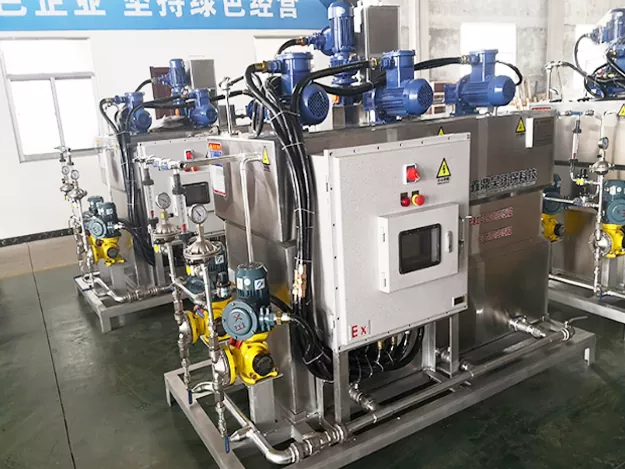
Table of Contents
- What Is a CNC Automatic Dosing Machine for Plant?
- Why Do Modern Plants Need Automated Dosing?
- What Are the Key Features?
- What Models Are Available?
- Where Can Plant-Level CNC Dosing Systems Be Used?
- What Benefits Can a Plant Expect?
- How Should a Factory Select the Right System?
- How Can Long-Term Performance Be Maintained?
- FAQ
- Conclusion
What Is a CNC Automatic Dosing Machine for Plant?
A CNC Automatic Dosing Machine for Plant is an automated dosing system designed to coordinate dosing activities across an entire production facility. Unlike a conventional single-point dosing device, a plant-level system focuses on centralized control, unified parameter settings, production-line integration, and continuous operation.
The system can be integrated with production lines, conveyor systems, and central control platforms. Its CNC-based control architecture allows operators to configure dosing parameters and coordinate multiple dosing stations according to the requirements of the production process.
This approach is particularly useful for plants where dosing must remain consistent across multiple production stages. Instead of relying on operators to adjust individual machines independently, centralized management helps establish standardized operating conditions throughout the workshop.
Why Do Modern Plants Need Automated Dosing?
Dosing accuracy directly affects production consistency in many industrial processes. Manual dosing can introduce variations because of operator differences, changing production conditions, delayed adjustments, or insufficient process records.
Automated dosing helps address these issues by creating repeatable operating procedures. A centralized CNC system can coordinate multiple dosing points while recording relevant dosing information for production analysis.
For a factory operating multiple shifts, this consistency becomes even more important. Standardized parameters reduce dependence on individual operator experience and make it easier for production managers to maintain the same process requirements across different shifts.
- Reduces variations caused by manual operation.
- Supports centralized parameter configuration.
- Synchronizes dosing with production equipment.
- Helps reduce unnecessary reagent consumption.
- Creates useful dosing records for production analysis.
- Supports continuous and cyclic industrial production.
What Are the Key Features?
The plant-specific design of EPIC's CNC dosing system focuses on the practical requirements of integrated factory production. Several features distinguish it from conventional decentralized dosing equipment.
1. Whole-Line Synchronous Dosing Control
The CNC control system can coordinate dosing equipment with production-line operation. Synchronized start-stop functions and parameter adjustments help ensure that dosing activities correspond with the operating status of the production process.
2. Centralized Management
Multiple dosing channels can be managed through unified parameter settings. This helps reduce differences between individual operating stations and supports consistent production standards throughout the plant.
3. Long-Cycle Operation
Industrial plants frequently operate for extended periods and across multiple shifts. A plant-level dosing system therefore needs durable components and stable control logic capable of supporting continuous cyclic operation.
4. Dosing Data Recording
The system can record daily, weekly, and monthly dosing information. These records can support production statistics, reagent consumption analysis, cost accounting, and process optimization.
5. Modular Installation
A modular configuration makes it easier to adapt the equipment to different workshop structures and production-line arrangements. It also provides flexibility for future expansion when production capacity increases.
What Models Are Available?
EPIC provides multiple plant-use configurations. The available models cover different numbers of dosing channels and power requirements, allowing factories to select equipment according to their production scale and layout.
| Model | Power (kW) | Configuration / Channels | Typical Positioning |
|---|---|---|---|
| CDJ-2006-6 | 1.5 | 6 | Small-scale dosing configuration |
| CDJ-2006-8 | 2.2 | 8 | Small workshop or multi-point dosing |
| CDJ-2006-12 | 3 | 12 | Medium production line |
| CDJ-2006-16 | 4.5 | 16 | Multi-station production |
| CDJ-2006-18 | 5 | 18 | Medium plant application |
| CDJ-2006-24 | 7.5 | 24 | Expanded production lines |
| CDJ-2006-32 | 9 | 32 | Large multi-station operation |
| CDJ-2006-36 | 11 | 36 | Large plant configuration |
| CDJ-2006-48 | 15 | 48 | Centralized whole-plant dosing |
| CDJ-2006-58 | 18 | 58 | High-capacity plant operation |
| CDJ-2006-90 | 30 | 90 | Large-scale centralized dosing |
The final model selection should be based on the number of dosing points, production process, workshop arrangement, required integration level, and future expansion plans rather than power rating alone.
Where Can Plant-Level CNC Dosing Systems Be Used?
The flexibility of a CNC Automatic Dosing Machine for Plant makes it suitable for multiple industrial production environments where consistent reagent or material dosing is required.
- Mineral Processing Plants: Centralized dosing can support flotation reagent management and other beneficiation processes.
- Industrial Production Plants: The system can be integrated into continuous or cyclic production lines in industries such as metallurgy, building materials, and light manufacturing.
- Environmental Treatment Plants: Automated dosing can support wastewater treatment processes requiring stable chemical addition.
- Batch Processing Plants: Centralized dosing helps maintain repeatable proportions during large-scale batch production.
For mineral processing applications, the dosing system can complement equipment such as flotation cells, agitation tanks, grinding equipment, and other beneficiation machinery.
What Benefits Can a Plant Expect?
Moving from decentralized manual dosing to centralized CNC control can create improvements in both production operation and management.
- Consistent Production Standards: Unified dosing parameters help maintain similar operating conditions between production stations.
- Higher Operational Efficiency: Automated coordination reduces repetitive manual adjustments and monitoring requirements.
- Better Cost Control: Accurate dosing and data recording can help identify unnecessary reagent consumption.
- Improved Production Stability: Synchronized dosing minimizes process interruptions caused by inconsistent manual operation.
- Scalable Plant Automation: Modular architecture creates opportunities for additional equipment and functions as production requirements change.
- Improved Data Visibility: Historical dosing records provide useful information for production analysis and process improvement.
These advantages are especially valuable for plants seeking gradual digital transformation. Instead of replacing an entire production system, automated dosing can become one practical step toward centralized process control.
How Should a Factory Select the Right System?
Choosing a dosing machine should begin with the actual production process rather than simply comparing equipment specifications. A professional supplier should evaluate the plant layout and dosing requirements before recommending a configuration.
Key selection factors include:
- Number of dosing points and production stations.
- Required dosing materials or reagents.
- Production capacity and operating schedule.
- Existing PLC, HMI, or central control architecture.
- Available workshop space and equipment positioning.
- Required data recording and production monitoring functions.
- Potential future expansion of production capacity.
- Environmental conditions and maintenance requirements.
For a new factory, dosing equipment can be incorporated into the original process design. For an existing plant, compatibility with current production lines and control systems becomes particularly important.
How Can Long-Term Performance Be Maintained?
Even an automated dosing system requires standardized maintenance. Regular inspection helps protect dosing consistency and reduces the possibility of unexpected production downtime.
- Inspect before each production cycle: Check equipment status and confirm that dosing channels communicate correctly with the production line.
- Calibrate parameters regularly: Periodic calibration helps maintain consistent dosing performance.
- Clean pipelines: Scheduled cleaning helps prevent residual material from affecting subsequent production batches.
- Check the control system: Confirm that the CNC control platform responds correctly to scheduling instructions.
- Replace worn components: Establish maintenance records and replace wear parts according to actual operating conditions.
A structured maintenance schedule is particularly important for plants operating continuously or across multiple shifts.
FAQ About CNC Automatic Dosing Machine for Plant
1. What is the main difference between a plant-level dosing machine and a conventional dosing machine?
A conventional dosing machine generally focuses on an individual dosing point, while a plant-level CNC system is designed for centralized management, multi-station scheduling, production-line synchronization, and standardized whole-plant operation.
2. Can a CNC Automatic Dosing Machine for Plant work with an existing production line?
Yes. The system is designed with plant integration in mind and can be configured to connect with existing production lines and control platforms. The exact integration method depends on the existing equipment and process architecture.
3. Can multiple dosing machines be centrally controlled?
Yes. The CNC intelligent control architecture supports unified parameter settings and coordinated scheduling for multiple dosing channels or equipment units, helping plants establish centralized dosing management.
4. Is this system suitable for continuous production?
Yes. The plant-oriented design emphasizes long-cycle operation, durable industrial components, and stable control programs for continuous and shift-based production environments.
5. How does automated dosing help reduce production costs?
Automated quantitative dosing can reduce unnecessary material consumption while recorded dosing data helps production managers analyze usage, perform cost accounting, and identify opportunities for process optimization.
6. Can EPIC provide a customized plant dosing solution?
Yes. EPIC provides plant-oriented model selection, layout planning, process optimization, installation, commissioning, operator training, and after-sales support according to individual project requirements.
Conclusion
A CNC Automatic Dosing Machine for Plant is more than an automated dosing device—it is an important component of modern plant-level process management. By combining centralized control, synchronized production-line operation, standardized parameters, data recording, and modular configuration, it can help factories improve dosing consistency while supporting more efficient production management.
EPIC's plant-specific solution is designed for different production scales and application environments, from smaller multi-station workshops to large centralized dosing systems. If you are planning a new production line, upgrading an existing plant, or looking for a more consistent way to manage multiple dosing points, contact us to discuss your process requirements, plant layout, model selection, and customized CNC dosing solution.