English
 Español
  Português
  русский
  Français
  日本語
日本語  Deutsch
  tiếng Việt
  Italiano
  Nederlands
  ภาษาไทย
  Polski
  한국어
한국어  Svenska
  magyar
  Malay
Malay  বাংলা ভাষার
  Dansk
Dansk  Suomi
Suomi  हिन्दी
  Pilipino
  Türkçe
  Gaeilge
  العربية
  Indonesia
  Norsk
Norsk  تمل
تمل  český
český  ελληνικά
  український
  Javanese
  فارسی
فارسی  தமிழ்
தமிழ்  తెలుగు
  नेपाली
  Burmese
  български
  ລາວ
ລາວ  Latine
  Қазақша
  Euskal
  Azərbaycan
  Slovenský jazyk
  Македонски
  Lietuvos
  Eesti Keel
  Română
  Slovenski
  मराठी
मराठी  Srpski језик

An Electric Magnetic Iron Remover is an important solution for removing ferrous contaminants from mineral and bulk-material processing lines. EPIC provides industrial magnetic separation equipment designed for demanding applications, combining adjustable magnetic performance, flexible cooling configurations, reliable construction, and optional automatic iron unloading to support continuous production.
In mining, construction materials, recycling, and chemical processing, even relatively small iron contamination can affect product quality, damage downstream equipment, and increase maintenance requirements. Choosing the right electromagnetic separator therefore requires more than simply comparing magnetic strength. Factors such as material thickness, belt speed, installation height, cooling method, excitation power, and discharge method should all be considered.
An electric magnetic separator generates a controllable magnetic field through energized coils to attract and remove ferrous impurities from conveyed materials. Compared with fixed-strength magnetic solutions, electromagnetic systems can provide greater flexibility for applications involving heavy material loads, higher iron contamination, and continuous industrial processing. EPIC's equipment series includes forced-air and natural-air cooling options, adjustable belt widths, and models with automatic iron unloading. Depending on the configuration, the equipment can handle material layers up to 200 mm and belt speeds up to 2.5 m/s. Correct installation, regular cleaning, belt inspection, magnetic-component maintenance, and appropriate operating parameters are essential for achieving stable separation performance.
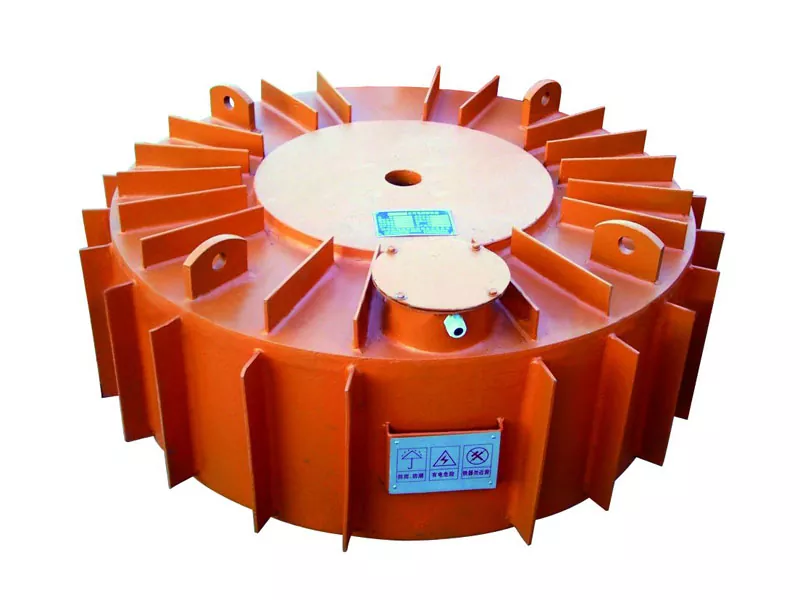
Table of Contents
- What Is an Electric Magnetic Iron Remover?
- How Does an Electric Magnetic Iron Remover Work?
- What Are the Key Features?
- Technical Specifications and Model Comparison
- Where Is It Used?
- What Advantages Does It Offer?
- How Should You Select the Right Equipment?
- Installation and Maintenance Recommendations
- Why Consider EPIC?
- FAQ
What Is an Electric Magnetic Iron Remover?
An Electric Magnetic Iron Remover is an industrial magnetic separation device designed to extract ferrous metal contaminants from materials transported through a production line. Instead of relying solely on permanent magnetic materials, an electromagnetic system creates its magnetic field by energizing coils. This allows the magnetic performance to be engineered for specific processing conditions.
The equipment is particularly useful when a production line handles relatively thick material layers, substantial iron contamination, or demanding continuous-duty applications. It can be positioned above a conveyor so that ferrous objects and particles are attracted toward the magnetic field while the non-magnetic bulk material continues through the processing system.
Depending on the selected configuration, EPIC equipment can use forced-air or natural-air cooling and may incorporate automatic iron unloading. These options allow the separator to be matched to different production environments and maintenance requirements.
How Does an Electric Magnetic Iron Remover Work?
The operating principle is straightforward but requires careful engineering. Electrical energy is supplied to the excitation coils, creating a magnetic field around the separator. When material passes beneath the equipment, ferromagnetic contaminants are attracted toward the magnetic system.
- Material conveying: Bulk material travels continuously along a conveyor or material-flow line.
- Magnetic attraction: The energized magnetic system attracts ferrous contaminants from the material stream.
- Separation: Non-magnetic material continues along its normal conveying path while iron contaminants are captured.
- Iron discharge: Depending on the model, captured iron can be removed manually or through an optional automatic unloading configuration.
The actual separation result depends on several variables, including material depth, particle characteristics, conveyor speed, installation height, iron content, and magnetic performance. This is why equipment selection should be based on the complete processing condition rather than a single specification.
What Are the Key Features?
Reliable Continuous-Duty Construction
Industrial separation equipment must operate consistently under demanding conditions. EPIC designs its magnetic iron removal systems for continuous processing, using durable components intended to reduce unexpected interruptions and support long operating cycles.
Flexible Cooling Configurations
Different electromagnetic systems can generate different levels of heat depending on their excitation requirements. Forced-air cooling and natural-air cooling configurations provide flexibility when selecting equipment for different operating environments.
Optional Automatic Iron Unloading
Automatic unloading can reduce manual intervention when the production line continuously encounters ferrous contaminants. This is particularly valuable for high-throughput applications where frequent manual cleaning could interrupt production.
Flexible Installation
The equipment can be installed above conveyor systems and integrated into existing material-handling lines. Installation height can be adjusted according to material thickness and processing conditions to help optimize separation performance.
Technical Specifications and Model Comparison
Model selection should be based on conveyor width, material thickness, cooling requirements, excitation power, and unloading configuration. The following specifications provide a practical comparison of representative EPIC models:
| Model | Cooling | Belt Width (mm) | Excitation Power (kW) | Hanging Height (mm) | Material Thickness (mm) | Belt Speed (m/s) |
|---|---|---|---|---|---|---|
| RCDA-5 | Forced air | 500 | 1 | 150 | ≤100 | ≤2.5 |
| RCDA-6 | Forced air | 600 | 1.6 | 175 | ≤150 | ≤2.5 |
| RCDA-8 | Forced air | 800 | 2 | 250 | ≤200 | ≤2.5 |
| RCDB-5 | Natural air | 500 | 0.1 | 150 | ≤110 | ≤2.5 |
| RCDB-8 | Natural air | 800 | 3 | 250 | ≤200 | ≤2.5 |
| RCDC-8 | Forced air + auto unloading | 800 | 3.5 | 250 | ≤200 | ≤2.5 |
| RCDD-8 | Natural air + auto unloading | 800 | 3 | 250 | ≤200 | ≤2.5 |
The table illustrates why a production line should be evaluated as a complete system. A wider belt, thicker material layer, or automatic discharge requirement may significantly influence the appropriate model and configuration.
Where Is It Used?
Electromagnetic iron removal can provide value wherever ferrous contamination needs to be separated from a bulk material stream. Typical applications include:
- Mining and mineral processing: Removes ferrous contaminants from ore and mineral processing streams.
- Construction materials: Helps separate unwanted metallic particles from sand, gravel, cement-related materials, and other bulk products.
- Chemical processing: Supports raw-material purity by removing iron particles from powders and granular materials.
- Recycling: Helps recover or remove ferrous metals from mixed material streams.
- Heavy industrial production: Provides an additional separation stage where material contamination could affect downstream machinery or final product quality.
For a broader overview of magnetic separation technologies, buyers can also explore EPIC's iron removal equipment solutions and compare different equipment types according to material characteristics and production requirements.
What Advantages Does It Offer?
1. Adjustable Magnetic Performance
Electromagnetic technology allows the magnetic field to be generated through excitation coils, offering greater configuration flexibility for demanding industrial applications.
2. Improved Material Purity
Removing unwanted iron particles helps reduce contamination in processed materials and can contribute to more consistent downstream production.
3. Protection for Downstream Equipment
Unwanted metal objects can potentially damage crushers, conveyors, grinding equipment, and other processing machinery. An effective iron-removal stage provides an additional layer of equipment protection.
4. Reduced Manual Intervention
Models equipped with automatic iron unloading can reduce the frequency of manual cleaning, helping production teams maintain a more continuous workflow.
5. Integration into Existing Lines
Properly selected magnetic separators can be integrated into existing conveyor systems with relatively limited modifications, making them practical for both new projects and equipment upgrades.
How Should You Select the Right Equipment?
Choosing an electromagnetic separator should begin with the operating conditions rather than the equipment name. Before requesting a quotation, prepare the following information:
- Material type: Identify the ore, aggregate, powder, recycled material, or other product being processed.
- Material thickness: Measure the maximum depth of the material layer on the conveyor.
- Conveyor width: Confirm the available belt width and installation dimensions.
- Conveyor speed: Provide the normal and maximum belt speeds.
- Iron contamination: Estimate the size, quantity, and frequency of ferrous contaminants.
- Cooling conditions: Determine whether natural or forced-air cooling is more appropriate for the operating environment.
- Discharge requirements: Decide whether manual cleaning is acceptable or automatic iron unloading is preferred.
This information enables an equipment manufacturer to evaluate the application more accurately and recommend a configuration that balances separation performance, installation requirements, operating cost, and maintenance needs.
Installation and Maintenance Recommendations
Correct installation is essential for maintaining consistent magnetic separation. The separator should be positioned appropriately above the material flow, with the hanging height adjusted according to material thickness and the expected contamination profile.
Installation Checklist
- Verify that the supporting structure can safely carry the equipment weight.
- Maintain the recommended separation distance between the magnetic system and material layer.
- Check electrical connections and grounding before commissioning.
- Confirm that the conveyor and separator are properly aligned.
- Ensure sufficient space for inspection, cleaning, and maintenance.
Routine Maintenance
- Inspect the conveyor belt and magnetic components for wear or damage.
- Remove accumulated material and ferrous contaminants from relevant surfaces.
- Check moving components and lubricate them according to the equipment manual.
- Inspect cooling components and airflow where forced-air cooling is used.
- Check electrical components and coil insulation as part of scheduled maintenance.
Regular maintenance can help maintain separation efficiency, reduce unexpected downtime, and extend the useful operating life of the equipment.
Why Consider EPIC?
Equipment quality and engineering capability are important considerations when purchasing industrial magnetic separation machinery. EPIC reports ISO9001:2015 quality management certification and multiple utility patents, while its manufacturing operation uses CNC processing and precision-engineered components. The company also states that its equipment has been exported to markets including Russia, Kazakhstan, Tanzania, Chile, Namibia, and Zimbabwe.
EPIC's service approach covers equipment consultation, solution design, installation guidance, commissioning, technical support, and maintenance assistance. According to the company's published equipment information, its broader iron-removal equipment offering is supported by more than 500 employees, with technical designers accounting for approximately 15% of its workforce.
For buyers evaluating an Electric Magnetic Iron Remover, these capabilities can be useful when the project requires more than a standard machine. Application-specific engineering, model selection, integration guidance, and after-sales support can all influence the long-term value of a magnetic separation system.
FAQ
What is the main purpose of an Electric Magnetic Iron Remover?
Its primary purpose is to remove ferromagnetic iron and steel contaminants from bulk materials. It is commonly installed above conveyor systems in mining, mineral processing, construction materials, chemical processing, and recycling applications.
What is the difference between electromagnetic and permanent magnetic separators?
Permanent magnetic separators generate magnetic force using permanent magnets, while electromagnetic separators create a magnetic field through energized coils. Electromagnetic designs can provide greater operational flexibility for applications requiring adjustable magnetic performance and specific heavy-duty separation conditions.
Can the equipment automatically discharge removed iron?
Yes. Certain EPIC configurations offer automatic iron unloading. This option can reduce manual intervention and is particularly useful when a production line continuously encounters significant quantities of ferrous contaminants.
What material thickness can the equipment handle?
Depending on the selected model, the published specifications indicate maximum material thicknesses ranging from approximately 100 mm to 200 mm. The correct model should be selected according to the actual material characteristics and conveyor conditions.
How fast can the conveyor operate?
The listed models support belt speeds of up to 2.5 m/s. Actual operating speed should be evaluated together with material thickness, iron particle characteristics, installation height, and required separation efficiency.
How should an electromagnetic iron remover be maintained?
Routine maintenance should include inspection of the belt and magnetic components, cleaning of material buildup, lubrication of moving parts, and inspection of electrical and cooling components. Regular maintenance helps maintain stable separation performance and minimize unplanned downtime.
Conclusion
An effective magnetic separation system can improve material purity, protect downstream equipment, and support more stable industrial production. With configurable cooling options, multiple belt widths, automatic unloading options, and models designed for different material thicknesses, EPIC's electromagnetic separation equipment can be considered for demanding mining, construction, chemical, and recycling applications. If you are evaluating equipment specifications, conveyor integration, or a customized magnetic separation solution, contact us with your material type, conveyor width, belt speed, material thickness, and iron contamination requirements to discuss a suitable configuration.