English
 Español
  Português
  русский
  Français
  日本語
日本語  Deutsch
  tiếng Việt
  Italiano
  Nederlands
  ภาษาไทย
  Polski
  한국어
한국어  Svenska
  magyar
  Malay
Malay  বাংলা ভাষার
  Dansk
Dansk  Suomi
Suomi  हिन्दी
  Pilipino
  Türkçe
  Gaeilge
  العربية
  Indonesia
  Norsk
Norsk  تمل
تمل  český
český  ελληνικά
  український
  Javanese
  فارسی
فارسی  தமிழ்
தமிழ்  తెలుగు
  नेपाली
  Burmese
  български
  ລາວ
ລາວ  Latine
  Қазақша
  Euskal
  Azərbaycan
  Slovenský jazyk
  Македонски
  Lietuvos
  Eesti Keel
  Română
  Slovenski
  मराठी
मराठी  Srpski језик

For mining plants, aggregate producers, road projects, and water conservancy operations, EPIC provides the Sealed Heavy Stone Spiral Sand Washer as a heavy-duty solution designed to combine effective stone washing with improved dust, splash, and wastewater control. Its reinforced structure, enclosed shell, protected transmission system, and closed-loop water design make it suitable for demanding aggregate-processing environments.
A modern sand washing system must do more than remove mud and surface impurities. Heavy aggregates can create substantial impact, abrasion, dust, water splashing, and equipment wear during continuous processing. The Sealed Heavy Stone Spiral Sand Washer addresses these challenges by combining a fully enclosed structure with reinforced heavy-duty components. The equipment is designed to support stable washing, classification, material recovery, and cleaner production conditions. EPIC offers several models with processing capacities ranging from 30 to 240 t/h, allowing users to select configurations according to material characteristics and production requirements.
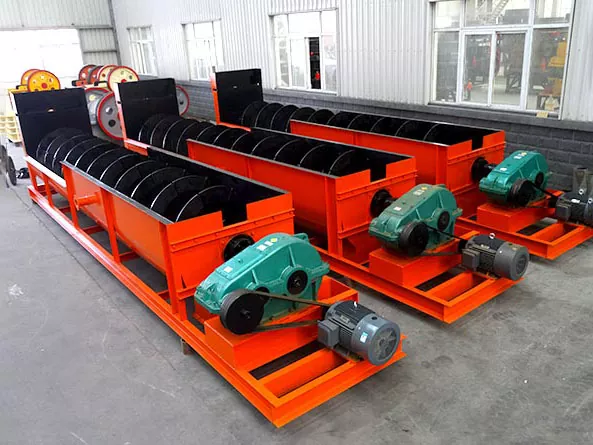
Table of Contents
Why Does Heavy Stone Washing Require a Specialized Solution?
What Makes the Sealed Structure Different?
What Are the Main Performance Advantages?
What Are the Available Technical Parameters?
Where Can This Equipment Be Used?
How Does the Washing Process Work?
How Should the Sand Washer Be Maintained?
Why Does Heavy Stone Washing Require a Specialized Solution?
Heavy aggregate processing places different demands on washing equipment compared with ordinary fine sand applications. Large stones and coarse aggregate can generate considerable impact and friction against tanks, spiral blades, frames, and transmission components. At the same time, washing operations introduce water, mud, and suspended particles into the working environment.
Traditional open washing equipment may therefore create several operational challenges:
- Dust can escape into the surrounding work area.
- Water may splash or leak outside the washing zone.
- Heavy stones can accelerate wear on critical components.
- Muddy water can enter vulnerable transmission areas.
- Material loss may occur during washing and drainage.
A sealed heavy-duty configuration approaches these challenges as one integrated engineering problem. Instead of adding environmental protection after equipment selection, the machine incorporates enclosure, structural reinforcement, protected transmission, and water-management considerations into its overall design.
What Makes the Sealed Structure Different?
The design concept behind the Sealed Heavy Stone Spiral Sand Washer combines a fully enclosed shell with a thickened heavy-duty body. According to EPIC's product specifications, the enclosed shell helps isolate the internal washing process from the external working environment, while reinforced components are intended to withstand the impact and friction associated with coarse heavy aggregates.
1. Fully Enclosed Sealing Shell
The integrated enclosure helps limit dust diffusion and water splashing. This can be particularly useful for plants where environmental management and cleaner working conditions are important considerations.
2. Reinforced Main Body
The tank body and supporting frame use a strengthened heavy-duty configuration designed to resist the mechanical loads associated with large stones and continuous processing.
3. Impact-Resistant Spiral
Reinforced spiral blades are designed for continuous stirring, conveying, and washing of coarse materials. Their wear-resistant configuration helps support stable operation in abrasive applications.
4. Protected Transmission Components
Sealed protection around transmission and bearing areas helps reduce the intrusion of dust and muddy water, supporting longer component service intervals when appropriate maintenance procedures are followed.
5. Closed-Loop Water Management
The enclosed drainage and circulation arrangement helps control wastewater and reduce unnecessary material loss during washing operations.
What Are the Main Performance Advantages?
For aggregate producers evaluating washing equipment, performance should be considered from both processing and operating-environment perspectives. The equipment combines several functions that can be important in demanding heavy-stone applications.
- Cleaner working conditions: The enclosed configuration helps control dust and water splashing around the washing area.
- Heavy-load capability: Reinforced structural components are designed for applications involving coarse and heavy aggregate.
- Effective impurity removal: Spiral agitation helps separate surface mud, dirt, and other unwanted materials from aggregate.
- Reduced material loss: Controlled water management supports more consistent recovery of washed aggregate.
- Protected mechanical components: Sealed transmission areas help reduce exposure to dust and muddy water.
- Outdoor adaptability: The enclosed configuration is suitable for demanding outdoor and dusty operating environments when the overall plant is properly designed.
These characteristics make the machine relevant to operations where washing efficiency and environmental management need to be addressed simultaneously.
What Are the Available Technical Parameters?
Model selection should be based on required throughput, feed characteristics, available installation space, and the site's operating conditions. EPIC lists multiple configurations for different production scales.
| Model | Processing Capacity | Power | Typical Application |
|---|---|---|---|
| LX-915 | 30–100 t/h | 15 kW | Sealed washing of medium sand and small heavy stones |
| 2LX-915 | 60–200 t/h | 15 × 2 kW | Batch processing of medium heavy aggregates |
| LX-1115 | 40–120 t/h | 22 kW | Coarse sand and large heavy stones |
| 2LX-1115 | 80–240 t/h | 22 × 2 kW | Large-scale continuous heavy stone production |
The figures above provide a useful starting point for equipment selection, but actual capacity can depend on material properties, feed size, moisture content, impurity levels, washing requirements, and plant configuration. Buyers should confirm the final model with the equipment supplier according to the specific production conditions.
Where Can This Equipment Be Used?
The combination of heavy-duty construction and enclosed washing makes this type of equipment applicable to several industrial environments.
Mining and Mineral Processing
Mining operations can use the washer to remove surface dirt and unwanted impurities from heavy mineral aggregates before subsequent processing or material utilization.
Road and Bridge Construction
Road bases and bridge-related aggregate applications may require consistent material cleanliness. Controlled washing can help prepare aggregate for downstream production and construction processes.
Water Conservancy Projects
Dam, revetment, and related projects can require substantial quantities of washed stone. A sealed configuration can help reduce uncontrolled water splashing and site contamination during processing.
Commercial Aggregate Plants
Large-scale aggregate facilities can integrate the washer into a broader crushing, screening, conveying, and washing line. The equipment can therefore function as part of an integrated sand washing machine solution.
How Does the Washing Process Work?
The working principle is based on the combined action of water, spiral agitation, material movement, and controlled separation. Feed material enters the washing area, where the rotating spiral creates mechanical agitation and conveys the aggregate through the washing zone.
During this process, water interacts with the material to loosen and carry away surface mud, fine contaminants, and other unwanted particles. The spiral movement promotes continuous contact between the aggregate and washing medium while simultaneously transporting the cleaned material toward the discharge section.
The enclosed shell helps contain the washing environment, while the protected transmission arrangement isolates critical mechanical components from external dust and muddy water. This integrated approach allows washing, conveying, and environmental control to operate as part of one system.
How Should the Sand Washer Be Maintained?
Regular maintenance is essential for maintaining washing performance and extending the service life of heavy-duty equipment. Operators should establish inspection procedures based on actual operating hours and material conditions.
- Check sealing components: Inspect the enclosure and sealing points for damage, looseness, or aging.
- Inspect spiral wear: Examine the spiral blades regularly, especially when processing highly abrasive aggregate.
- Maintain transmission components: Follow the manufacturer's lubrication and inspection requirements for bearings and transmission assemblies.
- Clean water channels: Remove accumulated sediment from drainage and circulation passages to reduce the risk of blockage.
- Check structural fasteners: Inspect frame and shell connections for loosening caused by long-term vibration.
- Monitor abnormal operation: Unusual vibration, noise, leakage, or temperature changes should be investigated promptly.
Preventive maintenance is generally more practical than waiting for a major mechanical failure, particularly in continuous aggregate production environments.
How Should Buyers Select the Right Model?
Choosing a suitable washer requires more than comparing nominal capacity. A reliable equipment selection process should consider the complete application.
- Material type: Identify whether the feed consists mainly of sand, coarse aggregate, or large heavy stones.
- Required capacity: Determine the target tons per hour under actual operating conditions.
- Feed characteristics: Consider particle size distribution, moisture, mud content, and abrasiveness.
- Environmental requirements: Evaluate dust, wastewater, splash-control, and site-management requirements.
- Plant layout: Confirm installation dimensions, material flow, water supply, drainage, and maintenance access.
- Future production: Consider whether the plant may require higher capacity as production expands.
EPIC states that it can provide model selection and structural adjustments according to material particle size, output requirements, and local environmental protection conditions. This makes application-specific consultation an important step before purchasing.
Frequently Asked Questions
What is a Sealed Heavy Stone Spiral Sand Washer?
It is a heavy-duty aggregate washing machine that combines a fully enclosed structure with reinforced components for processing coarse and heavy stone materials. The design aims to provide effective washing while helping control dust, water splashing, and wastewater leakage.
What is the difference between a sealed washer and a conventional heavy-duty sand washer?
The key difference is the integration of an enclosed sealing system. In addition to handling heavy aggregate, the sealed configuration is designed to isolate the washing process from the surrounding environment and protect critical mechanical components.
What capacity can EPIC's models handle?
The listed models cover approximately 30–240 t/h depending on the selected configuration. Actual performance depends on material properties, feed conditions, washing requirements, and operating parameters.
Can this equipment process large and abrasive stones?
The reinforced body and impact-resistant spiral configuration are specifically designed for heavy aggregate applications. However, the final model should be selected according to the actual feed size and abrasiveness of the material.
Is the sealed structure suitable for outdoor applications?
The enclosed and dust-resistant configuration is designed to support demanding outdoor environments, including dusty and windy working conditions. Proper plant-level drainage, foundations, electrical protection, and maintenance remain important.
Does EPIC provide customized equipment solutions?
Yes. EPIC indicates that it provides model selection and structural adjustments according to material characteristics, required output, and applicable environmental requirements, together with pre-sales, installation, commissioning, and after-sales support.
Final Considerations
The Sealed Heavy Stone Spiral Sand Washer addresses two important requirements in modern aggregate processing: reliable washing of heavy materials and better control of the surrounding working environment. Its enclosed shell, reinforced body, wear-resistant spiral, protected transmission system, and controlled water arrangement make it suitable for mining, aggregate production, road construction, and water conservancy applications. If you are evaluating equipment for a new plant or upgrading an existing washing line, EPIC can help assess material characteristics, production capacity, and site conditions to identify a suitable configuration. For model selection, technical consultation, and project-specific equipment recommendations, contact us today and discuss your heavy aggregate washing requirements with the EPIC team.