 English
 Español
  Português
  русский
  Français
  日本語
日本語  Deutsch
  tiếng Việt
  Italiano
  Nederlands
  ภาษาไทย
  Polski
  한국어
한국어  Svenska
  magyar
  Malay
Malay  বাংলা ভাষার
  Dansk
Dansk  Suomi
Suomi  हिन्दी
  Pilipino
  Türkçe
  Gaeilge
  العربية
  Indonesia
  Norsk
Norsk  تمل
تمل  český
český  ελληνικά
  український
  Javanese
  فارسی
فارسی  தமிழ்
தமிழ்  తెలుగు
  नेपाली
  Burmese
  български
  ລາວ
ລາວ  Latine
  Қазақша
  Euskal
  Azərbaycan
  Slovenský jazyk
  Македонски
  Lietuvos
  Eesti Keel
  Română
  Slovenski
  मराठी
मराठी  Srpski језик


Why Is a Spiral Sand Washer for Coarse Stones Essential for High-Quality Aggregate Production
EPIC offers the Spiral Sand Washer for Coarse Stones for quarry operators, mining companies, and aggregate producers seeking dependable washing performance under demanding working conditions. Designed around coarse material handling, effective impurity removal, and continuous operation, this equipment can help improve aggregate preparation for construction and mineral processing projects.
Washing coarse stones presents challenges that ordinary sand washing equipment may not adequately address. Large particle sizes, abrasive surfaces, sticky clay, and inconsistent feed conditions can affect cleaning efficiency, equipment wear, and production continuity. A properly selected spiral sand washer helps loosen surface contaminants, separate muddy water, and convey cleaned aggregate through a controlled process. This article examines the working mechanism, essential design considerations, application scenarios, capacity planning, operating costs, and maintenance practices associated with coarse stone washing equipment. It also provides a practical checklist for evaluating a suitable machine for a quarry or aggregate processing plant.
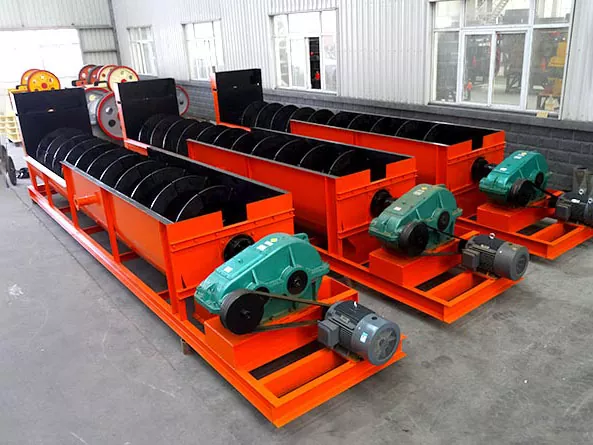
Table of Contents
- What Makes Coarse Aggregate Difficult to Wash?
- How Does the Washing Process Remove Contaminants?
- Which Design Details Should Buyers Examine?
- What Factors Influence Washing Efficiency?
- How Should You Calculate Processing Capacity?
- Which Industries Benefit from Coarse Stone Washing?
- How Can Operating Costs Be Controlled?
- What Maintenance Practices Help Extend Service Life?
- Frequently Asked Questions
- Final Recommendations
1. What Makes Coarse Aggregate Difficult to Wash?
Coarse stones are widely used in concrete production, road construction, drainage systems, railway infrastructure, and large civil engineering projects. Before these materials enter the next production stage, however, their surfaces may need to be cleaned to remove loose soil, clay, and unwanted fine particles.
Unlike fine sand, coarse aggregate contains larger and heavier particles. Their irregular shapes create spaces where contaminants can accumulate, while their mass places additional demands on the washing equipment. Sticky clay can also adhere firmly to stone surfaces, making simple water spraying insufficient for some applications.
Several common problems can reduce washing effectiveness:
- Uneven feed distribution: Excessive material accumulation can prevent consistent contact between stones and washing water.
- Persistent clay contamination: Adhesive soil may require sufficient mechanical agitation and suitable water flow to loosen.
- High abrasion: Hard or angular stones can accelerate wear on spiral blades, liners, and other material-contact components.
- Unstable water supply: Inadequate flushing may leave contaminants behind, while excessive water flow can increase operating expenses.
- Discharge obstruction: Oversized stones or sticky material can interfere with smooth movement through unsuitable discharge passages.
A dedicated spiral sand washer for coarse stones addresses these operational demands through a washing and conveying arrangement selected for larger aggregate. The objective is to achieve the required cleanliness without sacrificing production stability or creating unnecessary maintenance work.
2. How Does the Washing Process Remove Contaminants?
A spiral sand washer combines mechanical movement with water flushing. The rotating spiral mechanism agitates and transports material through the washing trough, helping separate surface contamination from usable aggregate.
Step 1: Feed Preparation
Coarse stones are delivered to the machine through a controlled feeding arrangement. Removing unsuitable oversized objects before washing can help protect the equipment, while consistent feed distribution reduces localized overloading.
Step 2: Mechanical Agitation
As the spiral rotates, its blades move the stones through the washing area. The resulting material movement helps loosen mud and clay attached to aggregate surfaces. Appropriate spiral geometry and operating speed are important because the machine must move heavy particles without creating excessive mechanical stress.
Step 3: Water Flushing
Water washes away released sediment and carries suspended impurities toward the designated drainage or overflow outlet. The required flow depends on the incoming material, contamination level, and final cleanliness target.
Step 4: Aggregate Discharge
The spiral mechanism conveys washed stones toward the discharge point. The cleaned material can then be transferred to a screening system, stockpile, or another processing stage, depending on the plant layout.
For best results, the washing machine should operate as part of a coordinated production line. Feed conveyors, water supply, drainage, and downstream handling equipment must all be capable of supporting the intended throughput.
3. Which Design Details Should Buyers Examine?
Equipment selection should focus on the interaction between machine structure and actual material conditions. A high nominal capacity is not sufficient if the machine cannot accommodate the feed size or remove the specific contaminants present in the raw aggregate.
Washing Trough Dimensions
The washing cavity must provide adequate space for coarse stones to move during operation. Sufficient clearance helps prevent excessive accumulation and supports contact between water and the material surface. Buyers should verify both the effective washing area and the allowable feed size.
Spiral Blade Geometry
Blade diameter, pitch, thickness, and rotation characteristics affect material transport and agitation. A configuration intended for coarse aggregate should be evaluated according to particle size distribution, feed volume, and the desired residence time.
Wear Resistance
Stone hardness and angularity influence abrasion rates. Reinforced structures and suitable wear-resistant components can help manage the mechanical demands of continuous operation. Buyers should ask which parts are replaceable, how wear is inspected, and whether spare parts are readily available.
Drive and Transmission System
The motor, reducer, bearings, and transmission components must be matched to the machine's load requirements. Stable power transmission helps maintain predictable operation, while accessible inspection points simplify routine servicing.
Water and Drainage Arrangement
Effective contaminant removal requires sufficient water distribution and an unobstructed drainage route. A well-planned installation should also consider sediment collection, wastewater treatment, and opportunities for recirculating clarified water.
EPIC's Spiral Sand Washer for Coarse Stones product page provides a starting point for reviewing the equipment. Buyers should confirm detailed engineering parameters with the supplier before finalizing a purchase.
4. What Factors Influence Washing Efficiency?
Washing efficiency is determined by more than the machine itself. Material properties, operating conditions, and production-line coordination all influence the final result.
| Performance Factor | Potential Challenge | Recommended Action |
|---|---|---|
| Particle size | Oversized stones may obstruct material movement | Confirm the maximum feed size and prepare material appropriately |
| Clay content | Adhering clay may resist ordinary flushing | Assess contamination severity and test suitable washing conditions |
| Feed consistency | Uneven loading can reduce cleaning uniformity | Maintain a controlled and consistent feed rate |
| Water flow | Insufficient flow may leave residual sediment | Adjust supply according to material conditions and cleanliness targets |
| Spiral condition | Worn blades may affect conveying and agitation | Inspect wear components and replace them when necessary |
| Drainage capacity | Accumulated muddy water can disrupt operation | Keep outlets clear and size the drainage system appropriately |
Operators should assess the washed aggregate at the discharge point and compare the results with project specifications. Where cleanliness requirements are strict, representative material testing can help determine whether adjustments or additional processing stages are needed.
5. How Should You Calculate Processing Capacity?
Capacity planning begins with the actual volume of material that must be processed, rather than the machine's maximum advertised throughput.
For preliminary planning, the required hourly capacity can be estimated using the following relationship:
Required hourly capacity = Daily production target ÷ Planned operating hours per day
For example, a quarry that needs to wash 720 tonnes of aggregate during a 12-hour operating day requires an average washing throughput of 60 tonnes per hour. This is a planning example, not a performance guarantee for any specific machine.
When selecting equipment, allow for operational interruptions, feed variation, maintenance, and the capacity of connected machinery. The selected washer should be evaluated against the expected working conditions, not just the average production target.
| Planning Item | Information to Confirm | Why It Matters |
|---|---|---|
| Daily production | Tonnes required per day | Establishes the basic throughput target |
| Operating schedule | Working hours and planned downtime | Determines required hourly capacity |
| Feed material | Particle size, density, and clay content | Influences actual processing performance |
| Water availability | Flow rate, quality, and recycling capacity | Helps establish a sustainable washing process |
| Connected equipment | Crusher, screens, conveyors, and drainage | Prevents production bottlenecks |
It is also important to distinguish between feed capacity and the production rate of aggregate that meets the required cleanliness standard. A machine may accept a certain quantity of raw material, but the achievable rate of acceptable finished product depends on the material and operating conditions.
6. Which Industries Benefit from Coarse Stone Washing?
Quarries and Aggregate Plants
Quarry operators use washing systems to remove soil and surface contaminants from crushed stone. Cleaner aggregate can be directed toward different product grades or construction applications according to the plant's screening and quality-control procedures.
Concrete and Infrastructure Projects
Concrete production and infrastructure construction often require aggregate that satisfies defined material specifications. Washing can help reduce unwanted surface contamination when required by the project's acceptance criteria.
Road and Railway Construction
Selected aggregates used in road bases, railway infrastructure, and drainage layers may require cleaning before placement. The appropriate washing process depends on the specified material grade and the characteristics of the available stone.
Mining Operations
In mining plants, washing may be used to remove clay and loose impurities before screening, crushing, or other downstream processing. Equipment configuration should reflect the mineral's physical properties and the requirements of subsequent separation stages.
Recycled Aggregate Processing
Recycled stone materials can sometimes be washed to remove loose soil and other contaminants before reuse. Mixed construction waste may require preliminary sorting, additional treatment, and quality testing before it is suitable for a particular application.
7. How Can Operating Costs Be Controlled?
The purchase price is only one part of the total cost of owning an aggregate washing machine. Electricity, water, wear parts, labor, maintenance, and production interruptions all contribute to long-term expenses.
Several practical measures can help improve cost control:
- Match the model to the workload: Avoid selecting equipment that is unsuitable for the actual feed size or production target.
- Optimize water consumption: Adjust flow according to the cleaning requirement and evaluate sedimentation or water-reuse systems where practical.
- Maintain stable feeding: Reduce unnecessary fluctuations that can cause inefficient operation or overload connected equipment.
- Track wear-part consumption: Monitor replacement intervals to identify abnormal abrasion and improve maintenance planning.
- Reduce unplanned downtime: Inspect the drive system, spiral blades, bearings, and discharge passages on a regular schedule.
- Review total energy demand: Consider the washer together with pumps, conveyors, screens, and water-treatment equipment.
Buyers should request information about recommended maintenance intervals, replacement components, lubrication requirements, and after-sales support. These details make it easier to estimate the total cost of operation over the equipment's service life.
8. What Maintenance Practices Help Extend Service Life?
Coarse aggregate washing equipment operates in an abrasive environment. Regular inspection can help identify developing faults and reduce the risk of production interruptions.
Daily Operating Checks
- Listen for unusual noise from the motor, reducer, bearings, or transmission system.
- Observe vibration, material movement, and discharge consistency.
- Check the water supply and confirm that drainage passages are unobstructed.
- Look for visible leakage, loose external fasteners, or abnormal material accumulation.
Scheduled Preventive Maintenance
- Inspect spiral blades and other wear components for deformation or excessive abrasion.
- Check lubrication according to the manufacturer's specified intervals and lubricant requirements.
- Examine accessible structural connections and mounting points.
- Review motor and reducer performance under normal operating loads.
- Keep records of operating hours, downtime, repairs, and replacement parts.
Before performing maintenance, isolate all energy sources and follow the manufacturer's lockout and safety procedures. Never remove blockages or inspect moving components while the machine is running.
9. Frequently Asked Questions
Q1: Is a spiral sand washer suitable for large stones?
It can be suitable when the machine is specifically designed and rated for the required coarse aggregate size. Always confirm the maximum feed size, trough clearance, and recommended operating conditions before purchasing.
Q2: Can a coarse stone washer remove sticky clay?
Mechanical agitation and water flushing can help loosen and remove clay, but results depend on the type and quantity of clay, its adhesion to the stones, and the washing conditions. Highly contaminated material may require testing or additional processing.
Q3: Does a higher-capacity machine always provide better performance?
No. A larger nominal capacity does not automatically guarantee cleaner aggregate or lower operating costs. The machine must be matched to the feed material, required cleanliness, available water, and production-line configuration.
Q4: Can washing water be reused?
In many aggregate plants, wastewater can be directed to settling or treatment equipment so that clarified water can be reused. The required system depends on sediment characteristics, water-quality requirements, local environmental regulations, and the plant's operating conditions.
Q5: Which details should I provide when requesting an EPIC quotation?
Provide the raw stone type, feed particle-size range, estimated contamination level, target hourly throughput, working schedule, available water supply, electrical requirements, and installation location. Photographs or representative samples can also help the supplier evaluate the application.
Q6: How can I evaluate the reliability of a washing equipment supplier?
Review the technical documentation, model suitability, spare-parts availability, maintenance guidance, installation support, and responsiveness of the technical team. Ask for confirmation of critical operating parameters and clarify which performance conditions are included in the quotation.
10. Final Recommendations: Build a More Efficient Aggregate Washing Line
Choosing the right spiral sand washer for coarse stones requires a clear understanding of feed characteristics, required throughput, contamination levels, water availability, and downstream processing requirements. Equipment structure and spiral geometry influence material movement, while water distribution and drainage determine how effectively released impurities can be removed. A well-planned maintenance schedule helps protect these components and supports consistent production.
EPIC provides a starting point for buyers evaluating coarse stone washing equipment for quarrying, mining, and aggregate processing projects. Before placing an order, compare the available configurations and confirm the allowable feed size, capacity under your working conditions, power requirements, water consumption, installation dimensions, and service arrangements. Visit the Spiral Sand Washer for Coarse Stones product page for more information. If you need help matching a machine to your raw material and production targets, contact us to discuss your application and request a project-specific equipment recommendation.
Send Inquiry



X
We use cookies to offer you a better browsing experience, analyze site traffic and personalize content. By using this site, you agree to our use of cookies.
Privacy Policy